Solar panels Belgium
Huawei solar inverter: price and review
A solar inverter from Huawei converts the direct current generated by your solar panels into usable alternating current electricity with an efficiency of up to 98.6%, significantly enhancing your home’s energy harvest. These inverters integrate with the SUN2000 series, support hybrid battery systems, and connect to the FusionSolar monitoring platform for seamless management.
Models range from the compact 5kW inverter ideal for residential use to larger 10kW or 150kW options designed for commercial setups.
How exactly does a Huawei solar inverter work?
A Huawei solar inverter transforms the DC electricity from your solar panels into AC electricity that your household can use, optimizing energy output through advanced electronics. It employs maximum power point tracking (MPPT) technology to continuously adjust voltage and current, maximizing energy extraction even when sunlight conditions change throughout the day.
Additionally, the inverter acts as the control center of your solar system. It manages the flow of electricity between your solar panels, household consumption, and optionally, battery storage to ensure efficient energy use.
What role do MPPT and efficiency play?
Maximum Power Point Tracking technology ensures each string of solar panels operates at its peak power output. Huawei inverters support multiple MPPT trackers, which is especially beneficial for roofs with panels facing different directions.
The inverter achieves an efficiency up to 98.6%, meaning energy loss during the DC to AC conversion is minimal. This places Huawei inverters among the most efficient technologies on the market.
How does the smart monitoring via the Huawei solar inverter app work?
The FusionSolar app offers real-time monitoring of your solar production, energy consumption, and battery status. You can observe performance data for each panel string and quickly detect any issues.
The system integrates with smart meters and supports energy optimization strategies in households using dynamic electricity tariffs, helping you save on energy costs.
Which Huawei solar inverter models and technologies are available?
Huawei offers a broad range of inverter models tailored for various system sizes, grid types, and battery integration options. The popular SUN2000 series includes the majority of available models.
What residential models like the Huawei Solar Inverter 5kW and 10kW exist?
Residential systems commonly use compact inverters that support hybrid configurations:
- The Huawei Solar Inverter 5kW suits small homes and supports roughly 8 to 12 solar panels.
- The 10kW model targets larger homes with higher energy consumption.
- Single-phase and three-phase options ensure compatibility with different grid systems.
What characterizes Huawei solar inverter hybrid systems?
The Huawei solar inverter hybrid models connect directly with battery systems such as the LUNA2000, allowing you to store unused solar energy for later consumption.
Hybrid setups often boost your self-consumption rate to over 70%, lowering reliance on the electrical grid.
Which large-scale Huawei solar inverter options are available?
High-capacity inverters serve commercial and industrial applications:
- The Huawei Solar Inverter 150kW supports large rooftops in industrial settings.
- Advanced active cooling systems help maintain performance under heavy loads.
- Grid-forming technology enhances stability in local electricity networks.
What is the price range for a Huawei solar inverter?
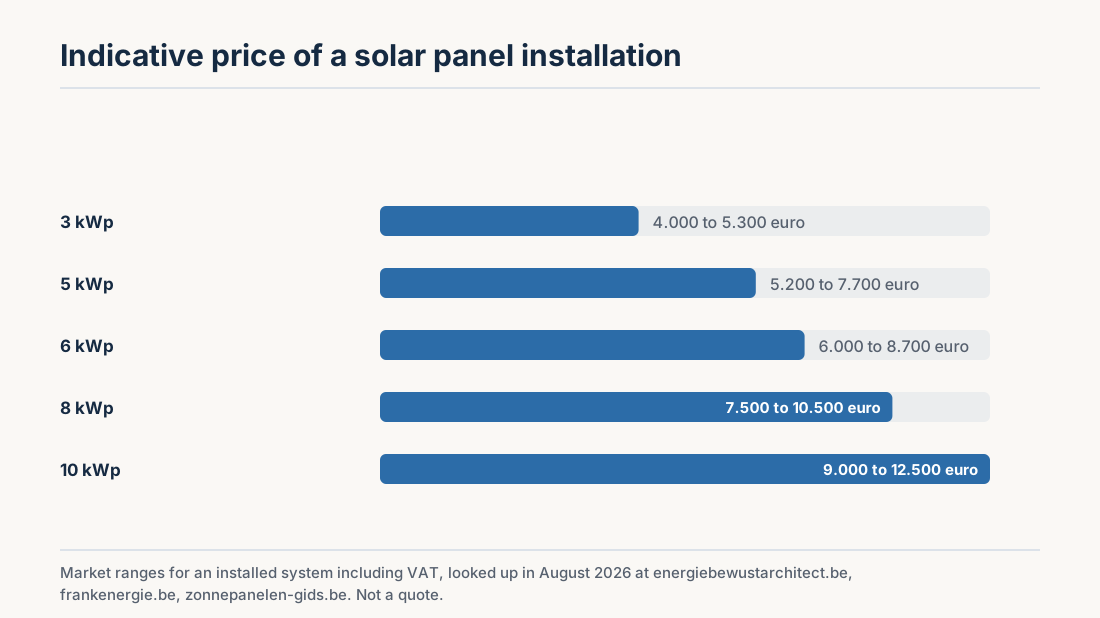
Prices for Huawei solar inverters range from approximately €1,000 to €6,000 incl. VAT, depending on power output, hybrid features, and installation complexity.
Below is a pricing overview for common inverter capacities:
- 3 to 5 kW: €1,000 - €1,800 incl. VAT
- 5 to 10 kW: €1,200 - €2,000 incl. VAT
- 10 to 30 kW: €2,000 - €4,000 incl. VAT
- 100 kW and above: starting at €5,000 incl. VAT
How do costs add up in a complete system?
Consider a typical residential system with 10 solar panels and a Huawei Solar Inverter 5kW:
- 10 solar panels: 10 × €250 = €2,500
- Huawei Solar Inverter 5kW: €1,400
- Mounting system: €600
- Installation labor: €2,000
- Monitoring equipment: €150
The total estimated cost is approximately €6,650 incl. VAT. The final price depends on factors similar to those for a full solar installation.
In what scenarios does a Huawei solar inverter offer the most advantages?
These inverters perform best in systems that prioritize efficiency, detailed monitoring, and seamless battery integration. They suit both residential and small commercial installations effectively.
Why are Huawei solar inverters ideal for hybrid battery systems?
The inverters integrate smoothly with home energy setups that include battery storage, improving self-consumption and reducing power sent back to the grid.
Compatibility with Huawei battery systems allows flexible capacity expansion from around 5 kWh to over 20 kWh.
How do Huawei inverters adapt to modern grid conditions?
The inverters support digital metering and dynamic capacity tariffs by prioritizing self-consumption. This approach helps reduce your grid costs throughout the year and enhances investment returns.
What are the main advantages and disadvantages of Huawei solar inverters?
The key advantages of Huawei solar inverters include their high efficiency, advanced safety features, and scalable design. Possible drawbacks relate primarily to ecosystem restriction.
Advantages include efficiency levels up to 98.6%, AFCI arc fault detection for enhanced safety, and detailed remote diagnostics via the FusionSolar app.
Disadvantages involve limited compatibility with batteries from other manufacturers and relatively higher upfront costs for hybrid configurations.
How do Huawei solar inverters compare to other inverter technologies?
Huawei solar inverters stand out due to their integrated ecosystem and readiness for hybrid battery systems.
Compared to traditional string inverters, Huawei models offer built-in smart management and battery support. Compared to micro-inverter systems, they require lower installation costs but provide less granular panel-level control.
If your roof experiences significant shading, micro-inverters may perform better. For a scalable smart system that includes storage, Huawei solutions are highly suitable.
When might you consider alternatives to Huawei solar inverters?
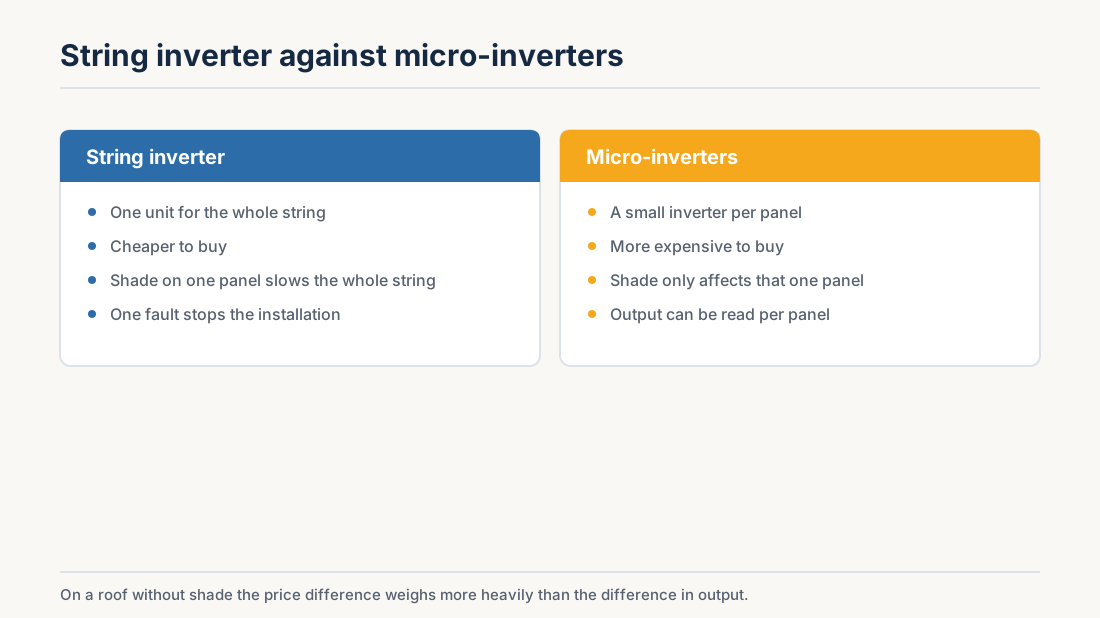
Choosing a Huawei solar inverter may not be ideal if your setup requires maximum panel-level optimization or uses components from multiple brands.
Systems with complex shading patterns benefit more from micro-inverters. If you need broad compatibility across battery brands, Huawei’s ecosystem may feel limiting.
Expansion options often depend on compatibility with newer battery modules, so consider this factor after recent product updates.
Selecting a solar inverter depends on factors such as efficiency, intelligent control, and future expandability. Huawei distinguishes itself with high performance, comprehensive monitoring, and smooth integration with battery storage, making it well-suited for households focused on maximizing self-consumption. Focus first on choosing the correct inverter size, then compare different hybrid options carefully. Soleva allows you to request multiple quotes to ensure the inverter matches your specific energy needs without overspending.
Frequently Asked Questions
Is Huawei a good solar inverter?
Yes, Huawei solar inverters achieve efficiencies up to 98.6% and feature advanced monitoring and battery compatibility. They suit homeowners looking for a smart and scalable energy system with detailed insights and strong safety features like arc fault detection, making them a reliable investment.
What are common issues with Huawei solar inverters?
Typical issues involve connectivity problems with the FusionSolar app and limitations with older battery models. Some users find setup configuration complex. Most challenges relate to software and are typically resolved through updates or support from installers.
Which solar inverter is best worldwide?
The ideal inverter depends on your system’s specific requirements. Huawei inverters rank highly for efficiency, hybrid battery integration, and smart monitoring. While micro-inverters excel in panel-level optimization, Huawei provides a strong balance of performance, scalability, and cost for most residential users.
How do you connect to a Huawei solar inverter?
Connecting is done via the FusionSolar app by scanning the inverter’s QR code, linking the device to your WiFi, and configuring system settings. Professional installers usually perform the initial setup, after which you can monitor and manage your system through the app.
What is the price range for a Huawei solar inverter within a complete system?
The total cost typically ranges between €6,000 and €12,000 incl. VAT, depending on system size and whether battery storage is included. Basic 5kW inverter systems are at the lower end, and hybrid systems with storage increase the investment accordingly.
Indicative prices for the Belgian market, checked in August 2026 against energy-village.be, thuisbatterij.be and zen-zonne-energie.be. These are market ranges for an installed system including VAT, not a quotation: your price depends on capacity, brand and the state of your existing installation.
Read also
Ready to cut your energy bill?
Compare quotes for solar panels, home batteries and charging points.