Solar panels Belgium
Trina solar panels: price and review
Trina Solar panels combine high efficiency, reliable warranties, and competitive pricing, with modern models reaching up to 22.5% efficiency and 450W power output. Many homeowners researching reviews and online discussions consistently report strong value for money and durable long-term performance. This review explains how Trina panels perform, compares them with alternatives, details pricing, and helps you decide if they suit your roof and energy needs.
What makes Trina Solar panels suitable for solar energy?
Trina Solar panels achieve high efficiency and maintain stable output over time due to advanced cell technologies and large-scale manufacturing. BloombergNEF rates Trina as a Tier 1 manufacturer, reflecting strong financial stability and bankability for long-term installations.
The brand balances price and performance effectively, offering near-premium efficiency without charging premium prices. This value combination often leads installers to recommend Trina panels for residential solar systems.
Which technologies define Trina panel performance?
Trina incorporates several modern technologies that enhance panel performance and durability.
- N-type TOPCon cells reduce degradation and extend lifespan
- Multi-busbar (MBB) design improves efficiency and limits shading losses
- Bifacial modules capture sunlight from both sides, increasing energy yield by up to 30%
- Dual-glass construction enhances durability and resists moisture damage
What efficiency and power output do you get?
Trina panels demonstrate strong performance through these metrics:
- Efficiency ranges between 19.8% and 22.5%
- Power output ratings from 370W to 670W
- Annual degradation approximately 0.4% for newer models
- Retains up to 87% output after 30 years
This blend makes them well-suited for regions with variable sunlight, such as Belgium, where consistent energy production is crucial.
How do Trina Solar panels compare with alternatives?
Trina panels offer slightly lower efficiency than premium brands but come at significantly lower prices. Comparisons with other well-known manufacturers like Canadian Solar, Longi, and JA Solar further demonstrate this balance.
Key differences include:
- Efficiency: Up to 22.5%, below premium levels but superior to many budget options
- Pricing: Typically 20% to 30% less than top-tier premium brands
- Warranty: Up to 25 years product warranty and 30 years performance guarantee for recent models
- Technology: Emphasis on TOPCon cells and bifacial module innovation
Which panel offers the best value?
Trina excels in value by providing competitive efficiency and quality at a lower cost per watt. For most homeowners, the small efficiency gains with premium panels do not justify the higher price.
How does Trina compare to Jinko?
When comparing Trina and Jinko, both brands perform similarly in efficiency and dependability. Trina leads slightly in innovation with larger-format cells, while Jinko remains price-competitive. Ultimately, the quality of installation has a greater effect than the choice between these brands.
What is the price of Trina Solar panels?
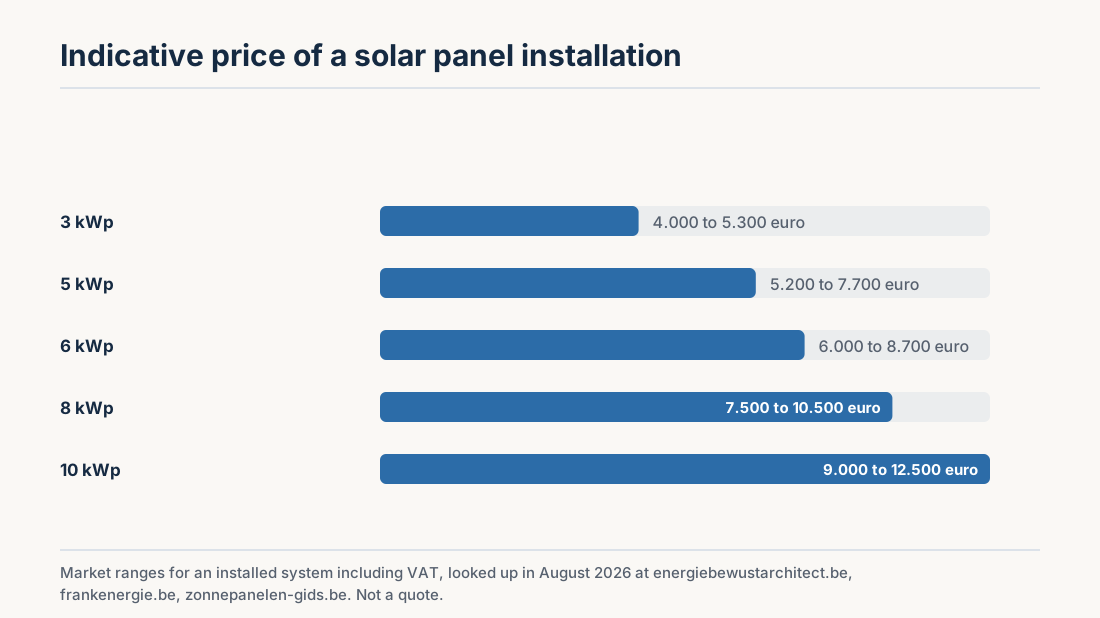
The price of Trina Solar panels generally falls within the low to mid-price range, contributing to their widespread popularity. You pay less per watt compared to premium brands while retaining strong performance.
Typical system costs include:
- Small system (4 - 5 kWp): €5,200 - €7,700 incl. VAT
- Medium system (6 - 8 kWp): €7,500 - €10,500 incl. VAT
- Large system (10 kWp+): €9,000 - €12,500 incl. VAT
Example calculation for a typical installation
For a 10-panel system using 420W panels, costs add up as follows:
- 10 panels × €220 = €2,200
- Inverter cost = €1,200
- Mounting system = €600
- Installation = €2,000
- Total = €6,000 incl. VAT
This total cost aligns with a full residential solar panel system and provides a clear picture of investment requirements.
What maintenance do Trina Solar panels require?
Trina Solar panels need little maintenance due to their durable construction and protective coatings. Basic cleaning and regular monitoring keep the system operating efficiently.
How often should you maintain the panels?
You should follow a straightforward maintenance schedule:
- Annual inspection for dirt accumulation and shading issues
- Cleaning every 1 to 2 years, depending on environmental conditions
- Monitor performance using inverter apps or remote monitoring software
Do dual-glass panels reduce maintenance needs?
Yes, dual-glass panels better resist moisture and degradation than traditional backsheet models. This durability reduces risks of water damage and microcracks over time.
Which roof types and situations suit Trina Solar panels best?
Trina Solar panels adapt well to a variety of residential and commercial installations, thanks to flexible sizing options and high output ratings.
Where do these panels perform most effectively?
Key application scenarios include:
- Pitched roofs with limited space benefit from the panels’ high efficiency
- Flat roofs achieve additional energy gain through bifacial modules
- Large-scale installations profit from high wattage panels rated above 500W
For accurate system sizing, consider using solar panel sizing guidance.
Are Trina panels effective in low-light conditions?
Yes, user feedback indicates stable energy production during cloudy days. These panels typically begin generating power earlier in the morning due to their lower voltage thresholds.
What should you look for when ordering Trina Solar panels?
Choosing the right Trina panel depends on your specific roof, budget, and energy consumption goals.
Which specifications are most important?
Pay attention to the following:
- Efficiency above 20% for limited rooftop space
- Warranty coverage lasting at least 15 years for product assurance
- Cell type, such as N-type TOPCon, for extended panel lifespan
- Physical panel dimensions compatible with your roof layout
Where are Trina Solar panels manufactured?
Trina Solar primarily manufactures its panels in China, with additional production in Vietnam and Thailand. This extensive global network supports competitive pricing and volume supply.
For installation, it is advisable to compare options using professional solar panel quotes to find the best match for your home and needs.
Are Trina Solar panels good and what are the real complaints?
Trina Solar panels offer reliable performance, robust warranties, and excellent value for the cost.
What do user reviews say?
Reviews from sources including Reddit and installer feedback show most users experience stable energy output and minimal issues over several years. Thousands of positive ratings - mostly 4 and 5 stars - confirm customer satisfaction.
What are the common complaints?
Some concerns reported include:
- Efficiency slightly lower than premium brands
- Quality issues in products manufactured between 2011 and 2014
- Sensitivity to shading when connected in string configurations
These issues are largely resolved in current product lines, and Trina panels now demonstrate strong reliability as confirmed by independent tests, such as PVEL performance scorecards.
Selecting solar panels requires weighing price, performance, and durability. Trina Solar stands out by offering advanced technology and high efficiency at a lower cost than premium brands, making it a practical option for many households. To proceed confidently, compare quotes from several installers and seek personalized advice through Soleva to ensure you choose the best system for your roof and energy needs.
Frequently Asked Questions
Is Trina Solar a Chinese company?
Yes, Trina Solar was founded in 1997 and is headquartered in Changzhou, China. The company operates globally with manufacturing facilities in China, Vietnam, and Thailand. It holds a Tier 1 manufacturer rating, which signifies financial stability and large-scale production capability in addition to product quality.
Which solar panels are considered the best 5 on the market?
The top solar panels often feature high efficiencies using advanced technologies like TOPCon or HJT cells. Trina Solar panels rank highly for value due to their efficiency and competitive prices. The best choice depends on your roof size, budget, and energy output goals rather than brand ranking alone.
What price difference should you expect between Trina and premium solar panels?
Trina panels generally cost 20% to 30% less than premium solar panels. This price reduction comes with only a modest efficiency trade-off, making Trina panels more cost-effective and delivering better returns for most homeowners.
How long do Trina Solar panels last in real-world use?
Based on warranty terms and degradation rates, Trina Solar panels last between 25 and 30 years. Newer models degrade at approximately 0.4% per year, enabling them to maintain over 85% of their initial output after many years, ensuring consistent energy production.
Is a Trina Solar panels review from 2021 still relevant today?
Reviews from 2021 provide useful background, but newer Trina models have made significant improvements. These include higher efficiencies, longer warranties, and lower degradation due to technologies like N-type TOPCon. To make the best decision, focus on the most recent product generations.
Indicative prices for the Belgian market, checked in August 2026 against energy-village.be, thuisbatterij.be and zen-zonne-energie.be. These are market ranges for an installed system including VAT, not a quotation: your price depends on capacity, brand and the state of your existing installation.
Read also
Ready to cut your energy bill?
Compare quotes for solar panels, home batteries and charging points.