Solar panels Belgium
Fronius inverter: price and review
Converting the direct current from solar panels into usable alternating current, a Fronius inverter achieves efficiencies up to 98.1%, significantly boosting your energy yield. Models like the Fronius inverter GEN24 are popular in homes with or without battery storage, particularly where maximizing self-consumption is important.
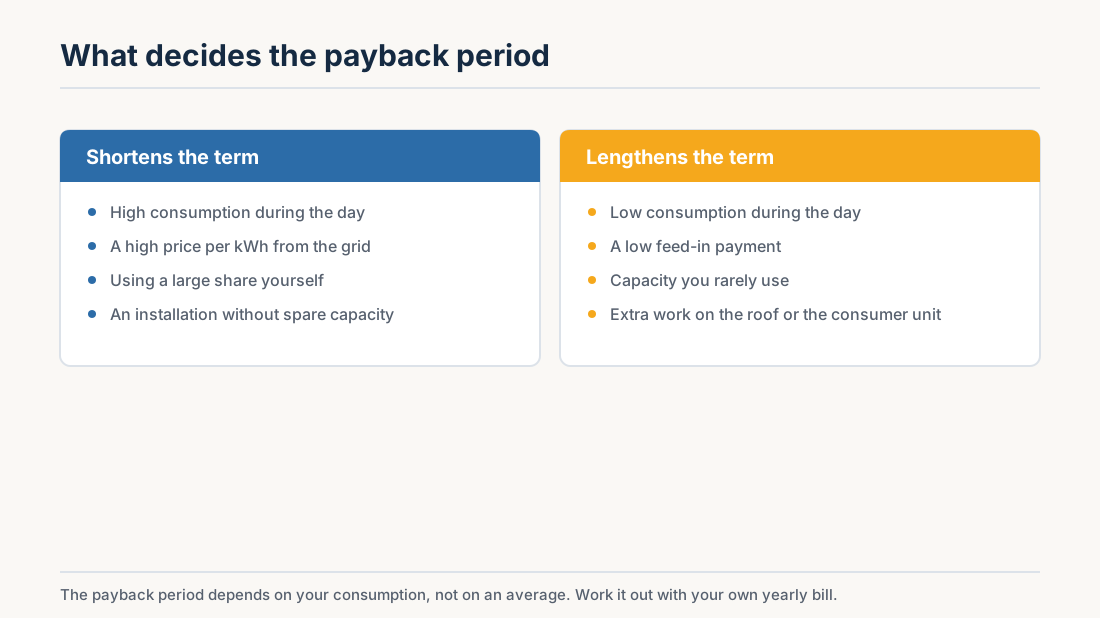
In regions equipped with digital meters, systems featuring smart monitoring can increase self-consumption by around 12%, enhancing your return on investment.
How exactly does a Fronius inverter work?
A Fronius inverter transforms DC electricity generated by solar panels into AC electricity suitable for household use and grid export. It manages energy flows between your panels, home, and optionally a battery system.
The inverter serves as the control center of your solar installation. It regulates voltage, continuously tracks maximum power points, and communicates with monitoring software. Without this essential conversion, your electrical appliances cannot utilize solar energy.
What is MPPT and why is it important?
Maximum Power Point Tracking (MPPT) dynamically adjusts voltage and current to extract maximum power from your panels. Fronius maintains stable MPPT ranges, preventing performance losses during fluctuating sunlight conditions.
How does monitoring enhance performance?
The Fronius Solar.web platform offers real-time information on energy production, consumption, and system status. Access to this data helps you identify faults early and adjust usage patterns for better efficiency. Many households report increased self-consumption after implementing monitoring tools.
To understand how this integrates with your overall system, consider exploring solar panel system basics for a comprehensive overview.
Which Fronius inverter models and technologies are available?
The most common Fronius inverter models include the Primo, Symo, and GEN24 series, each tailored to specific residential or commercial requirements.
The primary product groups consist of:
- Fronius Primo - single-phase inverter ideal for small residential systems
- Fronius Symo - three-phase inverter designed for larger homes or small commercial applications
- Fronius inverter GEN24 - hybrid-ready inverter supporting batteries and backup power
- GEN24 Plus - advanced hybrid inverter with integrated emergency power supply
What applications suit a Fronius inverter 5kW or 6kW?
A Fronius inverter 5kW or 6kW is suitable for households with annual electricity consumption between approximately 4,000 and 6,000 kWh. These inverter sizes commonly match typical residential solar system capacities and offer a balance between cost and efficiency.
When is a Fronius inverter 10kW necessary?
A Fronius inverter 10kW serves larger homes, electric vehicle charging stations, or small commercial installations. It accommodates higher panel capacities and allows room for future system expansion.
For more detailed comparisons of system sizes, review different solar panel capacities.
What is the price range for a Fronius inverter?
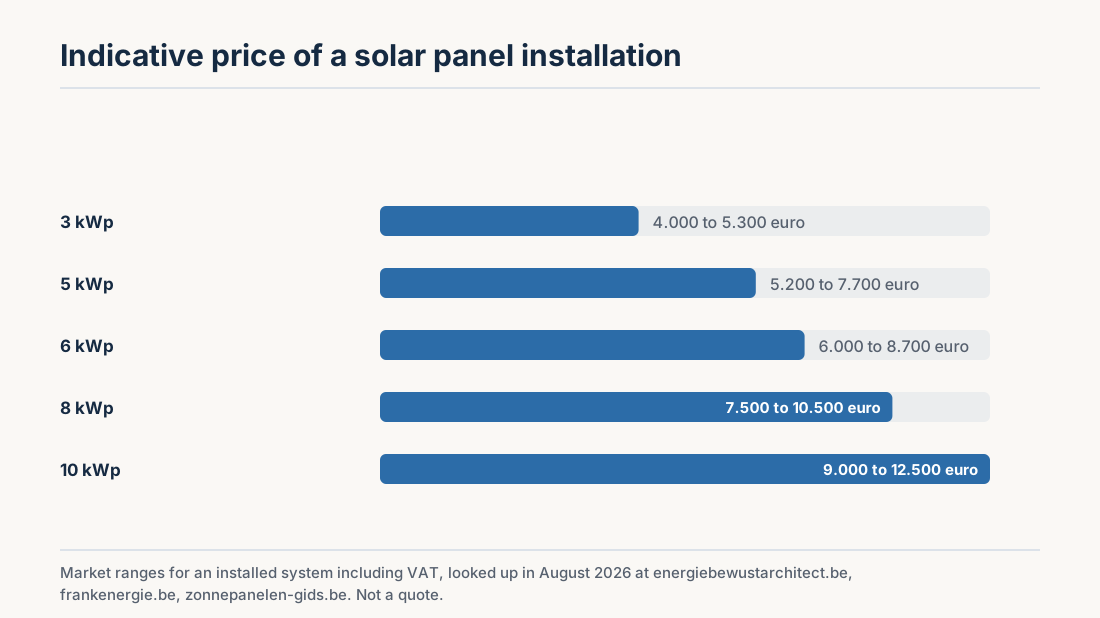
The Fronius inverter price varies from approximately €1,000 to €3,500 incl. VAT, depending on power output, phase configuration, and hybrid capabilities.
Typical price ranges by inverter size are:
- 3 kW - €1,000 - €1,500
- 5 kW - €1,500 - €2,200
- 6 kW - €1,800 - €2,500
- 10 kW - €2,500 - €3,500
Calculation example for a complete solar system
Consider a solar installation featuring 10 panels paired with a 5 kW Fronius inverter:
- Solar panels: 10 × €300 = €3,000
- Fronius inverter 5kW: €1,800
- Mounting system: €700
- Installation costs: €2,000
- Total approximate cost: €7,500 incl. VAT
For a detailed breakdown of solar installation expenses, see complete solar installation costs.
In which situations is a Fronius inverter the best choice?
Fronius inverters perform best in solar systems that emphasize maximizing self-consumption and implementing advanced energy management.
They are particularly advantageous in these scenarios:
- Homes equipped with digital meters and dynamic electricity tariffs
- Solar systems paired with battery storage
- Roof installations experiencing partial shading
- Users seeking comprehensive monitoring and energy analytics
Why is hybrid functionality important?
The hybrid design of the Fronius inverter GEN24 enables direct integration with battery storage. This feature enhances energy independence and minimizes reliance on the grid.
How does shade management optimize energy output?
Fronius inverters incorporate dynamic shade optimization, which prevents losses when some panels receive less sunlight. This technology ensures more consistent energy production throughout the day.
To explore combining this with storage options, consider a solar system with battery setup.
What are the advantages and disadvantages of a Fronius inverter?
Fronius inverters offer noteworthy benefits, including high efficiency, advanced monitoring tools, and dependable European manufacturing. However, the upfront price tends to be higher compared to entry-level alternatives.
A distinguishing feature is the strong balance between performance and control. The monitoring interfaces and energy insights exceed typical standards, aiding optimal system operation.
The main drawback is the relatively greater initial investment. Nevertheless, the long-term reliability and support often justify this expense.
Are Fronius inverters reliable?
Yes, Fronius inverters deliver efficiencies up to 98.1% and exhibit strong reliability. Their modular designs also achieve recycling rates up to 95%, contributing to environmental sustainability.
Is Fronius an Austrian or German brand?
Fronius is an Austrian company with manufacturing facilities in Europe. This origin ensures rigorous quality standards and compliance with EU regulations.
How does a Fronius inverter compare to other inverter types?
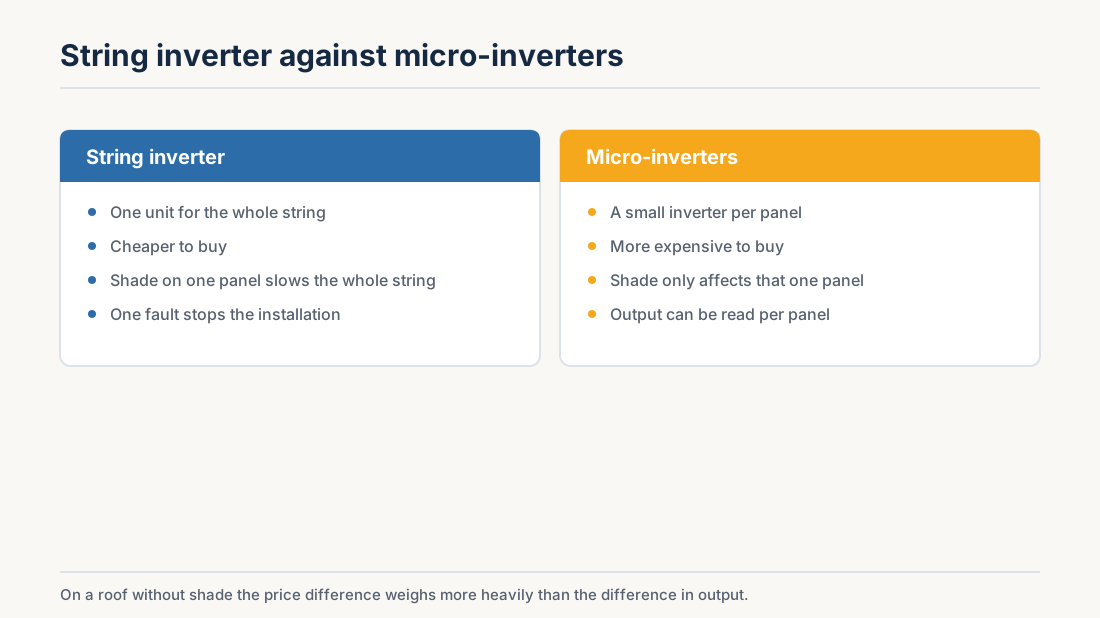
Fronius inverters excel as string or hybrid inverters for uniform roof installations, while alternative inverter types may suit different situations.
Key differences include:
- String inverter - efficient for uniform roofs and generally lower cost
- Hybrid inverter - facilitates battery storage integration
- Micro inverter - better suits complex shading or irregular layouts
Is Fronius superior to Sungrow?
Fronius stands out with superior monitoring and European manufacturing quality. Sungrow tends to offer more competitive initial pricing. Choosing between them depends on whether you value long-term reliability or lower upfront costs most.
What are the top inverter categories?
Common inverter categories include string, hybrid, micro, central, and battery inverters. Fronius is recognized for excellence in both hybrid and string inverter segments due to system integration and monitoring capabilities.
If you need to evaluate system options, examine solar energy system options for more details.
Selecting the right inverter depends on your specific energy usage, system dimensions, and plans for future growth. Fronius stands out with its high efficiency, advanced monitoring features, and hybrid versatility, particularly if you intend to add battery storage later. Focus on proper sizing and ensure careful integration within your solar system. Using Soleva, you can compare options and request personalized quotes to identify the ideal configuration for your needs.
Frequently Asked Questions
What is the price of a Fronius inverter 5kW system?
A comprehensive system featuring a Fronius inverter 5kW generally costs between €5,500 and €7,500 incl. VAT. The final amount depends on panel brand, installation complexity, and mounting design. Including a battery storage system increases the total price but enhances energy self-sufficiency.
Is the Fronius inverter GEN24 worth the investment?
The Fronius inverter GEN24 is a valuable choice if you prefer flexibility. It accommodates battery integration, provides backup power, and offers advanced monitoring options. This inverter suits homes planning future system upgrades, especially where higher self-consumption rates are financially beneficial.
How do you install a Fronius inverter safely?
Professional installation by a certified electrician is necessary because the inverter connects to high-voltage DC and AC components. Proper grounding, adequate ventilation, and adherence to electrical codes are essential to avoid safety hazards and ensure optimal performance.
What factors influence the price of a Fronius inverter 10kW?
Pricing for a Fronius inverter 10kW depends on attributes such as single-phase or three-phase compatibility, hybrid functionality, and included monitoring features. Additional costs arise from installation complexity, cabling, and any required electrical upgrades. Larger systems typically demand more labor, increasing expenses.
Can you monitor energy production and consumption with a Fronius inverter?
Yes, one of the strongest advantages of Fronius inverters is comprehensive monitoring. The Solar.web platform tracks production, consumption, and system health in real time. When paired with a smart meter, it provides detailed insights into household energy use, enabling you to optimize consumption and reduce electricity costs.
Indicative prices for the Belgian market, checked in August 2026 against energy-village.be, thuisbatterij.be and zen-zonne-energie.be. These are market ranges for an installed system including VAT, not a quotation: your price depends on capacity, brand and the state of your existing installation.
Read also
Ready to cut your energy bill?
Compare quotes for solar panels, home batteries and charging points.