Solar panels Belgium
Hyundai solar panels: price and review
A review of Hyundai solar panels reveals efficiencies ranging from 19.2% to 22.53%, along with reliable long-term performance suitable for residential energy systems. These panels include monocrystalline and bifacial models, such as 400W and 440W variants, which maintain stable energy output even under cloudy conditions.
Hyundai Energy Solutions offers advanced cell technologies combined with a 25-year warranty, positioning these solar panels within the mid-to-premium market segment.
What features make Hyundai solar panels effective for solar energy?
Hyundai solar panels deliver above-average efficiency, consistent output in low-light situations, and long-lasting durability. They utilize monocrystalline PERC, half-cut, and shingled cell technologies, which minimize energy loss and improve performance when shading occurs.
Key performance attributes include:
- Efficiency ranging from 19.2% to 22.53%
- Power output spanning 350W to 440W+
- Temperature coefficient approximately -0.347% per °C
- Performance ratio between 86% and 89%
How do Hyundai solar panels perform in low-light conditions?
Hyundai panels maintain strong performance even during cloudy or overcast days due to enhanced light absorption by PERC and shingled cells. This ability significantly benefits regions with annual yields between 900 and 1,100 kWh per kWp. The consistent energy output in such conditions compares favorably to standard panel alternatives.
What insights do consumer reports provide in Hyundai solar panels reviews?
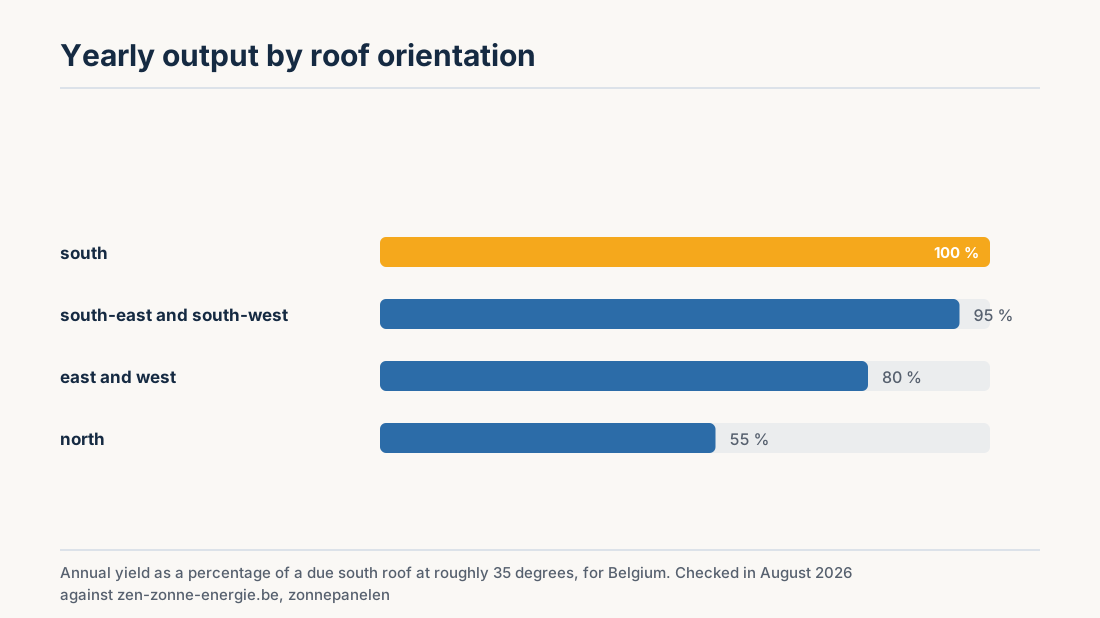
Consumer reviews consistently highlight Hyundai solar panels’ reliability, steady energy production, and robust warranties. Many users report dependable daily performance, including effective operation for installations oriented east-west. Some feedback notes that availability depends on regional installers, which may limit choices in certain areas.
What does Reddit feedback reveal about Hyundai solar panels?
Discussions on Reddit often describe Hyundai solar panels as a ‘value premium’ option. Users appreciate competitive pricing and solid build quality. While not always the top choice, these panels tend to perform well once installed and receive positive attention for balancing quality and cost.
For a comprehensive understanding of solar panel functionality within a system, you can visit how solar panels work.
How do Hyundai solar panels compare with alternatives like Jinko?
Comparing Hyundai solar panels against Jinko models reveals that Hyundai emphasizes durability and strong warranties, whereas competitors often focus on offering higher wattage at lower prices.
The table below summarizes the essential differences:
| Criteria | Hyundai | Typical Alternative |
|---|---|---|
| Efficiency | 19.2% - 22.53% | 18% - 22% |
| Warranty | 25 years product | 10 - 25 years |
| Temperature coefficient | -0.347% per °C | -0.3% to -0.5% |
| Technology | PERC, shingled, bifacial | Mostly PERC |
In what situations do Hyundai panels provide the most benefit?
Hyundai panels are well suited for homes with limited roof space since their high efficiency allows a greater power output per square meter. Their shingled cell design also enhances performance for shaded rooftops.
When might Hyundai panels not be the best option?
If your main goal is to minimize the initial price per watt, Hyundai panels may not be the optimal choice. Some alternatives offer more affordable entry-level systems but typically with shorter warranty periods.
What is the typical price range for Hyundai solar panels?
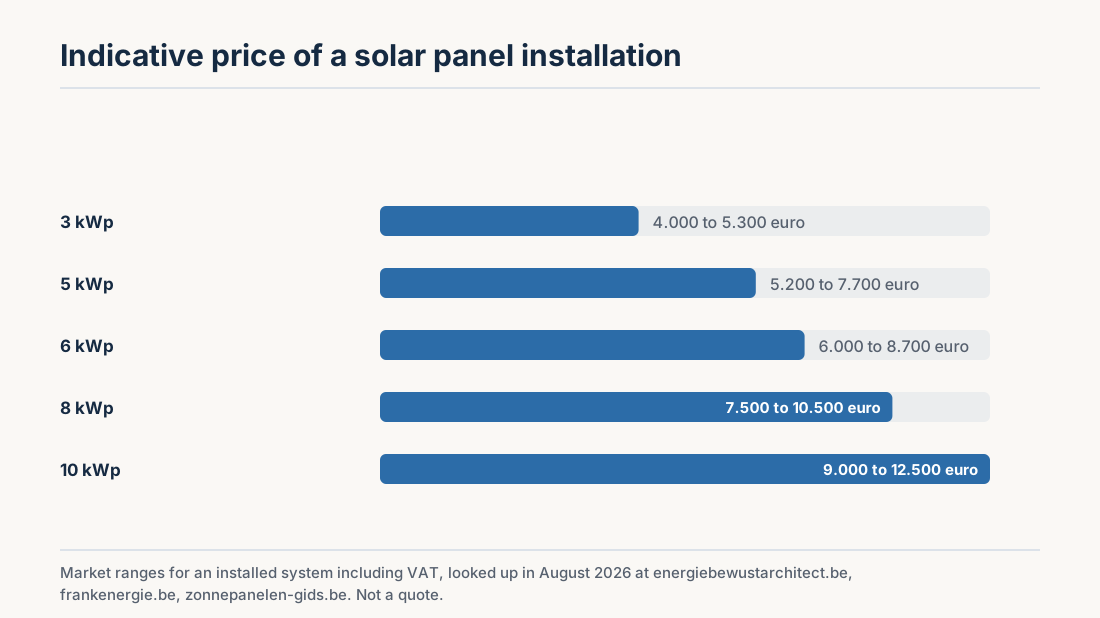
The pricing for Hyundai solar panels generally aligns with the market average and varies based on system size and installation requirements.
Common system price ranges include:
- Small 4 kWp system: €4,500 - €6,500 incl. VAT
- Medium 6 kWp system: €6,000 - €8,700 incl. VAT
- Large 10 kWp system: €9,000 - €12,500 incl. VAT
Can you provide a detailed cost breakdown for a Hyundai system?
For example, a 10-panel setup featuring Hyundai 410W solar panels might cost:
- 10 panels × €220 = €2,200
- Inverter = €1,200
- Mounting system = €600
- Installation = €2,000
- Total = €6,000 incl. VAT
Final costs may vary depending on roof type and installation complexity, paralleling the pricing framework of a complete solar panel system.
How should you maintain Hyundai solar panels?
Hyundai solar panels are designed for minimal maintenance due to their durable glass and corrosion-resistant materials. Performing routine cleaning and system monitoring helps preserve consistent performance.
What maintenance schedule is recommended?
- Inspect cables and mounting structures annually
- Clean panels every 1 to 2 years
- Monitor system performance using the inverter’s app
How does panel degradation influence long-term performance?
These panels degrade at about 0.54% per year. After 25 years, they typically retain around 85% of their initial output, slightly better than average, and the extensive warranty supports this longevity.
Which types of roofs and installations are best for Hyundai panels?
Hyundai solar panels accommodate pitched roofs, flat roofs, and ground-mounted arrays depending on the model selected. For instance, the XG series suits conventional rooftop installations, while bifacial YH panels excel on reflective surfaces.
Why might you choose Hyundai 440W solar panels?
Panels with a 440W rating are ideal when roof space is limited, as their higher wattage reduces the number of panels required to meet energy needs.
Are bifacial panels beneficial for residential use?
Bifacial panels can produce up to 19% more energy on reflective surfaces such as flat roofs or carports. For standard sloped roofs, their added benefit tends to be modest.
What specifications should you focus on in a Hyundai solar panels spec sheet?
A typical spec sheet for Hyundai solar panels highlights efficiency, wattage, temperature coefficient, and warranty duration, which collectively indicate expected long-term performance.
Which specifications are most critical?
- Efficiency above 20%
- Power ratings like the 400W Hyundai solar panels
- Temperature coefficient better than -0.4%
- Warranty coverage extending 25 years
Is Hyundai classified as a Tier 1 solar panel manufacturer?
Yes, Hyundai is a Tier 1 brand, indicating strong financial stability and manufacturing scale, as recognized by major financial institutions.
Where are Hyundai solar panels produced?
Production takes place in certified facilities across Asia, including China and South Korea, adhering to UL and VDE testing standards.
Hyundai solar panels offer an excellent combination of efficiency, durability, and comprehensive warranty coverage. They provide dependable energy output in both sunny and cloudy conditions, ensuring predictable long-term performance. The key to maximizing benefits is selecting panels that match your roof type and energy requirements. To make an informed choice, start by comparing available system sizes and obtain multiple quotes through a trusted provider such as Soleva. Taking these steps will help you find the most suitable Hyundai solar panel configuration for your home’s needs.
Frequently Asked Questions
How much do Hyundai solar panels cost per panel?
The cost of a single Hyundai solar panel typically ranges from €150 to €300 incl. VAT, depending on the model and wattage. Higher wattage panels, like the 440W models, are priced at the upper range. Note that installation, inverters, and mounting hardware will increase the total system cost beyond the price of individual panels.
Which brand offers the best quality solar panels?
The best quality solar panels exhibit high efficiency, slow degradation, and strong warranty protection. Hyundai ranks highly in these areas due to its 25-year warranty and reliable performance metrics. While some premium brands achieve slightly higher efficiency, Hyundai provides a reliable balance between quality and price for most residential solar installations.
How does a Hyundai solar panels review compare with actual user experiences?
Reviews of Hyundai solar panels align closely with homeowner feedback, emphasizing consistent energy production and dependability. Many users praise the panels for maintaining solid performance in cloudy climates and sustaining long-term output. Most negative remarks relate to limited availability rather than technical issues, confirming the brand’s overall quality.
Are Hyundai solar panels suitable for cloudy climates?
Yes, Hyundai panels perform well in cloudy environments due to their PERC and shingled cell technologies, which enhance energy capture during low-light conditions. This improved efficiency results in more consistent daily energy yields, benefiting homes in areas with frequent cloud cover compared to standard solar panels.
What is the price difference between Hyundai 400W and 440W panels?
The price difference between 400W and 440W Hyundai panels usually ranges from €20 to €50 per panel. Although higher wattage panels have higher upfront costs, they reduce the number of panels and installation complexity required, often making the overall system more cost-effective in the long run.
Indicative prices for the Belgian market, checked in August 2026 against energy-village.be, thuisbatterij.be and zen-zonne-energie.be. These are market ranges for an installed system including VAT, not a quotation: your price depends on capacity, brand and the state of your existing installation.
Read also
Ready to cut your energy bill?
Compare quotes for solar panels, home batteries and charging points.