Solar panels Belgium
solar panels for business belgium price & options
Installing solar panels for business Belgium reduces your electricity costs and helps your company comply with the new energy regulations mandating renewable energy use. The price of solar panels for business Belgium mainly depends on the size of the system and the type of installation, while financing options like free solar panels for business Belgium can lower your initial investment.
What is the price of solar panels for businesses in Belgium?
The price for solar panels for business Belgium ranges from €50,000 to over €500,000 including VAT, depending on system size, roof area, and energy needs. Small and medium enterprises typically install systems around 30 kWp, while industrial sites can exceed 500 kWp.
Below is a typical price overview for business installations:
- 30 kWp system: €50,000 - €70,000 including VAT
- 100 kWp system: €120,000 - €180,000 including VAT
- 500 kWp system: €450,000 - €650,000 including VAT
Which factors mostly influence the price?
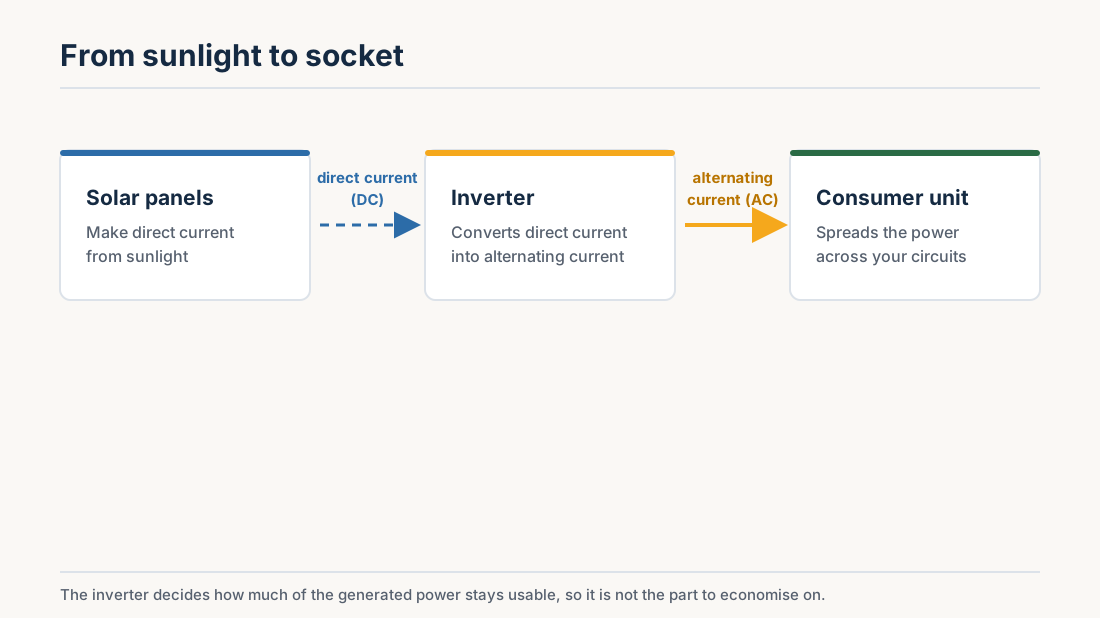
The cost of solar panels for business Belgium depends on the installation scale, inverter selection, and mounting system. Flat roofs generally use ballasted mounting, while ground installations require extra land preparation. Additional costs come from monitoring systems and grid connection upgrades.
How does a commercial system cost breakdown look?
For example, a 100 kWp system for a logistics company includes:
- Solar panels: €90,000
- Inverters: €15,000
- Mounting system: €10,000
- Installation and labor: €25,000
- Monitoring system: €5,000
The total investment amounts to approximately €145,000 including VAT. With energy savings, most businesses recover this investment within 4 to 7 years.
For a detailed understanding of how each component impacts costs, visit our solar panel system overview.
How do solar panels help businesses save money in Belgium?
Solar panels lower electricity expenses by generating on-site energy and reducing dependency on the grid. Although Belgian businesses consume over 50% of electricity, they produce less than 20% of solar energy, presenting a significant opportunity for cost savings.
What financial advantages can companies expect?
- Reduced electricity bills through increased self-consumption
- Protection against rising energy prices
- Predictable long-term energy costs
- Improved return on investment over the 25 to 30-year lifespan of solar systems
How does the return on investment work for businesses?
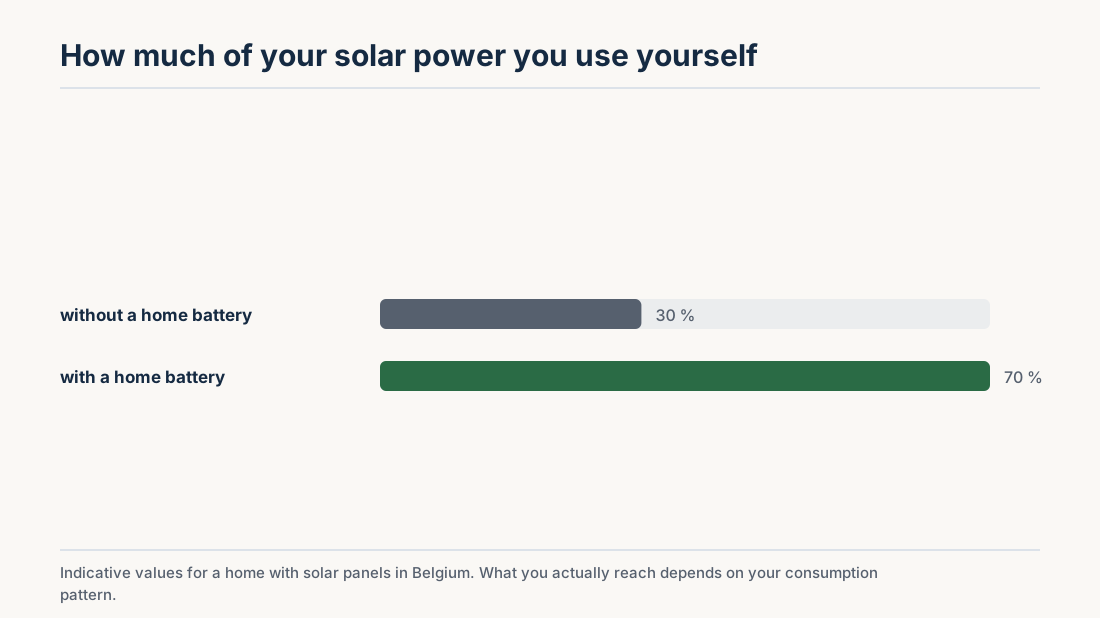
The ROI depends on when your company consumes electricity. Businesses that use most of their power during daylight hours achieve higher self-consumption and faster payback. Continuous operations benefit especially because nearly all generated solar energy is used directly onsite.
Can solar panels improve energy independence?
Yes, solar panels reduce your reliance on the electricity grid, stabilizing your operational costs and shielding your business from market fluctuations. Additionally, adopting solar energy enhances your company’s sustainability profile, improving brand reputation.
Learn more about how solar panels generate electricity in our solar energy guide.
Which system types are best suited for businesses in Belgium?
The optimal solar panels for business Belgium depend on your available space and energy demand. Companies commonly select from rooftop, ground-mounted, and hybrid systems.
What installation types are available?
- Rooftop systems, ideal for warehouses and offices
- Ground-mounted systems, suitable for large land spaces
- Solar carports that combine energy generation with EV charging stations
- Floating or specialized installations for unique locations
When should you choose each type?
Rooftop installations are best for companies with large, flat roofs exceeding 500 m². Ground-mounted systems are preferable when roof space is insufficient. Solar carports offer dual benefits by providing shade and supporting electric vehicle infrastructure.
How do batteries enhance system performance?
Battery storage stores surplus solar energy for use during non-sunny periods, boosting self-consumption and reducing peak grid demand. Businesses with variable electricity needs gain the most from integrating batteries into their solar systems.
For guidance on sizing your system, see our article on how many panels you need.
Which regulations affect businesses installing solar panels in Belgium?
Belgian regulations require companies with annual electricity consumption over 1,000 MWh to install solar panels or equivalent renewable systems covering a minimum of 10% of their roof area starting April 2026.
What are the main compliance requirements?
- Minimum eligible roof size is 500 m²
- Renewable generation share starts at 10% and rises to 15% by 2030
- Further increases to 20% in later years
- Penalties apply for failure to comply
Are there alternative compliance options?
Yes, companies may opt for ground-mounted solar installations, solar thermal systems, or hybrid energy solutions. Third-party financing models offer ways to comply without upfront capital investment.
How do smart meters support solar energy use?
Dual-flow smart meters measure both electricity production and consumption, aiding in managing self-consumption and improving grid integration. These smart meters are paired with digital monitoring solutions to optimize energy use.
How do subsidies and financing options assist businesses in Belgium?
Belgium offers tax deductions and alternative financing options for businesses investing in solar energy. The term free solar panels for business Belgium often relates to third-party financing models.
Which financing models are available?
- Direct purchase with full asset ownership
- Leasing agreements and energy service contracts
- Third-party investment schemes with no upfront costs
How does third-party financing function?
An external investor installs and owns the solar system, while your business buys electricity at a fixed, below-market price. After the contract ends, ownership transfers to your company.
What tax incentives and subsidies can businesses access?
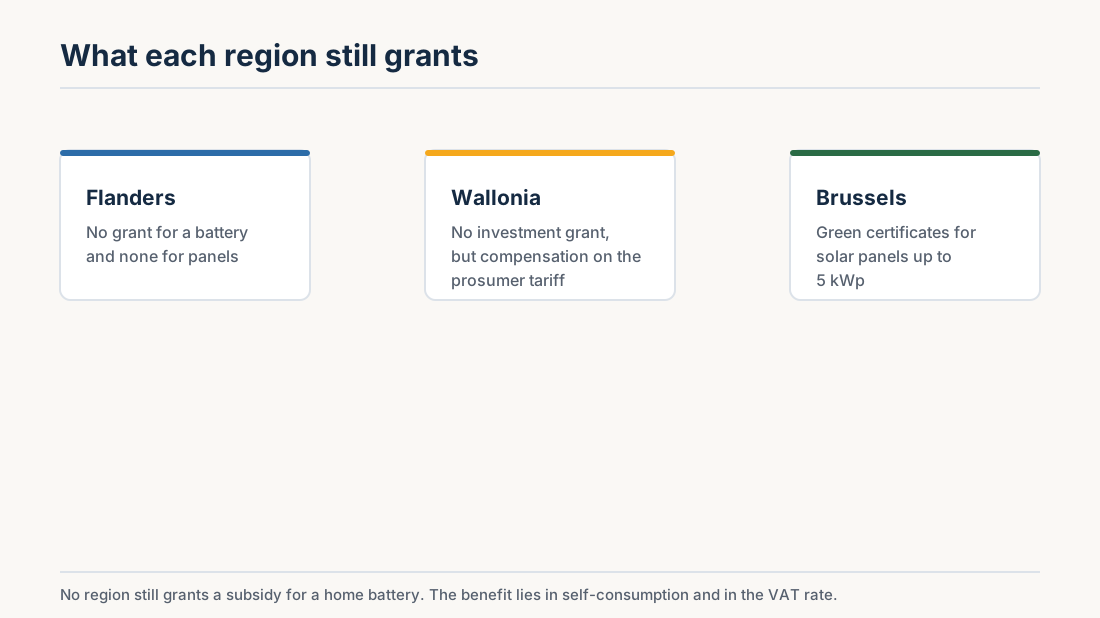
Eligible businesses benefit from investment deductions and reduced VAT rates under certain conditions. Subsidies differ by region and project type. To explore available financial incentives, review our page on solar subsidies in Belgium.
For personalized offers, request a free solar quote through Soleva to compare available financing options.
Investing in solar panels allows your business to control energy expenses while meeting regulatory requirements. The most significant factors affecting your savings and payback period include system size and your electricity consumption profile. Begin with a technical evaluation of your roof and energy use, then compare at least three offers. Using Soleva connects you with verified professionals and transparent quotes, helping you proceed with confidence toward renewable energy adoption.
Frequently Asked Questions
What is the price of solar panels for business Belgium for small enterprises?
Solar panels for small businesses usually cost between €50,000 and €100,000 including VAT for systems sized around 30 to 50 kWp. The final cost varies based on roof structure, inverter choice, and installation complexity. Companies consuming more power during the day experience quicker payback from higher self-consumption.
How does the free solar panels for business Belgium model operate?
Free solar panels for business Belgium involves third-party financing where an investor installs the system at no upfront cost to your company. Your business then pays for the generated electricity under a fixed agreement. This setup minimizes financial risk and enables access to solar energy without capital expenditure.
What is the price difference between rooftop and ground-mounted solar systems?
Rooftop solar systems generally have lower costs because they utilize existing building structures. Ground-mounted systems involve extra expenses for materials and land preparation, but they offer more flexibility in orientation and scale, benefiting larger industrial operations.
Are solar panels mandatory for businesses in Belgium?
Yes, Flemish regulations require large businesses with high electricity consumption to install renewable energy systems. These companies must cover a set percentage of their roof area with solar panels or alternative systems. The requirements will become more stringent over time, so early installation is advantageous financially and operationally.
How does adding a battery affect the price of a business solar system?
Including a battery increases the total investment but enhances self-consumption and reduces peak demand charges. Pricing depends on battery size and integration complexity. Businesses with fluctuating electricity consumption benefit most by storing excess energy and lowering grid reliance during peak hours.
Indicative prices for the Belgian market, checked in August 2026 against energy-village.be, thuisbatterij.be and zen-zonne-energie.be. These are market ranges for an installed system including VAT, not a quotation: your price depends on capacity, brand and the state of your existing installation.
Read also
Ready to cut your energy bill?
Compare quotes for solar panels, home batteries and charging points.