Solar panels Belgium
solar panels EV charging guide and price
Using solar panels for EV charging generates electricity from sunlight to power your electric vehicle either directly or through your home energy system. A typical setup includes photovoltaic panels, an inverter that converts DC into AC electricity, and often a home battery to efficiently manage energy flow. Many households install 8 to 12 panels to cover their daily driving needs, while smart charging and storage options enhance flexibility.
How exactly does solar EV charging work?
Solar EV charging converts sunlight into electricity that powers your electric vehicle through an inverter and a charging station integrated with your home. Photovoltaic panels generate direct current (DC), which the inverter transforms into alternating current (AC) needed for household devices and EV chargers. The system prioritizes your home’s energy needs before channeling electricity to the vehicle.
This section describes the flow of energy, key system components, and smart controls that optimize charging efficiency.
Can an EV be charged directly from solar panels?
An EV cannot charge directly from solar panels without conversion. Solar panels produce DC electricity, but EV chargers and home systems use AC power. The inverter performs this conversion and stabilizes the voltage. Without it, charging would be unsafe and incompatible with the vehicle’s requirements.
What components make up a solar EV charger system?
A complete solar EV charging system consists of several key elements working together safely and efficiently.
- Solar panels - capture sunlight to produce electricity
- Inverter - converts DC electricity to AC for home and EV charging
- EV charging station - delivers power to your electric vehicle
- Smart or CT meter - tracks and controls energy flow
- Home battery - stores excess solar energy for later use
Learn more about system options on the solar panels overview page.
Which EV chargers are compatible with solar panels?
Most Level 2 EV chargers integrate efficiently with solar panel systems because they use the household’s AC electricity. Level 1 chargers also function but charge at a slower rate. Level 3 fast chargers require specialized high-voltage connections and typically are unsuitable for residential solar setups.
Can solar panels fully charge an electric car?
Solar panels can fully charge an electric car if your system produces enough electricity to meet your driving needs. A residential solar installation commonly generates several thousand kWh annually, which often covers the energy consumption of an EV.
This section examines the feasibility of full solar charging, seasonal impacts, and practical performance data.
How long does charging an EV with solar panels take?
Charging duration depends on your EV’s battery size, the solar system’s output, and available sunlight hours. For example, a 40 kWh battery paired with a 4 kW solar setup typically requires about 10 hours of strong sunlight to fully charge. Less sunlight extends this time across several days.
What factors limit full solar EV charging?
Several factors affect how much of your EV’s energy comes from solar panels:
- Seasonal sunlight changes
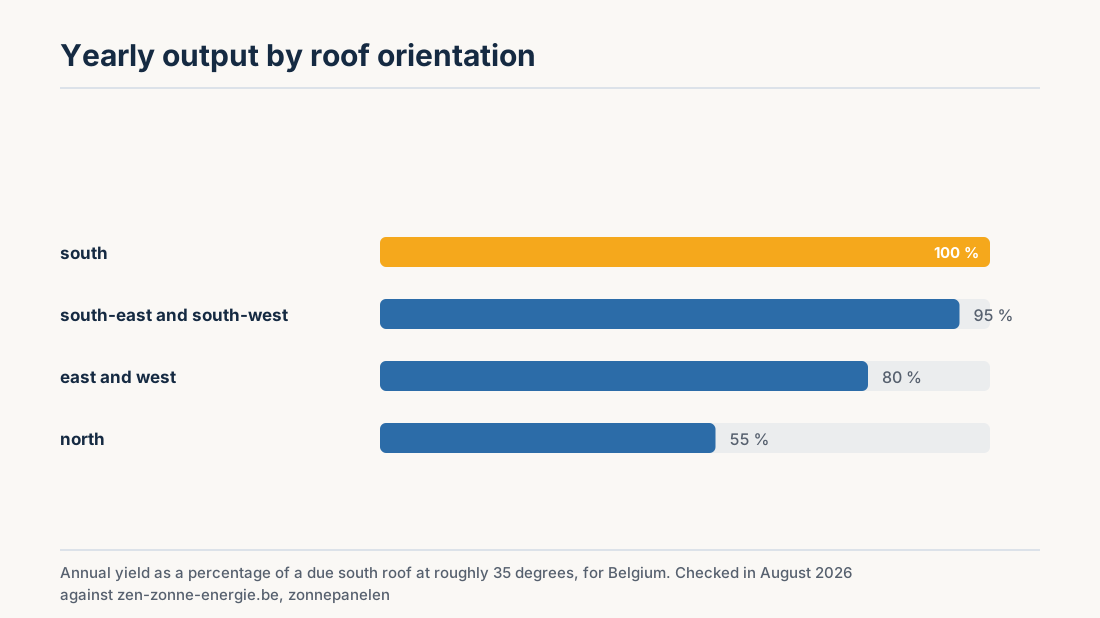
- Roof orientation and shading
- Daily driving distance
- System size and wiring efficiency
During winter or high-demand periods, solar energy often requires supplementation from the grid.
How many solar panels do you need to charge an EV?
Typically, installing between 8 and 12 solar panels supports regular EV charging needs. The exact number varies based on your daily driving distance, vehicle efficiency, and the output of panels.
This section outlines calculation methods with examples.
Example of calculating daily panel requirements
Consider this practical calculation:
- Daily driving distance: 40 km
- Energy consumption: 0.25 kWh per km
- Total daily energy need: 10 kWh
- Solar panel output: 1 kWh per panel per day
- Required panels: about 10 panels
What is the 20% rule for panel installation?
The 20% rule suggests installing extra panels to counter inefficiencies and seasonal changes. For example, if you calculate 10 panels, installing 12 improves reliability and lowers grid dependency. You can use the panel requirement guide to get custom estimates tailored to your location and habits.
What costs are associated with solar panels EV charging?
The total cost for a solar EV charging system typically ranges from €5,000 to €15,000 incl. VAT, depending on system size, charger choice, and storage options. Larger systems that include batteries require a higher upfront investment but offer greater energy independence and savings in the long run.
Typical cost brackets are:
- Small systems (8 panels plus charger): €4,200 - €5,800
- Medium systems (12 panels plus charger): €5,000 - €7,500
- Large systems (16 panels with battery and charger): €6,200 - €9,300
Detailed cost calculation for a typical setup
Here is an example cost breakdown for a full system:
- 12 solar panels: €4,800
- Inverter: €1,200
- EV charging station: €1,500
- Installation labor: €2,000
- Total: approximately €9,500 incl. VAT
Visit the solar panel price page for more detailed pricing comparisons and options.
In which situations does solar EV charging offer the most benefit?
Solar EV charging works best in households with steady daytime solar energy production and moderate daily driving distances. Homes that have adequate roof space with a south-facing orientation achieve optimal solar efficiency.
This section highlights ideal usage scenarios and alternative options.
Benefits of combining solar panels with home battery storage
A solar EV charging system paired with a home battery stores excess solar energy generated during the day for nighttime charging. This increases your self-consumption rate and further reduces reliance on the grid.
Off-grid and portable solar EV charging solutions
Off-grid solar EV chargers use independent panels and battery storage, while portable systems combine solar panels with power stations for mobility. These setups fit remote locations, travel, or emergencies but produce less power than fixed home installations.
What are the advantages and disadvantages of solar EV charging?
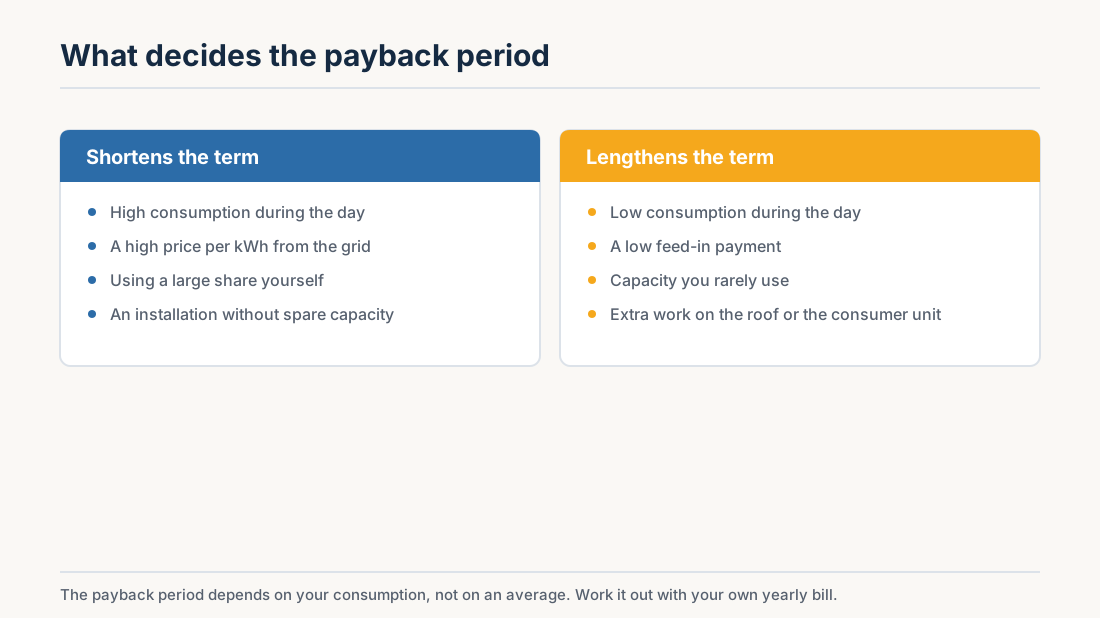
The primary benefits include reduced electricity bills and lower carbon emissions. Drawbacks involve initial costs and dependence on sunlight availability. This balanced overview explains key points.
Solar EV charging cuts fossil fuel consumption and supports low-emission driving. After installation, the electricity you generate is essentially free, decreasing long-term energy expenses.
However, the system’s effectiveness relies on sunlight. During winter months, production drops significantly, increasing the need for grid electricity. Moreover, the upfront installation cost demands a significant financial commitment.
When might solar EV charging not be the best choice?
Solar EV charging may not suit you if your roof lacks sufficient space, receives limited sunlight, or if your driving exceeds realistic solar production capacity. Apartments without roof access and properties with heavy shading often cannot generate enough solar energy.
In these situations, combining grid charging with renewable energy tariffs is more practical. Even a smaller solar system can reduce costs if partial solar use is an option.
Request a personalized evaluation with a free solar quote to check feasibility for your home.
Charging your electric vehicle using solar energy helps you lower electricity expenses and reduce emissions. The appropriate system depends on your roof’s size and orientation, your driving habits, and your budget. Typically, installing 8 to 12 solar panels satisfies most daily charging needs, while adding a battery offers extra flexibility. To make an informed decision, start with a tailored assessment and compare multiple offers through Soleva to find a setup that fits your usage and delivers lasting value.
Frequently Asked Questions
Can you use solar panels to charge an electric car without a battery?
Yes, your EV can charge directly from solar panels during daylight by sending electricity through an inverter to your charging station. Without a battery, however, excess energy is lost, and nighttime charging is impossible, which limits overall system flexibility and efficiency.
What is the price of a solar EV charger kit?
A solar EV charger kit costs typically between €1,000 and €3,000 incl. VAT, depending on its charging speed and smart features. This price excludes solar panels and installation. A full system with panels and inverter requires a higher initial investment but offers full energy independence.
How does smart charging improve solar EV charging efficiency?
Smart charging prioritizes solar energy when available and switches to grid or battery power as needed. Real-time data from meters and apps control charging speed and timing automatically. This process maximizes your solar self-consumption and reduces electricity costs without requiring your manual adjustments.
Can an electric car with solar panels installed on its roof charge itself?
Because the roof area of an electric car is small, built-in solar panels produce limited electricity, which typically powers auxiliary functions or adds a small driving range. Full charging requires external solar panels installed on your home or dedicated structure.
What is the best solar generator for EV charging?
The best solar generators for EV charging have large battery storage and strong output power, typically several kWh and high wattage. These systems provide usable charging speeds suitable for backup power or off-grid use but remain less effective than permanent home solar installations.
Indicative prices for the Belgian market, checked in August 2026 against energy-village.be, thuisbatterij.be and zen-zonne-energie.be. These are market ranges for an installed system including VAT, not a quotation: your price depends on capacity, brand and the state of your existing installation.
Read also
Ready to cut your energy bill?
Compare quotes for solar panels, home batteries and charging points.