Home battery belgium
is a home battery worth it belgium | Real ROI Guide
A home battery combined with solar panels is worth it in Belgium, especially due to the digital meter, low feed-in tariffs and high grid electricity prices. By increasing your self-consumption from around 30 - 40% to 70 - 85%, a home battery setup directly reduces electricity costs. The significant price difference between buying electricity at approximately €0.30 per kWh and selling surplus energy at about €0.05 per kWh makes storing energy financially viable.
Is a Home Battery Worth It in Belgium in 2026?
A home battery is financially worthwhile for most households with solar panels in Belgium, particularly in Flanders and Brussels where net metering no longer applies. The economic reasoning is straightforward: you store electricity instead of selling it cheaply and buying it back at a higher price later.
Currently, surplus energy sells for about €0.05 per kWh, while grid electricity costs around €0.30 per kWh. This 1 to 6 price ratio greatly increases the value of self-consumed energy compared to exporting it to the grid.
Real-world outcomes show the impact:
- Self-consumption without a battery ranges from 30% to 40%
- Self-consumption with a battery ranges from 70% to 85%
- Annual savings typically reach between €750 and €1,300 depending on usage patterns
- The payback period averages six to eight years under favorable conditions
The tariff structure strongly favors using your own energy rather than exporting it.
Why Does the Digital Meter Change Everything?
The digital meter separately measures your electricity consumption and injection. This system no longer offsets production against consumption like the previous reversing meter did. As a result, exporting energy now carries a direct financial disadvantage.
Pairing a solar panel system with a battery allows you to avoid this penalty by storing excess energy for later use.
How Does the Capacity Tariff Affect the Battery’s Value?
The capacity tariff allocates part of your grid costs according to your peak electricity usage. Batteries help reduce these peaks by delivering stored energy during times of high demand.
This can lower your network costs by about €150 to €300 annually. Though often overlooked, this saving directly benefits your return on investment.
Are Reddit Discussions on Battery Worth Correct?
Discussions on platforms like Reddit often reference older conditions such as subsidies or net metering, making those conclusions outdated.
With the current tariff setup, profitability depends mainly on the price differences in electricity and your consumption pattern rather than subsidies.
How Does a Home Battery System Work With Solar Panels?
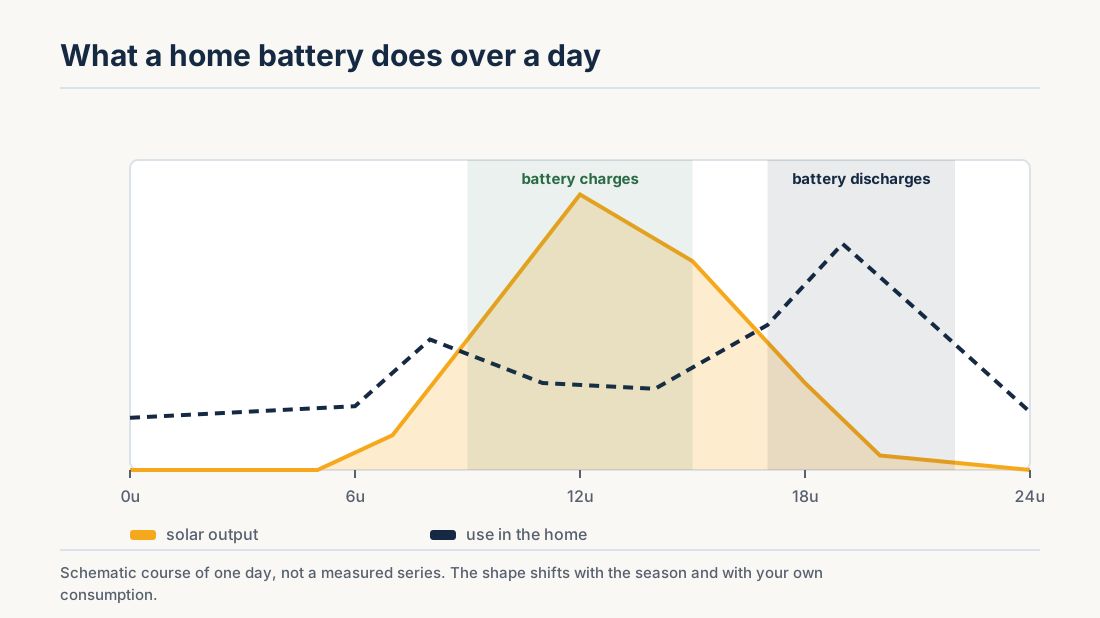
A home battery stores excess electricity produced by your solar panels during daylight hours and releases it when production decreases. This shifts your energy usage from daytime to evening periods.
The system includes three primary components:
- The battery unit that stores electricity measured in kilowatt-hours (kWh)
- An inverter that converts direct current (DC) to alternating current (AC) for home use
- An energy management system that controls charging and discharging processes
For a broader understanding, explore the energy systems overview.
What Is the Difference Between Smart and Standard Batteries?
Smart batteries optimize charging based on electricity prices, weather forecasts, and your consumption patterns. Standard batteries operate on fixed charge and discharge cycles.
Smart systems enhance savings by adjusting to tariff changes and reducing peak demand.
What Is a Home Battery Plug-In Solution?
A home battery plug-in solution connects directly to an electrical socket, requiring minimal installation. These systems reduce initial costs and suit smaller households.
Although smaller in capacity, they provide a simple way to experience battery storage benefits.
Is a DIY Home Battery Feasible?
Building a DIY home battery is technically possible but not advisable in Belgium due to strict safety regulations and grid compliance requirements. Certified systems ensure compatibility with the grid and the digital meter.
What Is the Price of a Home Battery?
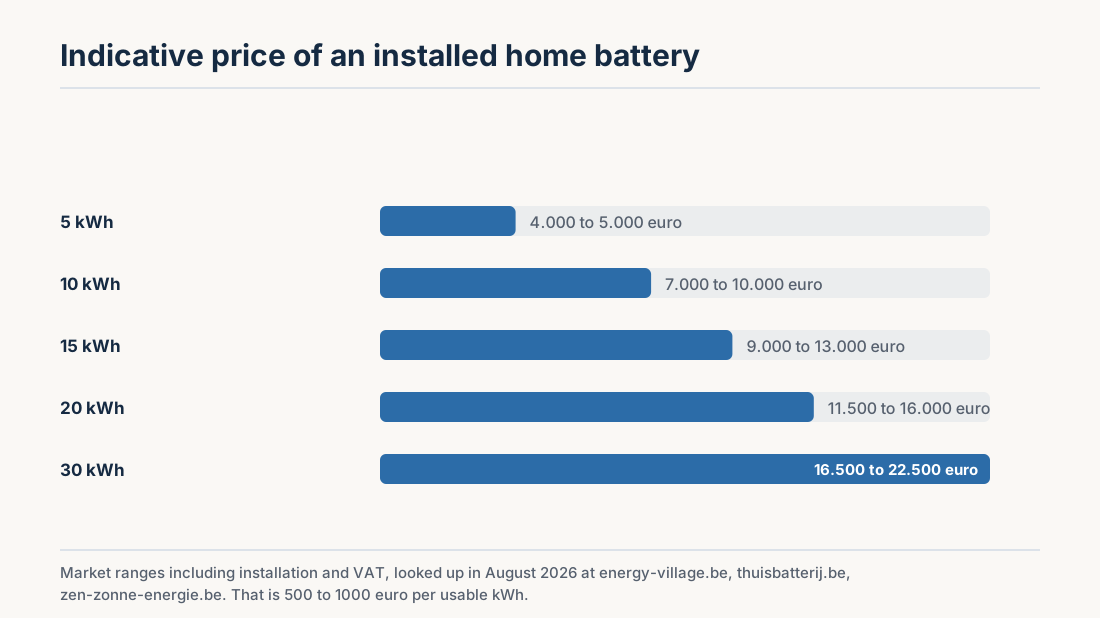
Home battery prices in Belgium vary between €4,000 and €11,000 including VAT, depending on capacity, inverter type, and installation complexity. Smaller systems cost less but offer limited storage.
Typical price ranges are:
- 3 kWh battery around €4,000
- 5 kWh battery between €4,000 and €5,000
- 10 kWh battery between €7,000 and €10,000
Example Calculation for a Typical Installation
Consider a 10 kWh system for an average household with the following costs:
- Battery unit: €6,000
- Inverter: €2,000
- Installation: €800
- Electrical upgrades: €400
The total estimated price is approximately €9,200 including VAT.
This corresponds with costs found in full solar energy setups where battery inclusion raises the overall system value.
What Is the Cost of a 20 kWh Home Battery?
A 20 kWh system is significantly more expensive because of increased capacity and inverter requirements. Prices generally exceed €10,000 including VAT and are suited to large households or homes with electric vehicles.
In Which Situations Does a Home Battery Make the Most Sense?
Home batteries provide the greatest value when your energy consumption, especially during the evening, does not align with your solar production.
Ideal scenarios include:
- Households equipped with solar panels and a digital meter
- High evening electricity consumption
- Electric vehicle charging during nighttime
- Homes with heat pump systems
How to Correctly Size a Battery Backup for Your Home?
Battery sizing should match your solar panel capacity and daily electricity usage. A common rule in Belgium is to install 1 kWh of battery storage for each 1 kWp of solar panels. For example, a 4 kWp solar installation pairs well with a 4 to 6 kWh battery.
What Is the 20% Rule for Solar Panels?
The 20% rule aims to limit the amount of electricity injected into the grid by ensuring you use or store at least 80% of your solar production. Installing a battery assists in following this guideline by increasing your self-consumption rates.
How Much Does 1 kWh of Electricity Cost in Belgium?
Electricity costs roughly €0.30 per kWh when consumed from the grid, whereas surplus energy is sold back at approximately €0.05 per kWh. This price gap is the key driver of battery storage profitability.
What Are the Pros and Cons of a Home Battery?
Using a home battery has clear advantages and some downsides.
Benefits include:
- Reduced electricity bills
- Protection from energy price volatility
- Peak load shaving that lowers capacity tariff costs
- Backup power during outages
Drawbacks include:
- A significant upfront investment
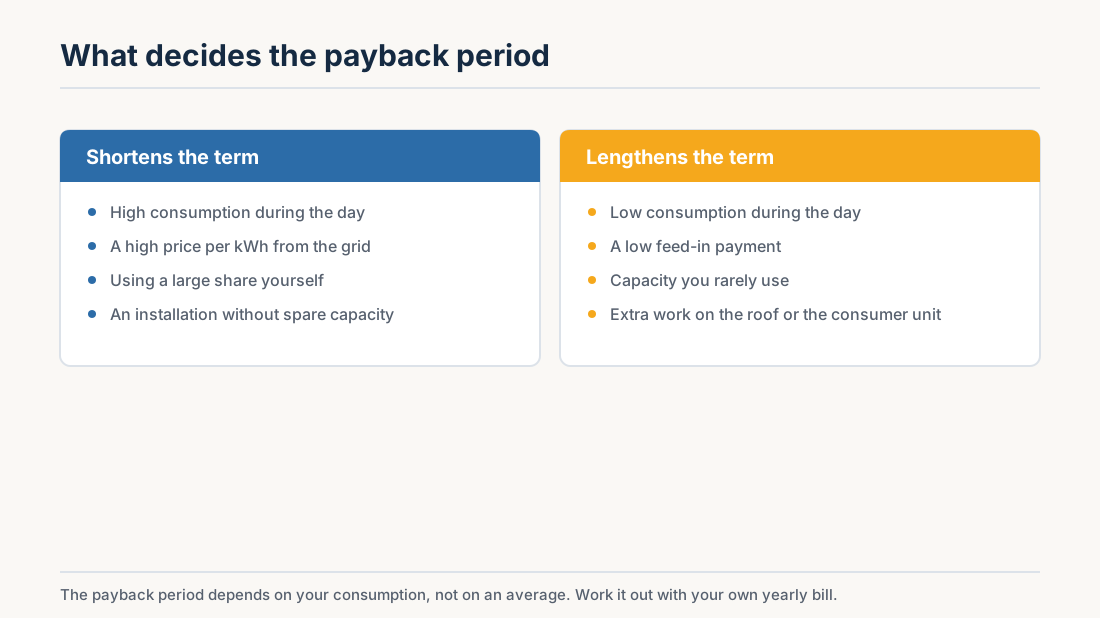
- Payback periods that depend heavily on usage patterns
- Limited benefits if you lack solar panels
Overall, if your home already has solar panels, adding a battery usually completes the system effectively. Without solar panels, the financial benefits are substantially lower.
When Should You Avoid Choosing a Home Battery?
A home battery is less beneficial when your consumption already matches your solar production, or electricity use is low.
Examples where batteries underperform are:
- Homes with high daytime energy consumption
- Residences without solar panels installed
- Houses in Wallonia that still benefit from net metering
In such cases, optimizing your consumption habits will provide better returns. You may improve results by shifting appliance use times or reevaluating your solar panel output strategy.
How Does a Home Battery Compare With Alternative Solutions?
Home batteries compete with other energy optimization methods like smart consumption, electric vehicle charging strategies, and grid services.
Comparison highlights include:
- Battery storage enhances energy independence and financial savings
- Smart consumption reduces costs without requiring upfront investment
- Electric vehicles may offer future vehicle-to-home power options
Which Is Better: Tesla or SMA Home Battery Systems?
Queries such as “Is a home battery worth it Belgium Tesla” or “home battery SMA” relate to system brands rather than core profitability.
The differences mainly concern software features, warranty conditions, and integration with home systems rather than fundamental storage capabilities.
What Is the Best Solar Battery for Home Use?
The best solar battery balances capacity, lifespan, and intelligent control features. Whole-home batteries fit large households, while smaller systems cover partial electricity needs effectively.
A home battery becomes financially advantageous when combined with solar production, a digital meter, and high evening electricity consumption. The difference between electricity purchase and selling prices drives most of the savings, while capacity tariffs contribute additional benefits. If your goal is to reduce electricity bills and gain more control over energy use, a properly sized battery system is worth considering. To ensure the best fit, I recommend comparing several tailored quotes from qualified providers based on your consumption profile before deciding.
Frequently Asked Questions
Is a home battery worth it Belgium for small households?
A home battery offers limited savings for small households due to lower overall energy use. Plug-in or smaller batteries may suit these cases better. You can improve returns by pairing batteries with solar panels and shifting consumption to evening hours. Without these patterns, recovering your investment takes longer.
What is the price of a home battery installation?
Installing a home battery generally costs between €500 and €1,000, depending on installation complexity and any required electrical upgrades. This price includes labor, wiring, and system integration. Additional components such as inverters or panel upgrades will increase the overall installation cost.
Is a home battery worth it Belgium with dynamic tariffs?
Yes, home batteries increase profitability under dynamic tariffs by storing electricity when prices are low and using it when prices are high. Smart control systems help automate this process and enhance financial benefits.
How long does a home battery last?
Home batteries typically last 10 to 15 years depending on charging cycles and battery technology. Lithium-based batteries maintain performance through thousands of charge cycles. Proper sizing and smart control can extend battery lifetime and improve investment returns.
What is the price difference between small and large batteries?
The main price difference comes from total capacity and system components. Small batteries cost less upfront but have a higher price per kWh. Larger batteries require more investment but provide better value per kWh and higher potential savings when matched to household consumption.
Indicative prices for the Belgian market, checked in August 2026 against energy-village.be, thuisbatterij.be and zen-zonne-energie.be. These are market ranges for an installed system including VAT, not a quotation: your price depends on capacity, brand and the state of your existing installation.
Read also
Ready to cut your energy bill?
Compare quotes for solar panels, home batteries and charging points.