Home battery belgium
3 phase home battery price and advice
A 3 phase home battery efficiently stores electricity across three power lines, stabilizing energy supply for homes with high power demands such as those using EV chargers or heat pumps. These systems typically have capacities ranging from 5 kWh to over 40 kWh and rely on a 3-phase battery inverter to balance energy flow across phases L1, L2, and L3.
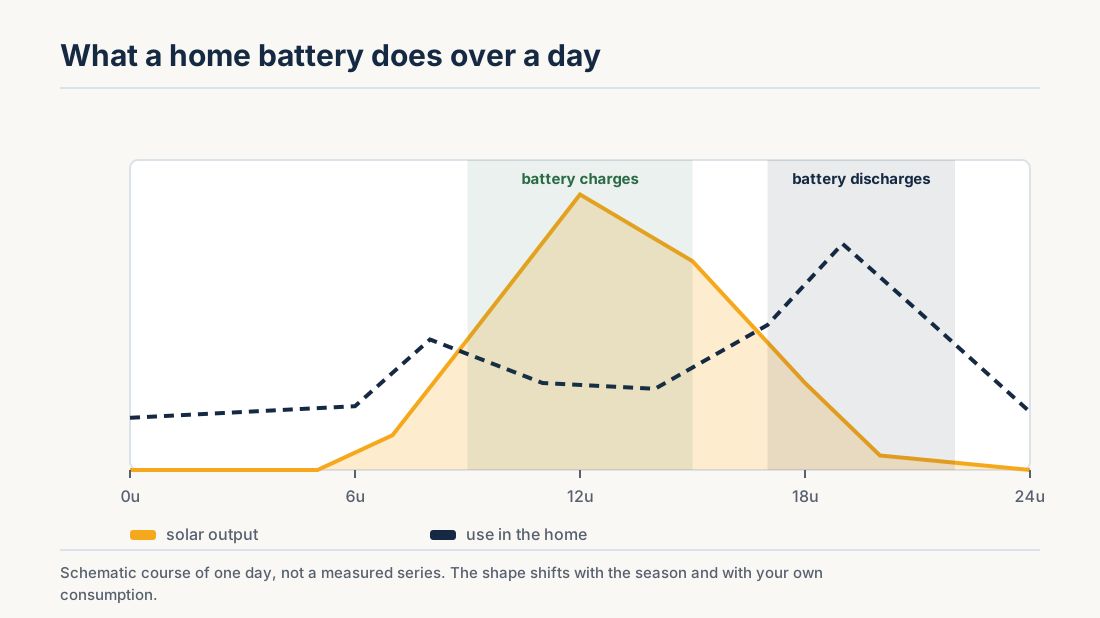
When combined with solar panels, a 3 phase solar battery system can increase your home’s self-consumption of solar energy from approximately 30% up to 70%.
How exactly does a 3 phase home battery work?
A 3 phase home battery stores and distributes electricity evenly across three electrical phases to prevent overload and enhance efficiency in homes with significant energy consumption. The system employs a 3-phase battery inverter that manages and converts energy flows between solar panels, the electrical grid, and your home’s appliances.
Unlike single-phase systems, this technology distributes power across phases L1, L2, and L3, which balances loads and ensures smooth operation of all connected devices. For an in-depth view on integrating solar with home energy use, consider exploring how solar panels work in your home.
Why does phase balancing improve home energy performance?
Phase balancing spreads electricity evenly across all three lines, which prevents any single phase from becoming overloaded while others remain underused. This is especially beneficial for homes with EV chargers or heat pumps, which demand high power levels.
- Prevents local grid overloads
- Maintains stable voltage for all appliances
- Enhances overall efficiency of your energy system
Which types of inverters are compatible with 3-phase systems?
The main inverter types used with 3-phase systems include hybrid inverters and AC-coupled inverters. A hybrid inverter combines solar and battery functionality in a single device, while an AC-coupled inverter allows adding battery storage to an existing solar setup.
- Hybrid inverters integrate battery storage and solar energy management
- AC-coupled inverters upgrade existing systems with added storage capacity
- Enable backup power and flexible charging strategies
Which technologies are available for a 3-phase solar battery system?
Common technologies for 3-phase solar battery systems include lithium-based modular batteries, all-in-one integrated cabinets, and scalable high-voltage configurations. Each type suits different household requirements and scalability preferences.
What defines a modular battery system?
Modular battery systems allow you to start with a smaller capacity and add additional modules later. This flexibility is ideal if you plan on increasing your energy storage capacity in the future, such as when installing an EV charger.
How do all-in-one 3 phase batteries work?
All-in-one systems combine battery cells, inverter, and control units within a single cabinet. This design simplifies installation and minimizes space requirements, making it suitable for homeowners seeking a compact, integrated solution.
What distinguishes high-voltage 3-phase battery systems?
High-voltage systems operate more efficiently in large homes by supporting greater power output and faster charging rates. These configurations fit households with high energy demands due to heavy appliances or extensive solar generation.
What is the typical price range of a 3 phase home battery?
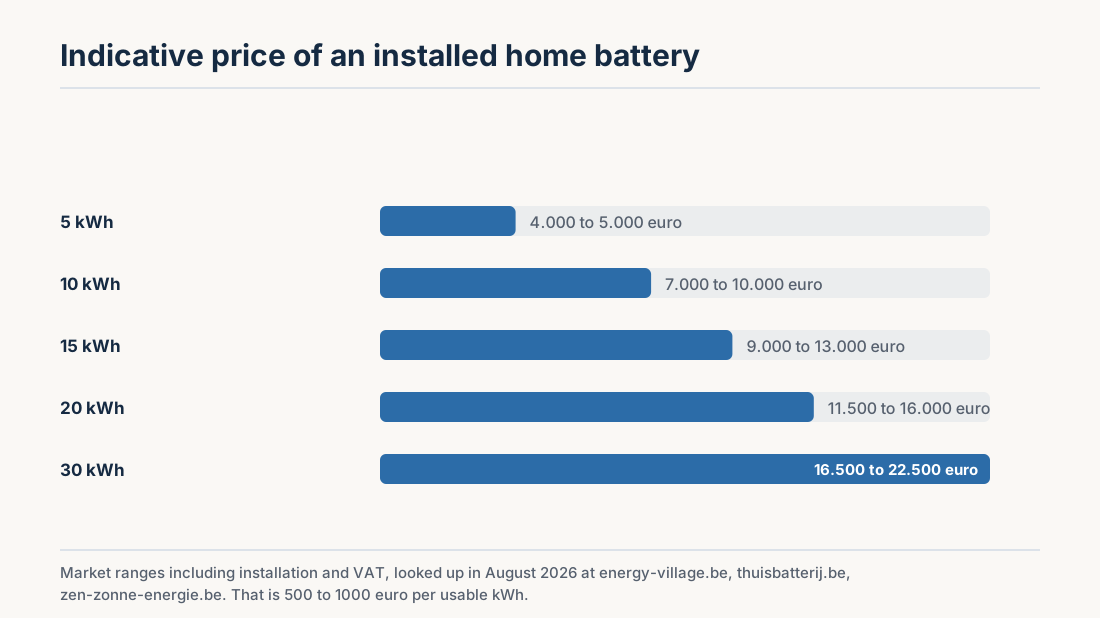
The price for a 3 phase home battery system generally ranges between €7,200 and €14,500 including VAT and installation for most households. The final cost depends on factors such as battery capacity, inverter choice, and installation complexity.
Typical price ranges by battery capacity are:
- 10 kWh: €7,000 - €10,000
- 16 kWh: €8,900 - €9,500
- 32 kWh: €13,900 - €14,500
What does a complete installation cost look like?
Consider a realistic system setup for a family home:
- 16 kWh battery: €9,200
- 3-phase battery inverter: €1,500
- Installation and wiring: €1,200
- Electrical panel upgrade: €600
The total estimated investment amounts to approximately €12,500 including VAT.
Popular configurations like the SolarEdge 3 phase home battery fall within this pricing range, though the exact cost varies with your chosen setup and location.
In which scenarios is a 3 phase home battery most beneficial?
A 3 phase home battery best suits homes with high electricity consumption and a three-phase grid connection, especially when you want to maximize solar energy use and reduce reliance on the grid.
Who benefits the most from a 3 phase home battery?
These situations justify the investment:
- Homes equipped with EV charging stations
- Residences using heat pumps for heating or cooling
- Large families with substantial evening electricity use
- Properties with solar systems having 8 to 28 panels
How does this system improve solar self-consumption?
The battery stores surplus solar energy generated during daytime and makes it available for later use. This raises your solar self-consumption rate to between 60% and 70%, which reduces energy exports and lessens your dependence on grid electricity.
What are key advantages and disadvantages of a 3 phase home battery?
The benefits of a 3 phase home battery include higher storage capacity, balanced load distribution, and the capability to provide whole-house backup power. However, the higher initial cost and complex installation requirements are important downsides to consider.
Key advantages feature stable power delivery to heavy-duty appliances and scalability for future energy needs. The system supports intelligent energy management, allowing you to store power when prices are low and use it during peak times.
On the other hand, single-phase battery systems are generally less expensive and better suited for smaller homes. The installation of 3 phase batteries often involves additional electrical work, increasing the project’s complexity.
How does a 3 phase home battery compare to a 1-phase system?
A 3 phase system distributes energy over three balanced lines, whereas a 1-phase battery supplies power through a single line. This fundamental difference impacts performance and which homes each system suits best.
Comparison highlights include:
- Power distribution: single line vs. three balanced lines
- Capacity support: standard vs. high consumption
- Compatibility with appliances: basic vs. heavy electrical devices
- Investment cost: lower vs. higher upfront expense
Typically, a 1-phase battery fits smaller homes with lower energy needs, while a 3 phase system suits larger households planning future growth. For proper alignment of your battery size with solar panel output, checking solar system sizing options is beneficial.
When might a 3 phase home battery not be the best choice?
You should avoid a 3 phase home battery if your home has low electricity consumption and no high-power appliances. Smaller battery systems perform better and more cost-effectively in such conditions.
Homes with limited solar generation or minimal evening energy use tend to see slower returns on investment with a 3 phase system. In these cases, a basic solar panel system with appropriately sized storage is a more suitable option, as explained in basic solar panel systems.
A three-phase home battery system offers stable power distribution and improved utilization of solar energy, making it ideal for households with significant energy needs and plans for future expansion. Although the higher initial investment requires thorough planning, this technology can substantially increase your home’s energy independence. To proceed effectively, assess your energy consumption and solar production carefully, then request multiple quotes through Soleva to find a configuration that best fits your household requirements.
Frequently Asked Questions
What is the price of a 3 phase home battery for a large household?
The price of a 3 phase home battery system for large households usually ranges between €9,000 and €14,500 including VAT. Larger capacities, such as around 32 kWh, are more expensive because they support full-home coverage, EV charging, and heating systems. Final costs vary depending on inverter size and installation complexity.
How much capacity does a 3-phase solar battery system need?
A 3-phase solar battery system generally requires around 1 to 1.5 kWh of storage per kWp of solar panel capacity. For example, a 10 kWp solar setup works well with a 10 to 15 kWh battery, optimizing self-consumption and avoiding paying for unnecessary storage.
Is a 3 phase home battery effective without solar panels?
Yes, a 3 phase home battery can operate without solar panels by charging from the electrical grid during low-cost periods. Households with dynamic energy pricing benefit from this setup by storing inexpensive electricity and using it when prices rise, thus lowering overall energy expenses.
How much more expensive is a 3 phase battery compared to a 1-phase battery?
The price difference between 1-phase and 3 phase battery systems typically ranges from €2,000 to €5,000 including VAT. The increased cost results from the need for more complex inverters and additional installation requirements. However, the 3 phase system offers better performance with high-demand appliances and a more balanced energy supply.
Can a 3 phase home battery provide backup power during outages?
Yes, depending on your system’s configuration, a 3 phase home battery can supply backup power during grid outages. Full backup setups maintain power across all three phases, while partial backup systems support selected circuits, ensuring essential appliances stay operational and improving your home’s energy security.
Indicative prices for the Belgian market, checked in August 2026 against energy-village.be, thuisbatterij.be and zen-zonne-energie.be. These are market ranges for an installed system including VAT, not a quotation: your price depends on capacity, brand and the state of your existing installation.
Read also
Ready to cut your energy bill?
Compare quotes for solar panels, home batteries and charging points.