Home battery belgium
increase self consumption battery benefits
Adding a battery to your solar system increases self consumption battery usage by storing surplus electricity and using it later instead of purchasing from the grid. Typically, a household achieves only 20% to 30% self-consumption without storage, but a battery raises this figure to approximately 70% to 80%. This improvement reduces grid dependency and enhances savings, especially as tariffs rise and feed-in compensation decreases.
This guide explains how battery storage works, its costs, how to size it properly, and when it improves your return.
How does a battery help to increase self consumption?
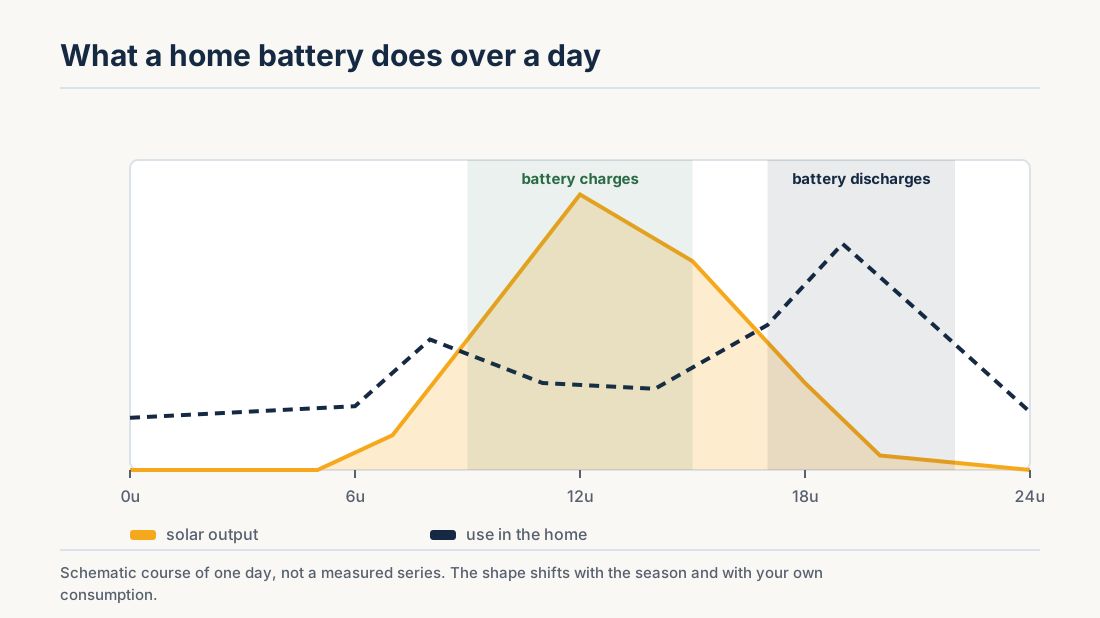
A home battery stores surplus solar energy and releases it when your household requires electricity. This process increases the proportion of self-generated energy you use instead of exporting it to the grid.
Solar panels typically produce most energy between 11:00 and 15:00, while household electricity demand usually peaks in the evening. This mismatch limits self-consumption without storage. A battery resolves this issue by shifting energy usage over time.
What is a self-consumption battery?
A self-consumption battery is an electrical storage system that captures excess photovoltaic energy and supplies it later. It works in combination with an inverter and an energy management system to prioritize local energy use over exporting to the grid.
How much can a battery increase self-consumption?
A battery can increase self-consumption from about 30% up to 70% or 80% in optimized households. The exact result depends on your household’s energy demand, system size, and how efficiently you manage energy flows.
- Without battery: 20% - 30%
- With battery: 60% - 80%
- Peak load reduction: 25% - 50%
This increase reduces the need to purchase electricity from the grid and protects against fluctuating energy prices.
To understand your energy production profile, review your solar panel system overview before installing battery storage.
Which technologies and systems improve self consumption battery performance?
The most common technology for boosting self-consumption is the lithium iron phosphate (LFP) battery. It offers a long cycle life, thermal stability, and consistent performance.
What types of batteries exist?
Main battery technologies vary in lifespan, safety, and cost.
- LFP batteries have a long lifespan and high safety.
- Lithium-ion NMC batteries provide higher energy density but have shorter cycle life.
Lead-acid batteries cost less but have a limited lifespan and are less suitable for long-term use.
What role does smart energy management play?
A home energy management system controls when energy is stored or used by connecting your battery, inverter, and household appliances into one coordinated system.
Key smart control strategies include:
- Charging the battery during solar production peaks
- Discharging energy during costly grid periods
- Automating appliances such as boilers or electric vehicle chargers to optimize consumption
Pairing battery storage with a modern photovoltaic installation maximizes overall efficiency and control.
What is the price of a battery to increase self consumption?
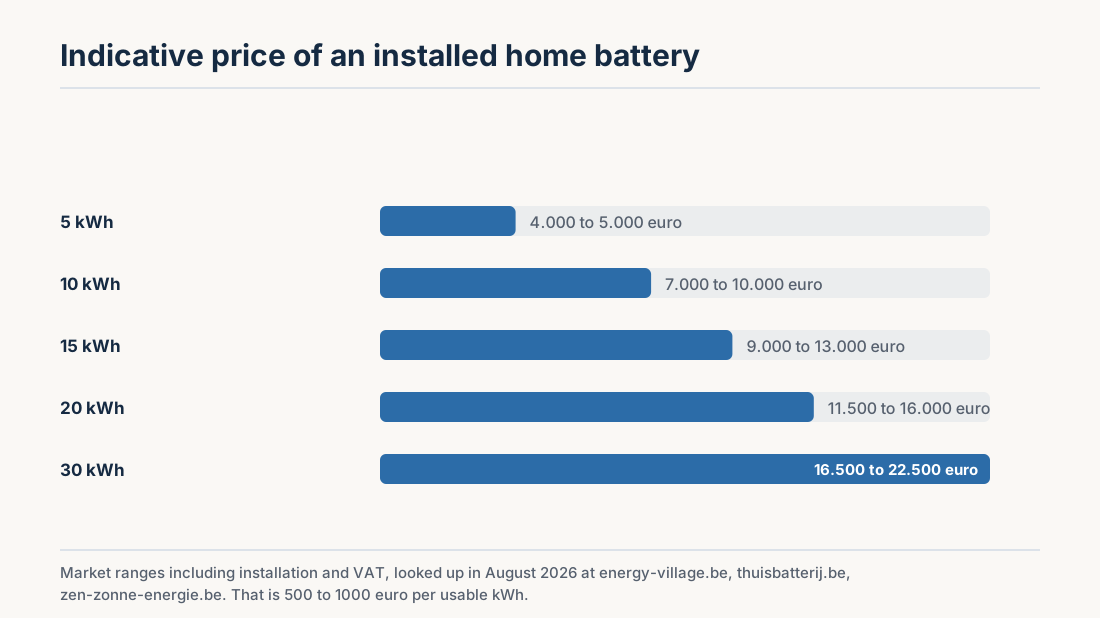
The price of a home battery system ranges between €4,000 and €10,000 including VAT, depending on capacity and installation complexity.
The typical price per kWh is between €500 and €1,000 for the battery unit itself.
- 5 kWh system: €4,000 - €5,000 including VAT
- 10 kWh system: €7,000 - €10,000 including VAT
Calculation example for a full system
A sample setup for a household with solar panels includes:
- Battery unit 10 kWh: €6,500
- Hybrid inverter: €1,200
- Installation and wiring: €1,500
- Electrical panel upgrade: €400
The total investment amounts to approximately €9,600 including VAT.
Annual savings can range from €300 to €700 depending on usage patterns and tariffs. This results in a payback period between 8 and 12 years.
You may compare different system sizes by reviewing solar panel configurations to select the appropriate battery capacity.
In which situations does a battery increase self consumption the most?
Batteries increase self-consumption most effectively in homes with high evening electricity demand and sufficient solar production during the day.
What is the 20% rule for solar?
The 20% rule explains that without storage, only about 20% to 30% of solar energy is consumed directly within the household. The remaining energy is exported unless shifted in time or stored.
Which households benefit most from battery storage?
Households most likely to benefit include:
- Families with annual electricity consumption between 3,500 and 5,000 kWh
- Homes with electric vehicles or heat pumps
- Users on dynamic energy tariffs
In these cases, batteries reduce peak electricity use and increase independence from the electricity grid.
If you plan to expand your system, consult panel sizing guidance first.
What are the pros and cons of using a battery to increase self consumption?
Battery storage offers several advantages but also includes some limitations related to cost and efficiency.
What benefits do batteries provide?
Installing a battery increases local energy consumption and decreases reliance on the electricity grid.
- Reduces electricity bills
- Offers protection against energy price fluctuations
- Reduces peak demand charges in capacity tariff areas
- Provides backup power potential in certain systems
What are the disadvantages?
Battery energy storage systems involve high initial investment, efficiency losses of around 10%, and limited returns in households with low electricity demand.
Oversizing a system often leads to underutilized batteries, especially during summer when storage capacity exceeds daily consumption.
How does a battery compare with direct consumption strategies?
A battery complements direct consumption strategies but does not replace them. Using both methods together provides the best overall results.
Which strategies increase self-consumption without a battery?
Direct consumption strategies can immediately reduce grid exports by:
- Running appliances during solar production hours
- Heating water using solar energy during the day
- Charging electric vehicles at midday
Is it possible to have a 90% efficient solar panel?
No, current solar panel technology limits efficiency to approximately 20% to 22%. This limitation makes energy storage and smart consumption essential for maximizing solar energy value.
In practice, combining smart consumption habits with storage delivers the highest financial return, as batteries cover energy use gaps that behavior alone cannot handle.
A battery changes how you utilize solar energy by shifting production to times when you actually need it. The most significant benefits come from pairing storage with smart consumption habits and proper system sizing. If your household uses electricity mainly in the evening or has dynamic tariffs, investing in a battery makes financial sense. Begin by reviewing your current electricity use and request several quotes via Soleva to match your system size with the appropriate battery capacity.
Frequently Asked Questions
How does a battery increase self consumption in winter?
A battery helps increase self-consumption in winter by storing limited solar production during daylight and supplying it when household demand rises in the evening. Although solar output is lower in winter and the battery cycles less frequently, you still benefit from reduced grid reliance and peak load management. However, overall self-consumption will be lower compared to summer months.
What is the ideal battery size to increase self consumption battery performance?
The ideal battery size is approximately 1 to 1.5 kWh per kWp of solar panels installed. This balance optimizes storage capacity with the amount of energy your system generates. Oversizing leads to unnecessary costs without extra benefits, while undersizing limits storage potential. Matching battery capacity to your consumption profile maximizes efficiency and financial returns.
What is the price difference between a small and a large battery?
The cost difference between a 5 kWh and a 10 kWh battery typically ranges from about €7,000 to €10,000 including VAT. While larger batteries increase self-consumption, they also require a higher initial investment. Additional capacity only pays off if your household has sufficient electricity demand during evening hours to utilize the extra storage.
Can smart systems replace a battery for self-consumption?
Smart energy management systems improve self-consumption by adjusting appliance usage to match solar production but cannot fully replace battery storage. They depend on real-time energy demand, whereas batteries store excess energy for later use. Combining smart systems with battery storage offers better overall energy efficiency and savings.
Does increasing self consumption battery usage reduce grid fees?
Increasing self-consumption by using a battery reduces grid fees by lowering peak electricity demand and total electricity drawn from the grid. In areas with capacity-based tariffs, batteries smooth consumption peaks, directly reducing charges. This benefit strengthens the financial advantage of installing battery storage in households with high peak loads.
Indicative prices for the Belgian market, checked in August 2026 against energy-village.be, thuisbatterij.be and zen-zonne-energie.be. These are market ranges for an installed system including VAT, not a quotation: your price depends on capacity, brand and the state of your existing installation.
Read also
Ready to cut your energy bill?
Compare quotes for solar panels, home batteries and charging points.