Solar panels Belgium
vertical solar panels guide and price
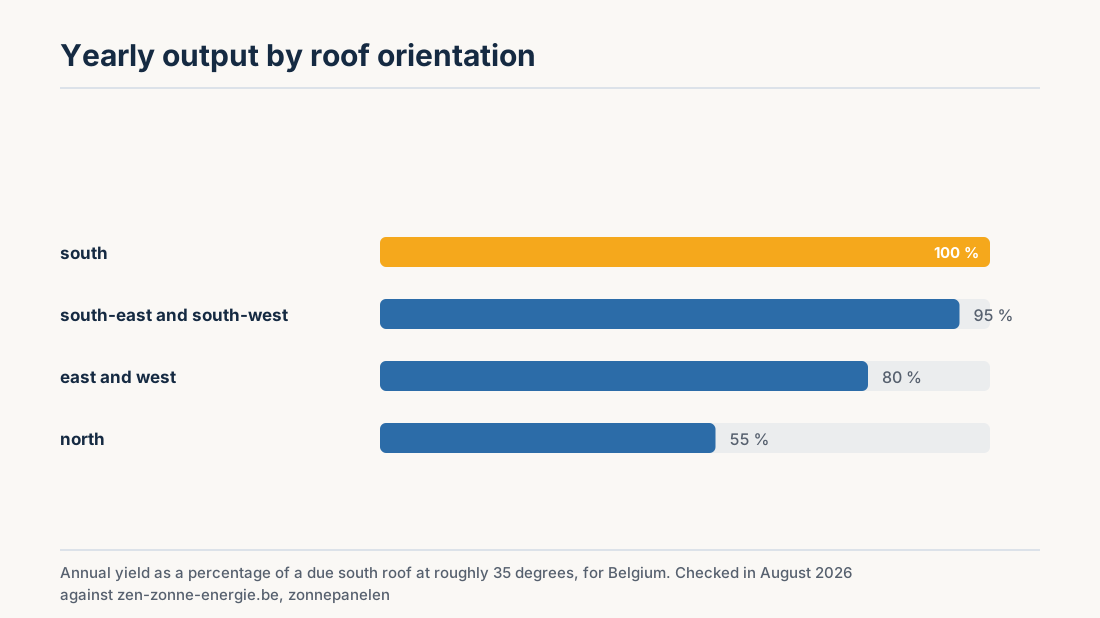
Vertical solar panels generate electricity by mounting photovoltaic modules at a 90° angle on walls, fences, or façades instead of on tilted roofs. This orientation enhances energy production during mornings and evenings and improves performance during winter due to low sun angles. Compared with traditional rooftop systems, vertical solar panels deliver roughly 70% of the annual output while optimizing space use and architectural integration.
This guide explains how vertical solar panels work, compares them to standard panels, outlines pricing, and helps you decide if this solution fits your home or building.
What makes vertical solar panels suitable for solar energy?
Vertical solar panels produce electricity by capturing sunlight on upright surfaces, often incorporating bifacial photovoltaic modules that absorb light on both sides. This dual-sided ability increases energy yield under diffuse light and reflected conditions.
The key advantage of vertical solar panels lies in their production timing. They generate more electricity in the morning and late afternoon, aligning better with typical household electricity demand peaks.
How does energy production differ throughout the day?
The energy output of vertical solar panels shifts away from the classic midday peak seen with tilted panels. Instead, vertical systems provide more balanced generation over the entire day.
- Higher energy output in the morning and evening hours
- Lower peak production at midday compared to tilted systems
- Better alignment with household electricity consumption patterns
Why do vertical systems perform better in winter?
The vertical orientation allows better capture of low-angle sunlight typical in winter months. Additionally, snow accumulation is minimal on vertical panels because they do not lie flat, maintaining production during colder periods.
Where are vertical solar panels typically installed?
Common installations include building façades, balcony railings, and vertical solar panel fences. These applications utilize spaces that are often unused for energy generation.
For a broader overview of solar solutions, you can visit types of solar panel systems.
How do vertical solar panels compare with traditional rooftop panels?
Vertical solar panels differ from traditional rooftop panels mainly in efficiency, installation flexibility, and energy production profiles. Rooftop panels target maximum total energy output, while vertical systems optimize space utilization and energy timing.
The comparison below highlights essential differences.
- Efficiency: Vertical systems typically produce approximately 70% of the annual output of tilted rooftop systems
- Production timing: Vertical panels generate more power during morning and evening periods
- Space usage: Vertical installations take advantage of walls, fences, and façades
- Weather resistance: Vertical panels shed snow and dirt more effectively
- Aesthetics: Integration into building exteriors enhances design flexibility
Does orientation as vertical versus horizontal affect solar panel performance?
Yes, orientation has a significant impact on energy yield. Horizontal or tilted panels maximize the total annual production, while vertical panels improve seasonal energy balance and optimize space in constrained environments.
Are vertical solar panels worthwhile?
Vertical solar panels are especially valuable in locations with limited roof space or urban settings. They provide steady energy output and allow you to utilize surfaces that are unsuitable for traditional panels.
What is the price of vertical solar panels?
The price of vertical solar panels ranges between €1,200 and €2,000 per kWp installed, influenced by mounting complexity and panel type.
Typical system prices include:
- Small 2 kWp system: €2,400 - €4,000 incl. VAT
- Medium 4 kWp system: €4,500 - €6,500 incl. VAT
- Large 6 kWp system: €6,000 - €8,700 incl. VAT
Example calculation for a vertical installation
A 4 kWp vertical façade system includes these components:
- 10 solar panels @ €300 each = €3,000
- Wall mounting structure = €1,200
- Micro inverter system = €1,000
- Installation labor = €1,800
- Total cost: approximately €7,000 incl. VAT
This investment is comparable to a standard rooftop system; however, the specialized mounting increases labor costs slightly.
For more details on rooftop installations, see standard rooftop installation.
What maintenance do vertical solar panels require?
Vertical solar panels require less frequent maintenance than tilted panels because their upright position reduces dirt accumulation. Rainwater naturally cleans most surfaces.
How often should you clean vertical panels?
Cleaning every 1 to 2 years generally maintains optimal performance. In dusty urban environments, annual inspections and cleanings may be necessary.
What issues can occur with vertical installations?
Thermal management is a primary consideration. Panels mounted on walls can retain heat, lowering efficiency. Ensuring sufficient spacing behind panels allows better airflow and cooling.
Which tools assist with monitoring vertical panel systems?
Monitoring systems track energy output and detect faults early. Many vertical panel installations use micro-inverters for panel-level monitoring.
Learn how system size influences performance at solar panel capacity planning.
Which roof types and situations suit vertical solar panels best?
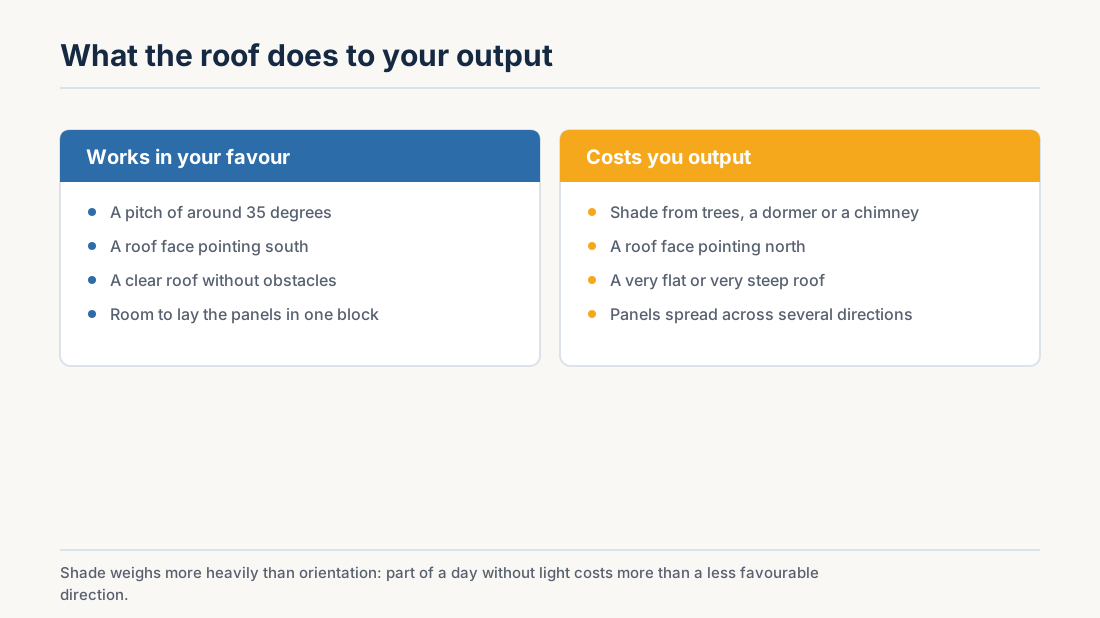
Vertical solar panels fit homes and buildings where roof space is restricted or where roof installation is not practical. They allow adding solar capacity without major structural changes.
When are vertical solar panels on buildings most effective?
Façade installations are ideal for apartment complexes and office buildings with large vertical surfaces. These panels integrate architecturally and can reduce façade construction costs.
How are vertical solar panels used in agricultural projects?
Vertical solar panels in agricultural settings serve multiple purposes. Panels double as fences while allowing sunlight between rows for crops to grow, combining energy production with farming.
What about fence and balcony installations?
Fence-mounted solar panels generate power along property borders. Balcony installations transform unused railings into small solar arrays providing additional electricity.
For advice on system sizing, see how many panels you need.
What should you look for when ordering vertical solar panels?
Choosing the right panels and mounting hardware is crucial for long-term system reliability and performance.
Which panel types suit vertical solar panel installations?
The best vertical solar panels vary by application:
- Bifacial panels offer the highest energy yield for fences and open spaces
- Monofacial panels provide better thermal control on building walls
- IBC modules perform well under low-light conditions
- TOPCon and HJT technologies offer high efficiency for bifacial configurations
What certifications and specifications are important?
Solar panels should comply with IEC 61215 and IEC 61730 standards to ensure safety and durability. Wind resistance ratings are especially important for vertical mounting.
What are the pros and cons of vertical solar panels?
Advantages of vertical solar panels include more efficient use of space, better winter performance, and lower maintenance requirements. Their drawbacks are somewhat reduced total efficiency and increased installation complexity.
For personalized advice, you can request quotes through Soleva solar specialists to compare different configurations.
Choosing vertical solar panels is a practical solution when roof space is limited or when you want to balance energy production throughout the day better. This approach offers flexibility in installation location and improves winter output, though it results in slightly lower annual energy yield compared to rooftop panels. Begin by evaluating your available wall or fence surfaces carefully and contact multiple providers through Soleva to obtain tailored quotes before making your decision.
Frequently Asked Questions
Can solar panels be placed vertically?
Yes, solar panels can be installed vertically on walls, fences, or façades. This is particularly effective in urban settings or when roof space is limited. Vertical placement typically provides lower peak output but enhances electricity generation during mornings and evenings, which aligns better with household consumption.
Are vertical solar panels worth it for homes?
Vertical solar panels are a worthwhile option for homes with limited roof area or shading issues. They add renewable energy capacity without altering the roof structure. Homeowners benefit most when combining vertical panels with existing rooftop systems to achieve a more balanced energy production throughout the day.
What is the price of vertical solar panels compared to standard panels?
Vertical solar panels usually cost slightly more due to the need for specialized mounting and installation on walls or fences. However, they allow you to use surfaces that are otherwise unused, which may compensate for installation cost differences, especially in areas where rooftops are unsuitable for solar.
Does the 20% rule apply to vertical solar panels?
The 20% rule concerns grid connection limits and inverter sizing, not panel orientation. Vertical solar panel systems must comply with local grid regulations, including limits on how much solar capacity you can connect relative to your electrical supply, regardless of whether panels are vertical or tilted.
Do vertical solar panels work on cloudy days?
Vertical solar panels perform well in cloudy weather because they can capture diffuse light from various angles. Using bifacial panels enhances this capability by absorbing reflected light on both sides, making vertical setups reliable where cloud cover and variable weather are common.
Indicative prices for the Belgian market, checked in August 2026 against energy-village.be, thuisbatterij.be and zen-zonne-energie.be. These are market ranges for an installed system including VAT, not a quotation: your price depends on capacity, brand and the state of your existing installation.
Read also
Ready to cut your energy bill?
Compare quotes for solar panels, home batteries and charging points.