Solar panels Belgium
types of solar panels explained
Understanding the types of solar panels is essential when choosing a solar energy system that suits your roof space, budget, and energy needs. The most common types include monocrystalline and polycrystalline solar panels, each offering different efficiency levels and costs. Solar panels convert sunlight into electricity through the photovoltaic effect, and their performance varies based on material quality and installation.
What are the primary types of solar panels?
The main types of solar panels include monocrystalline, polycrystalline, and thin film solar panels. These options are popular in residential and commercial solar installations because they balance efficiency, cost, and durability effectively.
The differences in these technologies influence the electricity output of your system and the roof space required. For a wider look at system setups, you may explore solar panel solutions for homes.
- Monocrystalline Solar panels offer efficiencies between 17% and 22%, providing high output per square meter and featuring a sleek black appearance.
- Polycrystalline solar panels have efficiencies from 14% to 17%, usually at a lower price but needing a somewhat larger surface area.
- Thin film solar panels offer efficiencies between 7% and 13%, are flexible and lightweight, but require more space for the same output.
How do solar panels generate electricity?
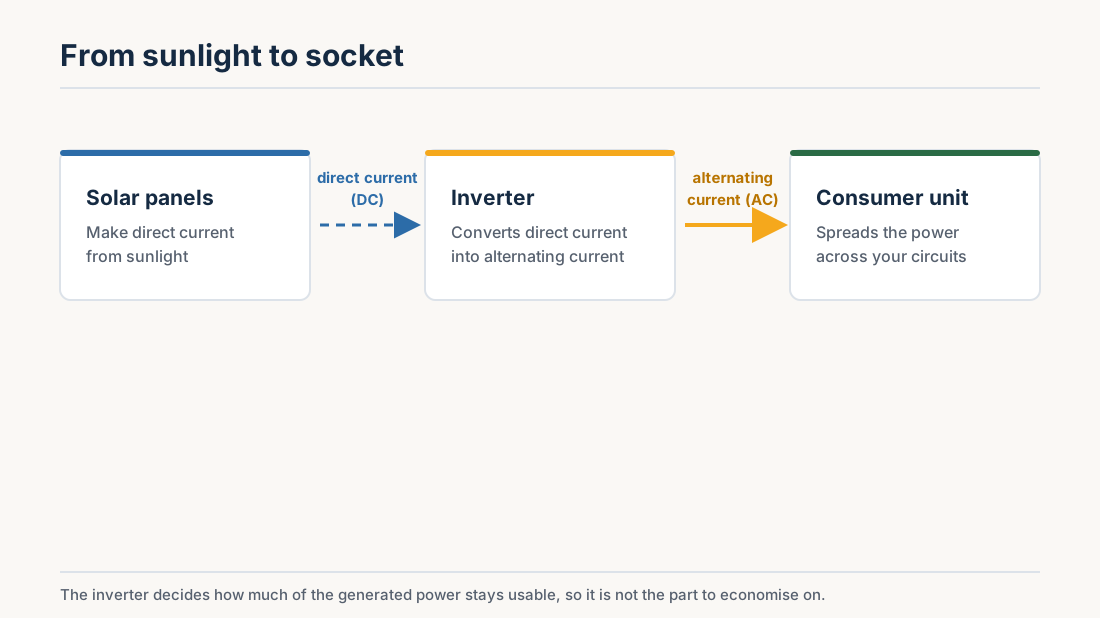
Solar panels generate electricity using the photovoltaic effect. When sunlight photons strike silicon cells, they release electrons, creating direct current (DC) electricity. An inverter changes this DC into alternating current (AC) usable in your home.
What wattages do different solar panel types offer?
Solar panel wattages vary by technology. Monocrystalline panels typically range from 350W to 400W. Polycrystalline panels produce between 240W and 300W, while thin film panels have a wide wattage range, depending on their flexible sizing.
Which types of solar panels are commonly used today?
In addition to monocrystalline, polycrystalline, and thin film panels, PERC solar panels are gaining popularity. PERC stands for Passivated Emitter and Rear Contact and enhances efficiency by reflecting unused light back into the solar cell.
- Monocrystalline panels with high efficiency.
- Polycrystalline panels offering a lower price point.
- Thin film panels suitable for flexible applications.
- PERC panels with improved performance, especially in low light conditions.
What are TOPCon and bifacial solar panels?
TOPCon solar panels use advanced N-type structures that reduce energy loss and increase durability. Bifacial solar panels capture solar energy from both sides, enhancing total energy yield when mounted on reflective surfaces.
Can you explain glass-glass and hybrid solar panels?
Glass-glass panels incorporate two glass layers to reduce degradation and extend lifespan beyond 25 years. Hybrid PVT panels combine electricity generation with heat collection, supplying both power and hot water.
How many types of solar panels exist including emerging technologies?
Depending on classification, six main solar panel types exist when including emerging technologies and advanced designs.
- Monocrystalline
- Polycrystalline
- Thin film
- PERC
- TOPCon or N-type
- Bifacial
Additionally, research introduces categories like biohybrid cells and concentrated photovoltaic systems with specific applications.
What defines the six solar panel types?
The six types listed above cover most market panels along with experimental designs such as cadmium telluride and CIGS thin film variants. These can lower production costs but may involve compromises in efficiency or environmental considerations.
How are solar panels grouped by generation?
Solar panels are classified into generations based on technology:
- First generation uses crystalline silicon panels.
- Second generation comprises thin film technologies.
- Third generation consists of experimental high-efficiency designs.
Which type of solar panel suits home use best?
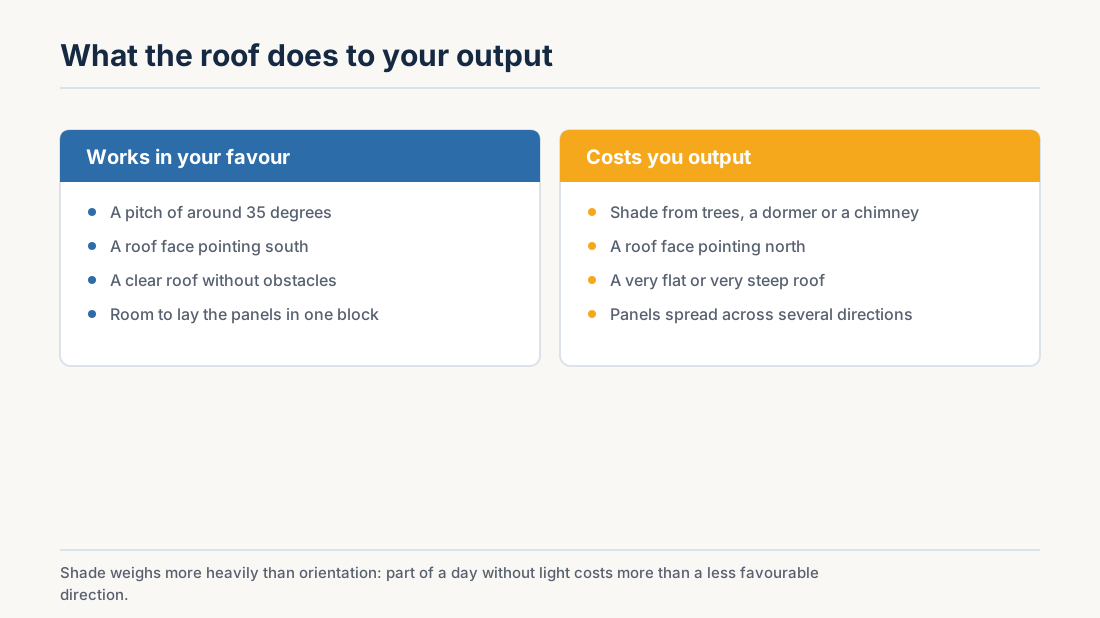
The best type of solar panel for home use depends on your available roof space and energy requirements. Monocrystalline panels generally provide the highest efficiency and suit homes with limited space.
For a detailed size and energy requirement calculation, see how many panels your home needs.
How to choose solar panels for your home?
- Small roof: Monocrystalline panels maximize power output.
- Large roof: Polycrystalline panels lower upfront costs.
- Unique surfaces: Thin film panels adapt well to curved or lightweight structures.
How do different solar panels perform in European climates?
Polycrystalline panels work well in diffuse light conditions, while monocrystalline panels retain higher efficiency in limited space. Thin film panels perform better in high temperatures due to a lower temperature coefficient.
What is the price difference among solar panel types?
Solar panel prices vary based on efficiency, materials, and installation complexity. Monocrystalline panels cost more per square meter but require fewer panels.
Typical price ranges per square meter are:
- Monocrystalline panels: €150 - €200
- Polycrystalline panels: €105 - €150
- Thin film panels: Usually priced below polycrystalline
- Glass-glass panels: €900 - €1,000
What is a cost example for a home solar system?
To illustrate costs, a 10-panel monocrystalline solar system with 400W panels breaks down as follows:
- 10 panels × €180 = €1,800
- Inverter: €1,200
- Mounting system: €600
- Installation: €2,000
This totals approximately €5,600 incl. VAT.
What about payback periods and savings?
Higher efficiency panels decrease your electricity bills faster. Monocrystalline systems produce more power per square meter, leading to shorter payback times compared to less efficient alternatives.
How do solar panel types compare in efficiency and lifespan?
Efficiency and lifespan significantly influence the long-term value of solar panels. Monocrystalline panels often exceed 20% efficiency, while polycrystalline panels typically range from 15% to 17%.
What is the temperature coefficient and how does heat affect performance?
The temperature coefficient indicates how much performance declines for every degree above 25°C. Thin film panels lose about 0.2% per degree, while crystalline panels lose between 0.3% and 0.5% per degree.
How do degradation and warranties vary by panel type?
Light Induced Degradation (LID) initially reduces performance by 1% to 3%. Most solar panels maintain 80% to 90% of their output after 25 years. Glass-glass panels show noticeably lower degradation rates.
Which new solar panel technologies are emerging?
Emerging solar technologies aim for higher efficiencies and lower environmental impact. Innovations include biohybrid cells, concentrated photovoltaic systems, and advanced thin film materials.
How do concentrated PV and tracking systems improve solar energy?
Concentrated photovoltaic cells can reach efficiencies up to 41%. These systems use mirrors and tracking devices to follow the sun’s movement, maximizing energy capture throughout the day.
What environmental considerations exist for solar panels?
Solar panel manufacturing utilizes materials such as silicon, cadmium, and copper. Recycling processes recover valuable materials and reduce waste. Thin film panels require careful handling due to chemical components.
Which is better: PWM or MPPT solar inverters?
The choice between PWM and MPPT solar inverters depends on system size and complexity. MPPT inverters track the maximum power point of solar panels, delivering higher efficiency and energy yields.
- PWM inverters: Lower price and suitable for simple systems.
- MPPT inverters: Higher efficiency and preferable for most modern solar installations.
MPPT technology is commonly chosen to optimize output from different types of solar panels.
Selecting the right solar panel technology depends on your roof space, budget, and long-term energy goals. Monocrystalline panels offer the highest efficiency, while polycrystalline options lower upfront costs, and thin film panels suit specialized applications. The key is to match the panel type with your home’s specifications and energy use. I recommend obtaining at least three quotes via Soleva to understand how your choice impacts investment and savings.
Frequently Asked Questions
What are the 4 types of solar panels?
The four main types are monocrystalline, polycrystalline, thin film, and PERC panels. Each uses distinct materials and cell structures affecting efficiency and cost. Monocrystalline panels are the most efficient, and PERC panels enhance output by reflecting unused sunlight back into cells.
Which type of solar panel is best for home installations?
Monocrystalline solar panels typically suit home installations best because they deliver higher electricity output per square meter, ideal for smaller roofs. Polycrystalline panels fit larger roofs with budget constraints, while thin film panels are useful on lightweight or non-traditional surfaces.
How many types of solar panels are used today?
Today’s market includes at least six types: monocrystalline, polycrystalline, thin film, PERC, TOPCon, and bifacial panels. While traditional types dominate, newer technologies continue to enhance efficiency, durability, and performance in varied conditions.
What is the price difference between solar panel types?
Prices vary mainly due to efficiency and materials. Monocrystalline panels have higher initial costs but require fewer units. Polycrystalline panels have moderate prices, and thin film panels are the least expensive but need more space for similar energy output.
Do different types of solar panels affect electricity production?
Yes, electricity production varies by panel type because of differences in efficiency, wattage, and temperature response. Monocrystalline panels produce more power per unit, whereas thin film panels perform better in heat but generate less electricity overall. Installation factors like orientation and shading also affect output.
Indicative prices for the Belgian market, checked in August 2026 against energy-village.be, thuisbatterij.be and zen-zonne-energie.be. These are market ranges for an installed system including VAT, not a quotation: your price depends on capacity, brand and the state of your existing installation.
Read also
Ready to cut your energy bill?
Compare quotes for solar panels, home batteries and charging points.