Solar panels Belgium
full black solar panels price and performance
Full black solar panels use monocrystalline cells combined with a fully black design that enhances roof aesthetics while achieving high efficiency levels above 22%. These panels feature a black backsheet, black frame, and dark cell structures, which results in visually seamless rooftop installations compared to standard blue panels.
Read on to learn all you need to know about full black solar panels and decide if they are right for your home.
What makes full black solar panels suitable for solar energy?
Full black solar panels deliver high efficiency, robust durability, and a uniform appearance because they use monocrystalline silicon cells with black encapsulation layers and frames. These panels usually achieve efficiency between 22.3% and 23.3%, ranking them among the top-performing residential solar modules.
The technology behind full black solar panels focuses on enhancing both performance and design. Features like black busbars, conductive adhesives, and anti-reflective coatings minimize visible contrast while preserving electrical conductivity. This combination improves energy conversion and creates a consistent surface appearance.
How do monocrystalline cells improve performance?
Monocrystalline cells enhance performance due to their single crystal structure which allows electrons to move more efficiently. This increases energy output per square meter, an important factor when roof space is limited. For example, a full black solar panel rated at 450 Wp produces more energy than older 300 Wp models.
Why do full black panels appear completely black?
The fully black look results from multiple components. Manufacturers use black backsheet materials, black frames, and dark anti-reflective glass coatings. Some advanced modules incorporate micro-textured glass that improves light absorption and eliminates visible grid lines.
What benefits does glass-glass construction provide?
Glass-glass construction uses two layers of glass instead of a plastic backsheet, which enhances durability, reduces moisture penetration, and supports warranty periods up to 30 years. Additionally, this design improves fire resistance and mechanical strength.
How do all-black solar panels compare to white-backed panels in performance and design?
Comparing all-black solar panels to white-backed ones involves weighing aesthetics against subtle performance differences. Both types often use similar cell technology, but their visual and thermal characteristics vary.
Here are the key differences:
- Efficiency: Black panels typically achieve over 22%, while white-backed panels offer similar or slightly better performance in diffuse light conditions.
- Appearance: Full black panels provide a uniform, sleek look; white-backed panels show visible grid lines.
- Heat absorption: Black panels absorb more heat, which can slightly reduce efficiency at high temperatures.
- Low light performance: White panels reflect more internal light, improving output under diffuse lighting.
- Roof integration: Black panels blend seamlessly with dark roof tiles.
In most residential settings, aesthetics are decisive. If your roof is highly visible, black panels present a cleaner appearance.
Are black solar panels superior?
Black solar panels offer advantages in appearance and higher power density. They generate strong output under direct sunlight but may produce slightly less energy than blue panels during cloudy conditions.
Why do traditional solar panels appear blue instead of black?
Solar panels appear blue primarily because polycrystalline silicon cells reflect light differently, producing a bluish tint. In contrast, monocrystalline silicon cells absorb more light, giving panels their black coloration.
What do black solar panel systems typically cost?
The price for black solar panel systems typically ranges between €5,200 and €6,000 for a 12-panel setup with about 3,300 Wp total capacity. Individual panels cost between €400 and €500 depending on wattage and technology.
Typical system prices include:
- 6-panel system: €3,000 - €3,800 incl. VAT
- 10-panel system: €4,500 - €5,500 incl. VAT
- 12-panel system: €5,200 - €6,000 incl. VAT
- 16-panel system: €7,000 - €8,500 incl. VAT
Example of a full system cost calculation
For a 12-panel full black system equipped with 450 Wp modules, the costs break down as follows:
- 12 panels × €450 = €5,400
- Inverter = €1,200
- Mounting system = €600
- Installation = €1,800
- Total = approximately €9,000 incl. VAT
The overall investment depends on factors such as roof type and inverter choice, similar to any complete solar panel system. Find more details on solar panel systems.
What maintenance is necessary for full black solar panels?
Full black solar panels require minimal upkeep because their glass surfaces resist dirt and weather well. Regular inspections along with occasional cleaning help maintain optimal performance.
How frequently should you clean black solar panels?
Cleaning is usually needed once or twice yearly, depending on local dust, pollen, and bird presence. Black surfaces show dirt readily, aiding visual inspections.
Do black solar panels degrade faster than others?
No, black panels do not degrade faster. Modern models show annual efficiency losses below typical levels and come with performance warranties spanning 25 to 30 years.
Which roof types and situations are best suited for black solar panel installations?
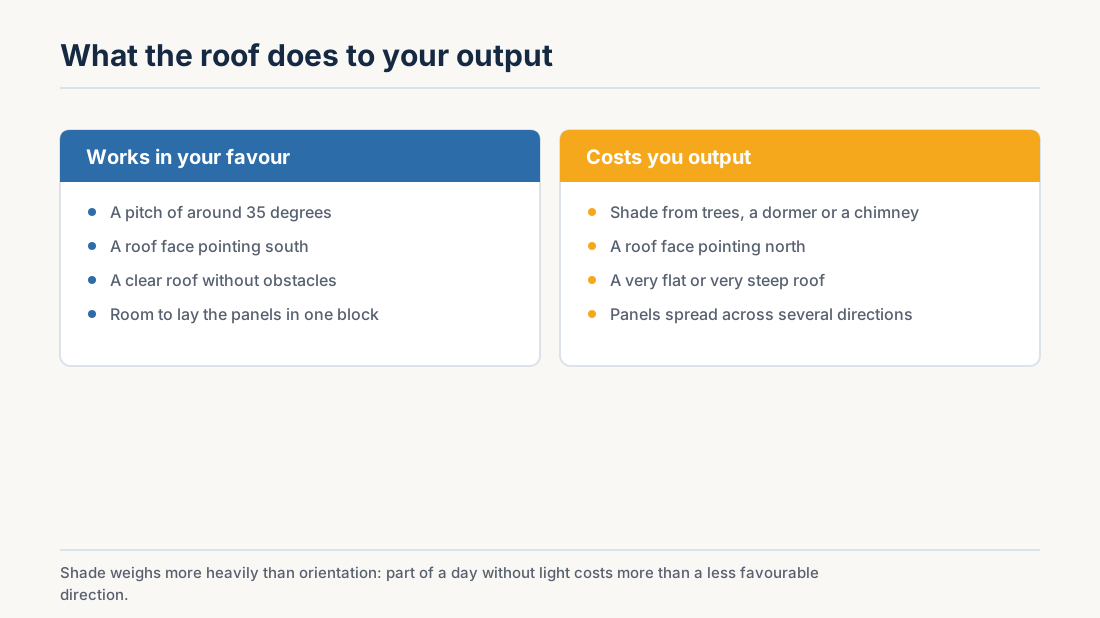
Black solar panels perform especially well on visible residential roofs where appearance is important. South-facing roofs maximize sunlight exposure and output.
These situations benefit most from black panels:
- Modern houses with dark roof tiles
- Homes with limited roof area requiring high-efficiency panels
- Architectural projects prioritizing visual integration
- Installations combined with residential solar solutions
Are black panels effective on flat roofs?
Yes, flat roofs can support angled mounting systems that optimize sunlight capture. The improved appearance remains beneficial for visible installations.
How do black solar panels perform in cold climates with snow?
Black panels absorb more heat, which speeds snow melting and enhances winter energy production compared to lighter colored panels.
What should you consider to select the best full black solar panels?
The best full black solar panels combine high wattage, strong warranties, and advanced cell technologies. Careful selection balances technical specifications with aesthetic factors.
Which technologies influence panel quality most?
Modern panels often incorporate innovations such as TOPCon, HJT, and back-contact cells, which increase efficiency and reduce energy losses in low light. High-end models like LONGi All Black often use these technologies.
What specifications indicate high-quality panels?
- Power rating between 400 Wp and 500 Wp
- Efficiency exceeding 22%
- Temperature coefficient around -0.36% per °C
- Warranty coverage of 25 years or more
- Glass-glass construction for enhanced durability
What factors should influence your purchase decision?
Pay close attention to warranty conditions and degradation guarantees. Investing slightly more upfront can provide better long-term returns and reduce risk.
You can compare offers and system configurations using solar panel options available through Soleva.
Balancing appearance with performance is key when choosing a solar system. Full black solar panels provide excellent efficiency, durability, and a sleek look that integrates well with modern roofs. Focus on high-quality panels backed by solid warranties and pair them with a well-designed system. To find the best option for your home, start by comparing multiple offers and requesting quotes through Soleva.
Frequently Asked Questions
Which solar panels are all-black?
All-black solar panels consist of monocrystalline cells enclosed within black backsheets and frames. These include both standard mono full black modules and more durable glass-glass variants. Premium models conceal busbars to produce a smooth, uniform surface across the panel.
What is a black solar panel?
A black solar panel is a photovoltaic module that uses monocrystalline silicon cells combined with dark coatings and materials, producing a consistent black surface. This design minimizes visual contrast on rooftops while sustaining high energy efficiency.
Are black solar panels better for home value?
Yes, black solar panels typically enhance property value because they blend well with contemporary architecture and provide a discreet, appealing appearance. Buyers often favor systems that look integrated rather than industrial, positively affecting resale value in neighborhoods where roof visibility influences buying decisions.
What is the price difference between full black solar panels and standard panels?
The price difference usually ranges from €20 to €50 per panel depending on brand and technology. Although this results in a slightly higher initial system cost, many homeowners accept this premium because of the improved aesthetics and comparable performance. Over time, this price gap remains relatively small.
Do full black solar panels perform well in low light?
Full black solar panels perform effectively in low-light conditions when equipped with advanced technologies such as TOPCon or HJT. These innovations help increase energy output during cloudy days and early mornings, although white-backed panels may still reflect more diffuse light internally.
Indicative prices for the Belgian market, checked in August 2026 against energy-village.be, thuisbatterij.be and zen-zonne-energie.be. These are market ranges for an installed system including VAT, not a quotation: your price depends on capacity, brand and the state of your existing installation.
Read also
Ready to cut your energy bill?
Compare quotes for solar panels, home batteries and charging points.