Solar panels Belgium
solar panel payback period belgium explained
The solar panel payback period in Belgium usually ranges between 6 and 8 years, depending on factors like system size, electricity savings, and regional incentives. A typical installation in Belgium generates about 850 kWh per kWp each year, which directly reduces your energy bills and speeds up your return on investment. Falling solar panel prices and increasing electricity rates have made returns faster in recent years.
This guide explains how the payback period is calculated, how regional policies such as Brussels’ green certificates affect your savings, and how to use tools like a solar panel payback period Belgium calculator to estimate your own benefits accurately.
What Is the Solar Panel Payback Period in Belgium?
The solar panel payback period in Belgium refers to the number of years needed to recover your investment through electricity savings and available incentives. Most residential solar panel systems break even within 6 to 8 years. Considering that panels typically last between 25 and 30 years, this results in long-term savings and profits.
This payback period depends primarily on the electricity production of your system and how much electricity you offset from the grid. On average, Belgian solar panel systems produce approximately 850 kWh per kWp annually, which translates into significant energy cost reductions.
For more details on the basics of solar systems, visit solar panel fundamentals explained.
How Did the Solar Panel Payback Period in Belgium Change Since 2021?
In 2021, the average payback period ranged from 7 to 9 years due to higher installation costs and different tariff structures. Since then, decreasing panel prices and improved panel efficiency have shortened this timeframe, allowing homeowners to recoup their investment faster.
What Insights Do Users Share About Solar Panel Payback Periods in Belgium?
Online community discussions, such as on Reddit, reveal that households achieve faster payback by maximizing self-consumption and benefiting from rising electricity prices. These real-life examples emphasize the importance of your electricity usage pattern in determining how quickly your system pays back.
How Do Regional Differences Influence the Payback Time?
While the energy output of a solar installation remains consistent across Belgium, financial returns vary according to regional policies and incentives. This results in distinct payback periods based on location.
Here is a regional overview:
- Flanders: Payback typically falls between 7 and 8 years due to capacity tariffs and digital meter regulations.
- Wallonia: Payback varies between 5 and 8 years, influenced by incentive tariffs and dynamic electricity contracts.
- Brussels: Homeowners can expect payback in about 5 years, thanks to green certificates that provide additional income.
These factors explain why solar panels installed in Brussels tend to deliver the quickest returns.
Why Does Brussels Offer the Fastest Payback Period?
Brussels grants green certificates to homeowners that can be sold for extra income, significantly reducing the time needed to recover your investment compared to other regions.
In What Ways Do Tariffs Affect Solar Panel Returns?
Tariffs such as capacity or prosumer tariffs can reduce your net savings from solar energy. However, systems with high self-consumption rates are less affected by these charges, which improves overall profitability.
Which Key Factors Determine Your Solar Panel Payback Period?
The payback time depends on several measurable factors impacting energy production and savings. Understanding these elements helps you estimate whether your system pays back in 5 years or closer to 8 years.
The most influential factors include:
- System cost: Lower installation prices directly shorten payback time.
- Electricity rates: Higher prices increase your annual savings.
- Self-consumption: Belgian households typically use around 36% of their generated solar power immediately.
- Panel efficiency: Panels with greater efficiency produce more electricity per square meter.
- Roof orientation: South-facing roofs provide maximum energy output.
Explore detailed cost variations at solar panels in Belgium.
How Do Orientation and Shading Affect Solar Panel Performance?
Panels angled 30 to 40 degrees facing south deliver the best energy output. Systems oriented east-west distribute energy production throughout the day and can improve self-consumption. Conversely, shading reduces yield significantly and delays payback.
What Impact Does Maintenance Have on Solar Panel Efficiency?
Regular cleaning of solar panels can boost energy production by 5 to 10% in areas with pollution or dust. This increase in output results in faster savings and a shorter payback time.
What Are the Costs of Solar Panels in Belgium?
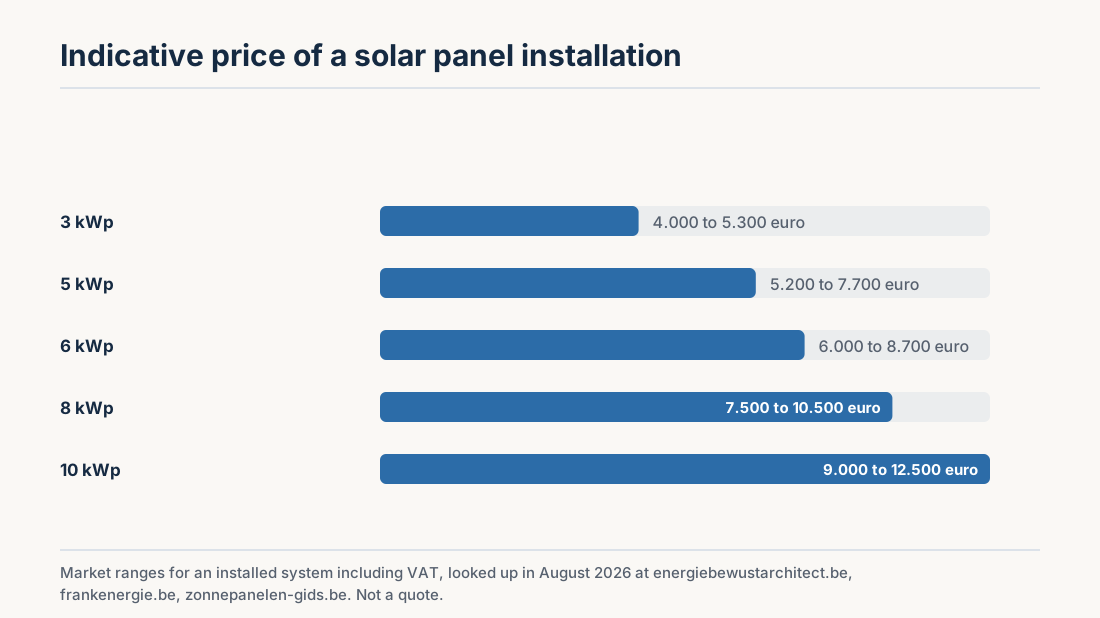
In Belgium, the price for a typical 5 kWp solar panel system without a battery ranges from €5,200 to €7,700 including VAT. Installing higher efficiency panels or adding batteries raises the investment but can lead to greater long-term savings.
The system price depends on factors like size and complexity of installation.
Typical cost estimates for common system sizes are:
- 3 kWp system: €4,000 - €5,300
- 5 kWp system: €5,200 - €7,700
- 10 kWp system: €9,000 - €12,500
How Does a Typical Solar Panel System Cost Break Down?
A standard 5 kWp installation usually includes:
- Solar panels: €3,000
- Inverter: €1,200
- Mounting system: €600
- Installation and labor: €1,200
The total price is approximately €6,000 including VAT. Given annual savings of about €1,000, the payback period is roughly 6 years.
For full cost details, see solar panel price insights.
How Can You Calculate the Solar Panel Payback Period Yourself?
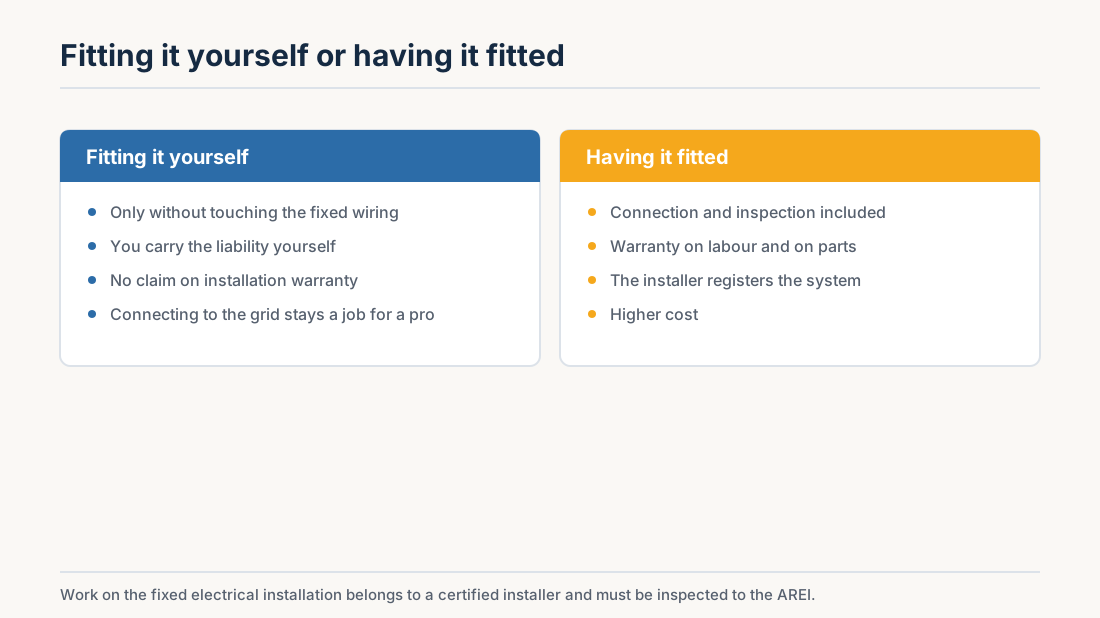
You can estimate the payback period by dividing your total investment by your annual savings. This simple calculation gives a reasonable approximation tailored to your system.
Follow these steps:
- Estimate system output in kWh using system kWp multiplied by 0.9.
- Multiply this output by your electricity rate.
- Subtract applicable tariffs or grid costs.
- Divide total installation cost by your net annual savings.
You can also use a solar panel payback period Belgium calculator to automate these calculations using your specific roof and consumption data.
Example Calculation for a Belgian Household
Consider a household with electrical consumption of 4,000 kWh per year installing a 4.4 kWp system. Using the 0.9 conversion factor, the system produces about 3,960 kWh annually. At an electricity price of €0.30 per kWh, this equals savings of €1,188 each year. With a total investment of around €6,000, the payback period is approximately 5 to 6 years.
How Can You Reduce Your Solar Panel Payback Period?
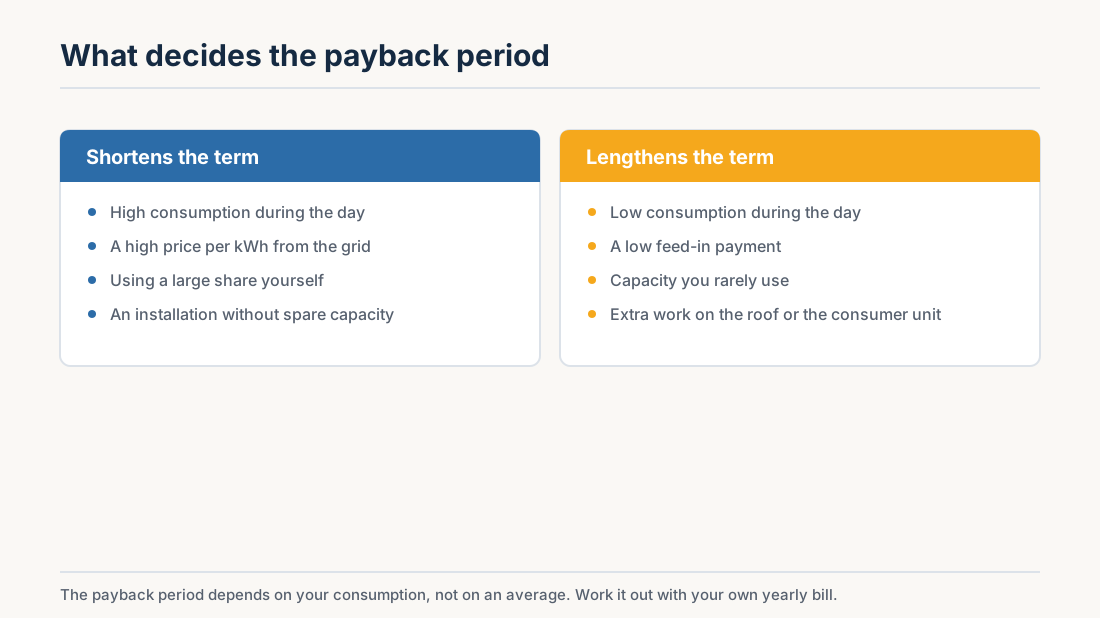
You can shorten the payback time by increasing your energy savings or by lowering initial costs. Implementing small improvements often leads to significant financial benefits over time.
Here are some effective methods:
- Boost self-consumption by following a home energy strategy.
- Choose panels with higher efficiency ratings.
- Optimize roof orientation and avoid shading.
- Use smart appliances during peak solar production periods.
Does Installing a Home Battery Improve the Payback Time?
Including a battery system helps increase self-consumption beyond 36%, which enhances your savings. In Wallonia, homeowners using batteries with dynamic tariffs achieve returns within 5 to 8 years.
How Will Future Electricity Price Changes Affect Payback?
Rising electricity prices will accelerate payback by increasing the value of generated solar power. As energy costs grow, your solar panels save you more money, improving the financial outcome of your investment.
Solar panel systems typically pay back faster than many expect, especially when you consider regional incentives and rising electricity prices. By focusing on maximizing your self-consumption and selecting a well-sized system tailored to your roof, you can significantly shorten your payback period. To begin, analyze your household’s energy use and roof potential, then collect multiple professional quotes. Through Soleva, you can easily request expert advice to find the ideal solar setup for your home’s needs.
Frequently Asked Questions
What is the average solar panel payback period Belgium for a family home?
The average payback period for a family home in Belgium ranges between 6 and 8 years. Homes with higher electricity consumption or better roof orientation often reach payback sooner. Additionally, available incentives in Brussels or optimized energy usage can further reduce this period to around 5 years.
How accurate is a solar panel payback period Belgium calculator?
A solar panel payback calculator for Belgium offers a reliable estimate when you input accurate details such as your roof’s orientation, system size, and electricity usage. It calculates expected production, savings, and payback using standardized conversion factors applied by regulators.
What is the price difference between systems that affect payback?
The cost difference between standard and high-efficiency panel systems directly influences the payback period. While higher efficiency panels require a larger upfront investment, they generate more electricity, which shortens the return time. Conversely, budget systems reduce initial costs but may extend the payback due to lower output.
Does owning an electric car influence the payback period?
Yes, owning an electric vehicle can enhance financial returns. By charging your car during daytime solar production, you increase self-consumption and reduce reliance on grid electricity, which shortens the system’s payback period compared to households without an EV.
How has the solar panel payback period in Belgium changed over time?
The solar panel payback period in Belgium has steadily decreased. Falling installation costs, rising electricity prices, and improvements in panel efficiency and smart energy management systems all contribute to faster returns for newer installations compared to older ones.
Indicative prices for the Belgian market, checked in August 2026 against energy-village.be, thuisbatterij.be and zen-zonne-energie.be. These are market ranges for an installed system including VAT, not a quotation: your price depends on capacity, brand and the state of your existing installation.
Read also
Ready to cut your energy bill?
Compare quotes for solar panels, home batteries and charging points.