Solar panels Belgium
Solar panel financing Belgium: options & loans
Financing solar panel installations in Belgium combines loans, reduced VAT rates, and fiscal incentives that make installing a solar system more affordable without paying the full cost upfront. The overall price depends mainly on the system size and roof type, while financing solutions like renovation loans or green loans allow you to spread payments over time. Typical payback periods last between 5 and 7 years with considerable energy savings through self-consumption.
This guide explains available financing methods, how to calculate monthly repayments, and which incentives are currently applicable.
What financing options are available for solar panel financing Belgium?
Solar panel financing in Belgium includes loans, fiscal benefits, and alternative payment approaches designed to reduce upfront costs. These options have largely replaced direct subsidies that ended in recent years.
Which loan types can you choose for solar panels?
The primary financing method is an energy or renovation loan, which covers both purchase and installation costs, repaid in fixed monthly amounts.
The common loan types are:
- Renovation loan Belgium with fixed interest rates and terms up to 20 years
- Green loan for energy efficiency improvements offering favorable interest rates
- Personal loans suited for smaller scale solar installations
- Mortgage extensions used for large systems or full property renovations
Loan amounts typically vary between €2,500 and €60,000 depending on the project scope, while fixed interest rates keep monthly payments predictable.
Are alternative financing models available?
Yes, alternatives exist but are suited to specific cases. Leasing spreads payments over a contract period but retains ownership with the provider during that time. Crowdfunding and community energy projects mainly apply to shared or commercial installations. Residential use of these models remains limited but is gradually increasing in Belgium’s solar market.
Whenever comparing options, ensure the financing duration aligns with the solar system’s expected lifetime of 25 to 30 years.
How do solar panel loans work in Belgium?
Solar panel loans function as installment credits where you borrow a fixed amount and repay this monthly with interest. This financing structure supports stable budgeting and corresponds with long-term energy savings.
What are the conditions for obtaining a solar panel loan?
Lenders require that loan funds are used exclusively for energy improvements like photovoltaic systems. You must provide an installation quote and proof of sufficient income.
Main conditions include:
- Fixed monthly repayments
- Loan terms up to 120 months or longer, depending on loan product
- Approval based on income verification and debt-to-income ratio
- Funds restricted to energy upgrade expenses
Your debt capacity is usually limited to about 30% of your income to manage financial risk.
How does a solar panel financing Belgium calculator assist you?
A solar panel financing calculator estimates monthly repayments, total owed, and loan duration based on system price and interest rate. It allows you to compare different scenarios, such as shorter loan terms with higher payments or longer terms with lower payments.
This tool helps you align your loan payments with expected electricity savings to ensure the system effectively pays for itself from the start.
What is the price range for solar panels and how does financing influence it?
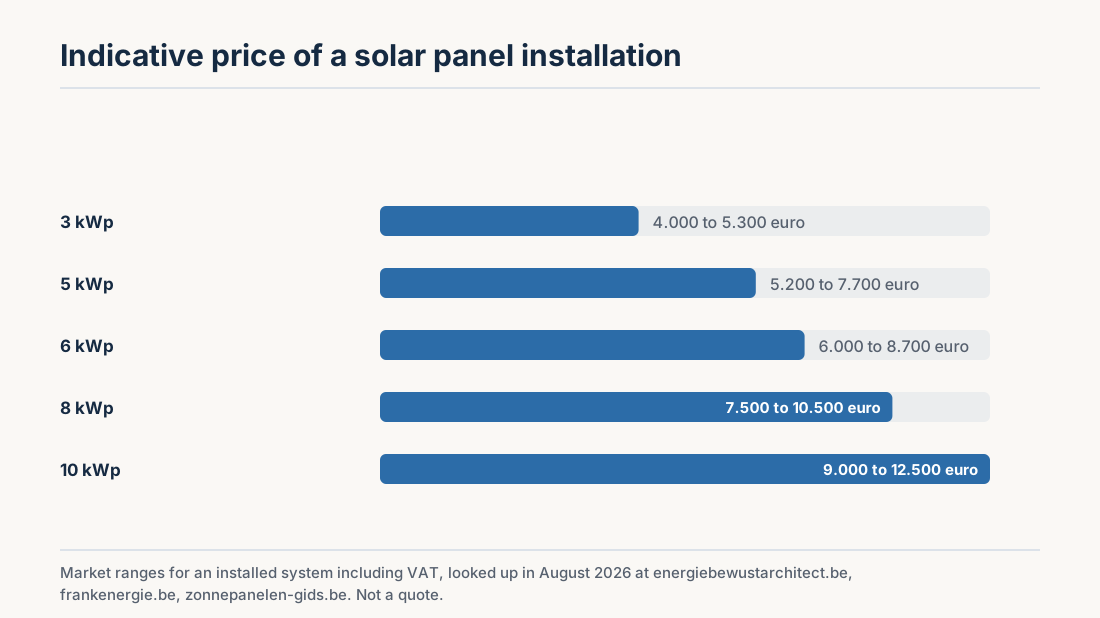
Residential solar panel system prices in Belgium typically range from €2,400 to €12,000, depending on capacity and installation complexity. Financing lets you spread payments over time but increases the overall cost due to interest.
Common price ranges include:
- 3 - 5 kWp systems: €5,200 - €7,700
- 6 - 10 kWp systems: €9,000 - €12,500
You can learn more about system sizes and pricing on the solar panels overview page.
Example calculation of financed solar installation costs
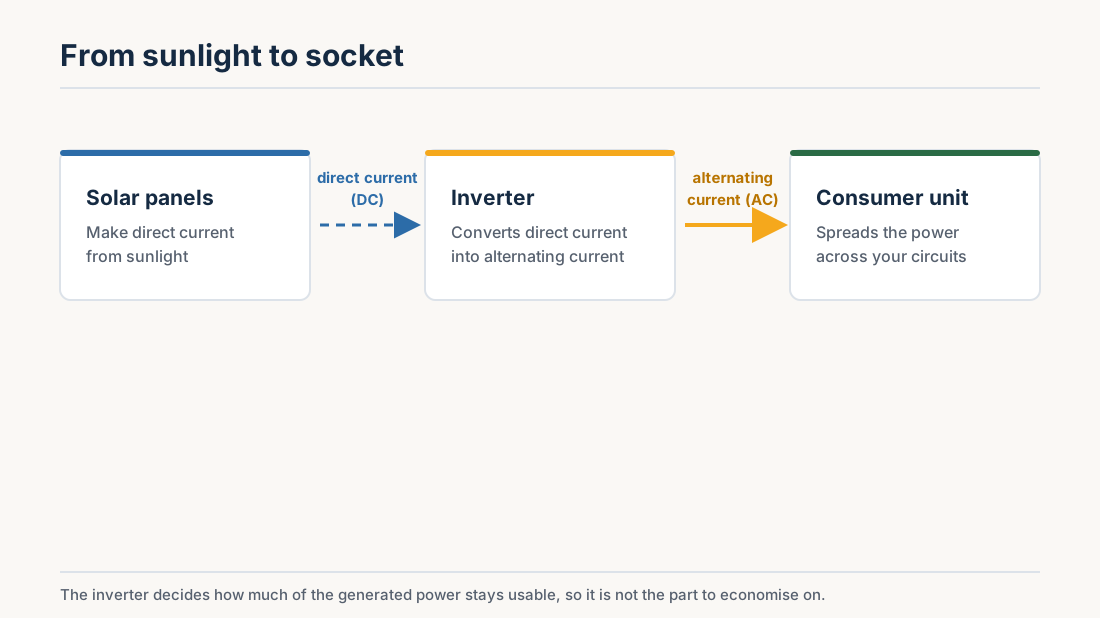
A typical financed installation for a 10-panel system (each 400 Wp) involves the following costs: €4,000 for panels, €1,200 for the inverter, €2,000 for installation, and €200 for monitoring, totaling approximately €7,400 including VAT.
Financed over 10 years at a fixed interest rate, monthly payments range from about €70 to €90 depending on the exact rate. These payments generally match the average energy savings achievable from a 5 kWp system.
In what way does financing affect payback time?
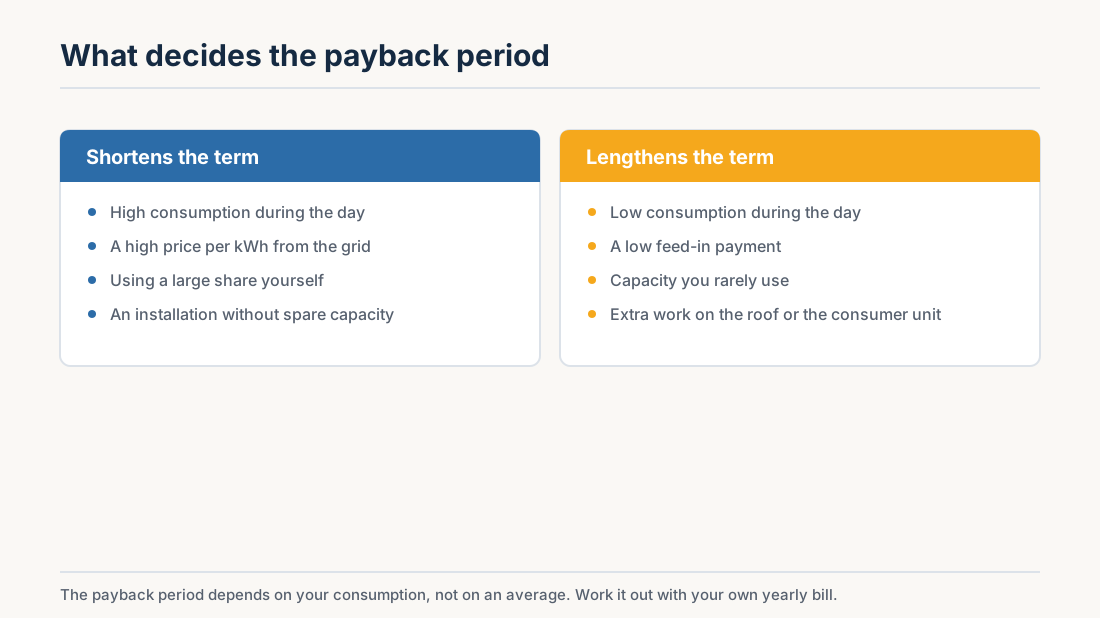
Financing extends the payback period slightly due to interest charges. Nonetheless, solar systems typically generate between 900 and 1,000 kWh per kWp yearly, making the return on investment appealing. Many households recover costs within the loan duration.
Which factors influence the best solar panel financing Belgium choice?
The most suitable financing depends on your financial capacity, system size, and long-term energy objectives. No single solution fits every household.
How does the interest rate impact your overall investment?
The interest rate greatly influences total repayment amounts. Lower rates reduce your overall cost, while even small rate differences can change the total paid by hundreds or thousands of euros over time.
Why is system size important for financing?
Larger systems require bigger loans but also produce higher savings. Properly sizing your system allows monthly payments to align with electricity cost reductions. Oversized systems may decrease financing efficiency.
What impact does self-consumption have on financing?
Self-consumption measures how much of your solar electricity is used directly. Higher self-consumption increases your savings and makes financing more beneficial. Integrating battery storage can improve usage rates up to about 80%.
Explore system performance and consumption patterns on the solar panels guide to better predict your savings.
Which incentives and tax benefits support solar panel financing Belgium?
Solar panel financing in Belgium largely relies on indirect incentives instead of direct subsidies, reducing upfront costs and improving financing outcomes.
Is the reduced VAT rate still in effect?
Yes, a favorable 6% VAT rate applies for homes older than 10 years for solar installations up to 10 kVA. This significantly lowers the total system price compared to the standard VAT rate.
Are grants or subsidies still available?
No direct subsidies are currently available for new residential solar systems, as previous premium programs ended in 2024. The focus now lies on loans and fiscal advantages.
Which regional incentives remain?
Support varies by region:
- Wallonia offers zero-interest renovation loans such as Reno-type financing
- Brussels provides green certificates that generate annual returns
- Flanders emphasizes loans and tax deductions
These regional initiatives replace direct grants and encourage long-term investment.
How do tax deductions improve financing conditions?
Investment deductions reduce your taxable income when you invest in energy improvements. This effectively lowers the net system cost and enhances your return on investment. For businesses, such deductions remain a significant incentive to adopt solar power.
Selecting the right financing approach for your solar installation requires balancing monthly repayments with your expected long-term savings. With options like loans, a reduced VAT rate, and tax deductions, solar panels have become accessible even without large upfront capital. Focus on choosing a system size that matches your electricity use and a loan duration that keeps payments manageable. Through Soleva, you can compare different offers and request personalized quotes to secure a financing plan suited to your needs.
Frequently Asked Questions
What is the best solar panel financing Belgium option for homeowners?
Your ideal financing depends on your financial stability and project size. A renovation loan with fixed interest and extended terms suits most homeowners because it offers predictable monthly payments. If you qualify, combining this loan with the reduced VAT rate creates the most cost-effective and balanced financing.
How does a solar panel financing Belgium calculator estimate loan payments?
This calculator factors in your system price, annual interest rate, and loan term to estimate monthly repayments and total loan cost. It allows you to compare various scenarios, like shorter loan terms with higher payments against longer terms with smaller monthly costs, helping you align financing with your budget and expected savings.
What is the price difference between financed and upfront solar panels Belgium cost?
Financing typically increases the total price due to interest accrued over the loan period. This difference depends on your loan’s interest rate and repayment duration. Shorter loans lower interest but raise monthly payments, while longer loans reduce monthly costs but increase total repayments. Your choice depends on your financial flexibility and savings goals.
Can solar panels in Belgium be financed together with other home renovations?
Yes. Many loans permit combining solar panels with other energy renovations such as insulation, heat pumps, or window upgrades. This combined financing improves overall energy performance and your home’s energy certification (EPC) score, often resulting in better loan terms and increased long-term savings than installing solar panels alone.
Is solar panel financing Belgium still worthwhile without subsidies?
Financing remains attractive despite the absence of direct subsidies because solar system prices have dropped and energy costs remain high. With robust annual energy yields and reduced VAT, systems often break even within loan durations. Optimizing self-consumption by using smart devices or battery storage further enhances profitability.
Indicative prices for the Belgian market, checked in August 2026 against energy-village.be, thuisbatterij.be and zen-zonne-energie.be. These are market ranges for an installed system including VAT, not a quotation: your price depends on capacity, brand and the state of your existing installation.
Read also
Ready to cut your energy bill?
Compare quotes for solar panels, home batteries and charging points.