Solar panels Belgium
solar panel yield belgium explained
The average solar panel yield in Belgium ranges between 850 and 1,100 kWh per kWp annually, influenced by factors such as roof orientation, system size, and weather conditions. This yield determines the total electricity your system produces and the speed at which you recover your investment. Typically, Belgian households consume about 30% to 40% of their solar production directly, which significantly affects the financial savings.
What is the average solar panel yield per kWp in Belgium?
The average solar panel yield in Belgium varies between 850 and 1,100 kWh per installed kWp each year. For example, a 5 kWp system typically generates between 4,250 and 5,500 kWh annually under standard Belgian conditions.
This variation depends mainly on roof orientation, shading, and system quality. A south-facing array with an optimal tilt angle generally achieves yields closer to the upper end of this range. In contrast, east-west oriented systems tend to produce energy more evenly throughout the day but with slightly lower total annual output.
How does real-world data compare with reported solar panel yields in Belgium?
Data shared by users in forums such as Reddit often show real-life yields between 800 and 1,000 kWh per kWp. These figures reflect typical conditions such as partial shading, non-ideal orientations, and seasonal weather fluctuations. These observations align well with expected performance for most residential rooftops, which rarely achieve perfect installation conditions.
What do kWh and kWp represent in solar panel yield?
The term kWh represents the actual energy produced, while kWp denotes the peak power capacity of the solar system under ideal conditions. The ratio of kWh per kWp indicates how efficiently the system converts sunlight into electricity over the course of a year. A higher ratio means better system performance and a faster return on your investment.
How can you calculate your solar panel yield in Belgium?
You can estimate your solar panel yield by multiplying the installed capacity in kWp by a conversion factor of approximately 0.9. This factor converts the peak power rating into expected annual energy production measured in kilowatt-hours.
This method is straightforward and commonly used by energy regulators and solar professionals.
Example calculation for a typical household
Suppose a household consumes 4,000 kWh annually. Using the conversion factor, the required system size is calculated as follows:
- Required capacity: 4,000 ÷ 0.9 = 4,444 Wp
- Assuming panels of 400 Wp each, the number of panels needed is about 11.
This example demonstrates how the system size should be designed to meet your energy demand effectively.
How reliable are solar panel yield calculators?
Calculators provide reliable estimates when accurate inputs such as roof orientation, shading, and system capacity are included. Tools like KBC solar panel applications offer quick insights; however, they rely on assumptions and averages. It is best to consider these estimates a baseline and adjust based on the specific characteristics of your roof and location.
Which factors affect solar panel performance in Belgium?
The performance of solar panels depends on several key factors that directly influence annual yield and system efficiency. The primary elements include:
- Panel power rating in watt peak (Wp)
- Roof orientation and tilt angle
- Geographical location and sunlight exposure
- Shading from trees, neighboring buildings, or other obstructions
- Regular maintenance and cleaning frequency
Why roof orientation and tilt angle are critical
A south-facing roof with a tilt between 30 and 40 degrees achieves the highest energy yield. East-west orientation systems usually produce marginally less but offer a production profile that better matches energy consumption patterns during the day, often improving self-consumption and financial returns.
How shading impacts your solar panel output
Shading from objects blocks sunlight and reduces output significantly. Even partial shading can affect an entire string of panels, lowering system efficiency. In urban locations like Brussels, shading from nearby buildings presents a common challenge for solar installations.
How do seasonal weather and temperature influence solar panel yield in Belgium?
Weather conditions strongly affect solar panel yield throughout the year, with production peaking in late spring. May and June are typically the most productive months due to longer daylight hours and moderate temperatures.
What happens when temperatures rise?
Solar panels begin to lose efficiency when temperatures exceed 25°C. For every additional degree above this threshold, output decreases by approximately 0.4%. During heatwaves, overall production losses can reach up to 15%. This explains why panels often generate more power on sunny spring days than hot summer afternoons.
Which months offer the highest and lowest energy production?
May, June, April, and August are the most productive months, while December and January yield the least energy due to shorter daylight and increased cloud cover. However, clear and cold winter days still contribute meaningful electricity generation despite reduced sunlight hours.
What is the price of solar panels in Belgium and how does it relate to yield?
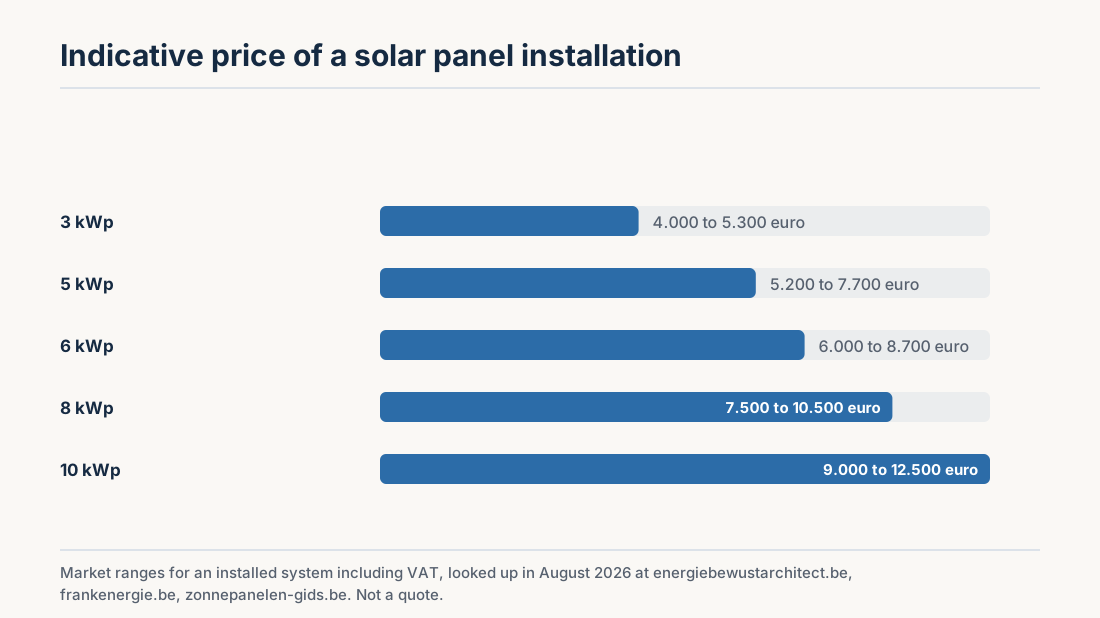
The cost of solar panel systems in Belgium generally ranges between €3,500 and €5,700 for typical residential installations. How quickly you recover this investment depends largely on your system’s yield and energy consumption patterns.
A breakdown for a mid-size solar installation might look like this:
- Solar panels: €2,200
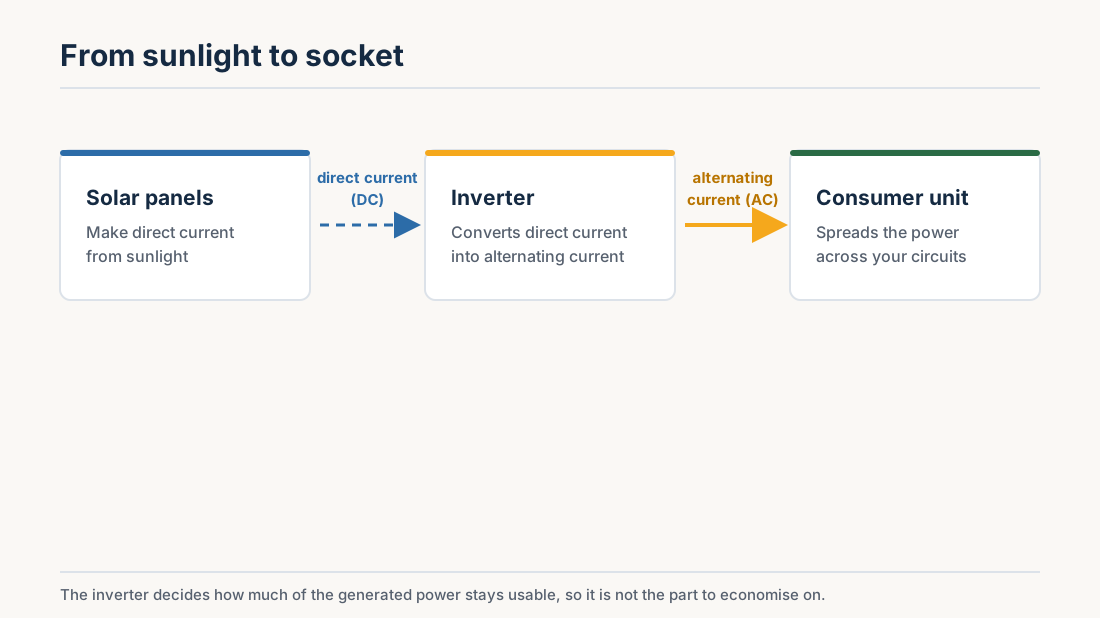
- Inverter: €1,200
- Installation labor: €1,500
- Monitoring system: €300
This results in a total investment of approximately €5,200 including VAT.
Example linking solar panel price to yield
A 5 kWp system typically produces around 4,500 kWh annually. If you directly consume 36% of this energy, that equals 1,620 kWh of self-used electricity, which reduces your electricity bills and shortens the payback period.
For more detailed system options and configurations, visit solar panel system options.
How does yield influence payback time?
Higher solar panel yield results in greater annual savings, reducing the payback period. In Belgium, residential solar investments usually pay off within 5 to 9 years, depending on your location. For example, residents in Brussels can expect a faster return due to green certificate incentives.
How do self-consumption and battery storage improve the financial value of your solar yield?
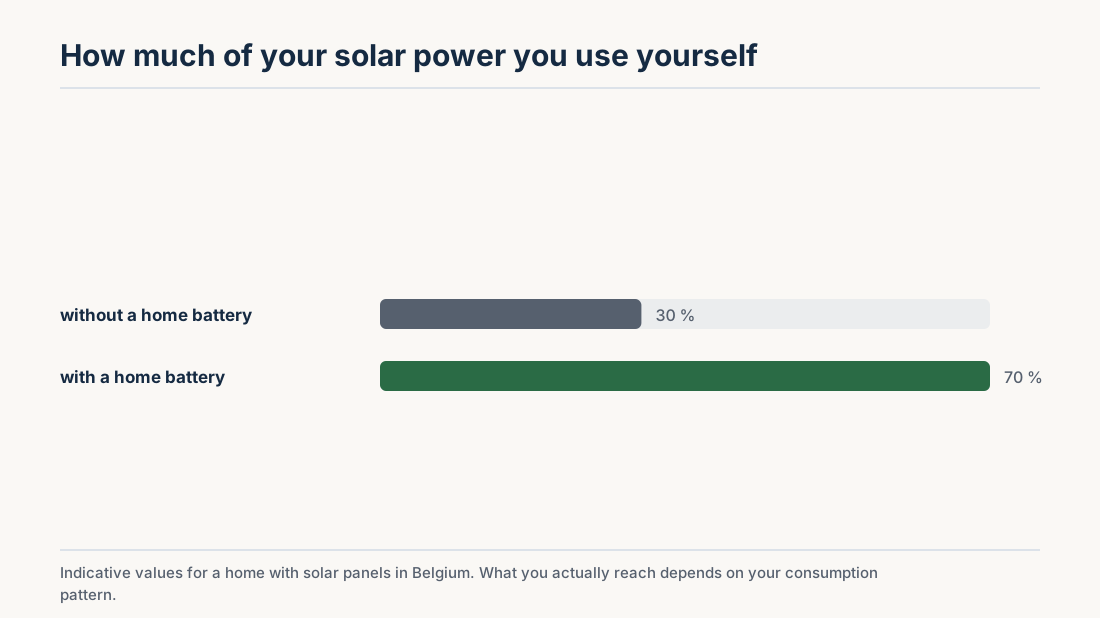
Increasing self-consumption enhances the financial benefits of your solar system. Belgian households generally consume about 36% of their generated electricity directly. Raising this percentage can significantly improve savings.
The benefits of home battery storage
Installing a home energy storage system can boost self-consumption rates to between 60% and 70%. This reduces your dependence on grid electricity and enhances the overall economic value of your solar investment. Battery solutions are especially beneficial for households with higher energy demands in the evening.
Electric vehicles as a solar energy partner
Electric vehicles typically increase household electricity demand by 1,500 to 5,000 kWh annually. Charging your vehicle during sunny daylight hours maximizes solar energy use, aligns production with consumption, and improves overall financial returns.
What common mistakes reduce solar panel yield in Belgium?
Several avoidable errors can lower solar panel performance and limit system output. The most frequent issues include:
- Incorrect roof orientation
- Neglecting shading analysis
- Insufficient cleaning and maintenance
- Inadequate system sizing - either too large or too small
- Poor choice of inverter
Most of these mistakes stem from poor system design rather than installation quality.
Why regular maintenance is essential
Dirt, pollen, and dust buildup can reduce panel efficiency noticeably during dry periods, sometimes by more than 7%. While rain can help clean panels, regular washing restores optimal output and protects your long-term energy yield.
How to choose the right system size
Installing a system that matches your household consumption is critical. Oversized systems produce excess electricity that may have lower financial benefits, while undersized systems fail to cover your energy needs. You can estimate the appropriate size using solar production planning tools.
Understanding how your solar panels generate electricity empowers you to make informed decisions for your investment. Annual yield depends on factors such as roof orientation, climatic conditions, and your household’s direct consumption - not solely on the quality of the panels. It is important to align system size with your energy usage and consider battery storage to increase savings. Through Soleva, you can compare various solar options and request quotes tailored to your expected production and budget, helping you optimize your solar panel yield in Belgium.
Frequently Asked Questions
What is the average yield of solar panel yield Belgium systems?
The average annual yield for solar panel systems in Belgium ranges from 850 to 1,100 kWh per kWp. Systems with optimal orientation and minimal shading achieve better output, while typical household installations may perform slightly lower due to roof limitations and variable weather.
How does solar panel yield Belgium per kWh vary throughout the year?
Solar panel yield in Belgium is higher during spring and early summer because of longer daylight hours and moderate temperatures. Conversely, winter months produce less energy due to shorter days and frequent cloud cover. Such seasonal changes are normal in yearly energy generation.
What costs are involved in improving solar panel yield?
Improving your solar panel yield can involve various costs. Cleaning services are relatively affordable, but investing in optimizers or battery storage requires a larger financial commitment. Each enhancement improves either the efficiency or the self-consumption of your system, leading to greater savings over time.
Does cleaning significantly improve solar panel yield in Belgium?
Cleaning solar panels can noticeably improve yield, especially when dirt, dust, or pollen accumulate. During dry spells, panels may lose over 7% efficiency. Regular cleaning maintains consistent production and protects your panels’ performance throughout the year.
How do smart energy habits influence the value of solar panel yield?
Using electricity strategically during sunny periods increases the value derived from your solar generation by raising self-consumption and reducing reliance on grid power. Smart energy habits, such as running appliances during peak production hours, directly enhance your financial returns from solar panels.
Indicative prices for the Belgian market, checked in August 2026 against energy-village.be, thuisbatterij.be and zen-zonne-energie.be. These are market ranges for an installed system including VAT, not a quotation: your price depends on capacity, brand and the state of your existing installation.
Read also
Ready to cut your energy bill?
Compare quotes for solar panels, home batteries and charging points.