Solar panels Belgium
Micro inverter solar panels price & guide
Micro inverter solar panels convert sunlight directly into usable electricity by attaching a small inverter to each panel, which enhances energy output and system reliability compared to traditional solar installations. This configuration boosts energy production on roofs with shading or multiple orientations, while typical small residential setups start around €3,000 - €4,000 incl. VAT.
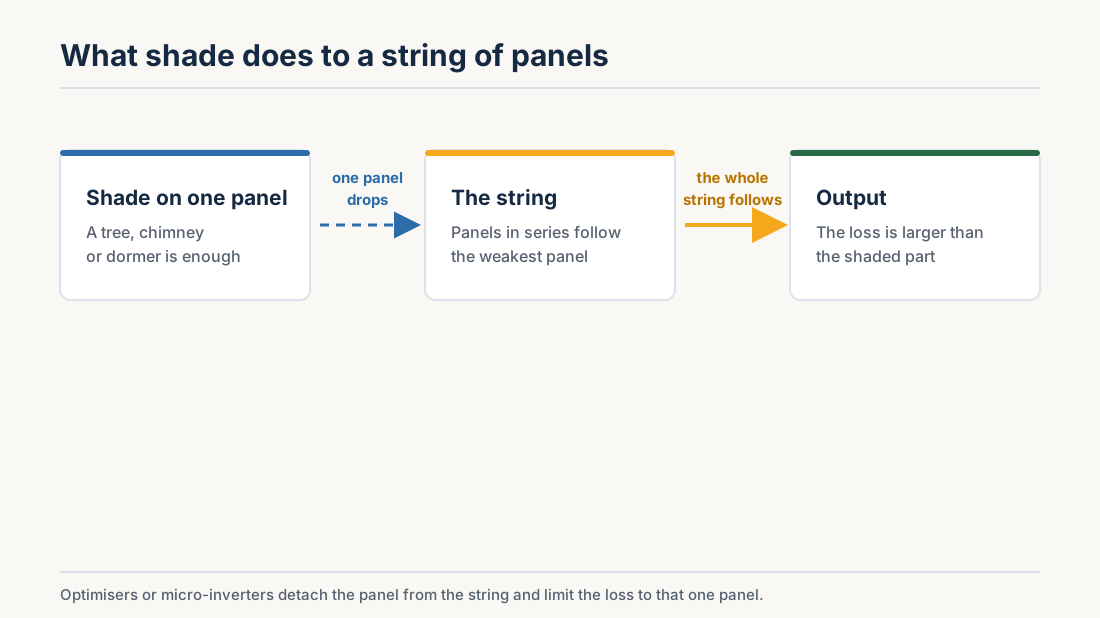
You gain advantages such as optimization at the panel level, improved safety through low-voltage alternating current, and detailed energy monitoring.
What makes micro inverter solar panels suitable for solar energy?
Micro inverter solar panels maximize energy production by converting direct current (DC) to alternating current (AC) at each individual panel, which prevents performance losses throughout the system. Since each panel functions independently, shading or dirt on one panel does not reduce the output of the others.
This panel-level optimization increases the annual energy yield by 10% - 15% in complex roof conditions. In areas with partial shading or roofs facing east and west, this improvement directly enhances self-consumption of solar power.
How does panel-level optimization improve performance?
Panel-level optimization ensures that each solar module operates at its own maximum power point. If one panel is shaded, it no longer limits the performance of the entire string of panels. This setup provides more consistent energy production throughout the day.
Why does safety improve with micro inverters?
Safety is enhanced because micro inverters convert electricity to low-voltage AC right on the roof. This design eliminates the need for high-voltage DC cables, reducing fire hazards and supporting rapid shutdown compliance required in modern installations.
Which homes benefit most from this technology?
Homes featuring multiple roof angles, partial shading, or limited roof space benefit most from micro inverter solar panels. The system is also well suited when you are planning gradual expansions in the future.
You can explore general system setups on solar panel solutions for a broader understanding.
How does a solar panel micro inverter vs inverter comparison look?
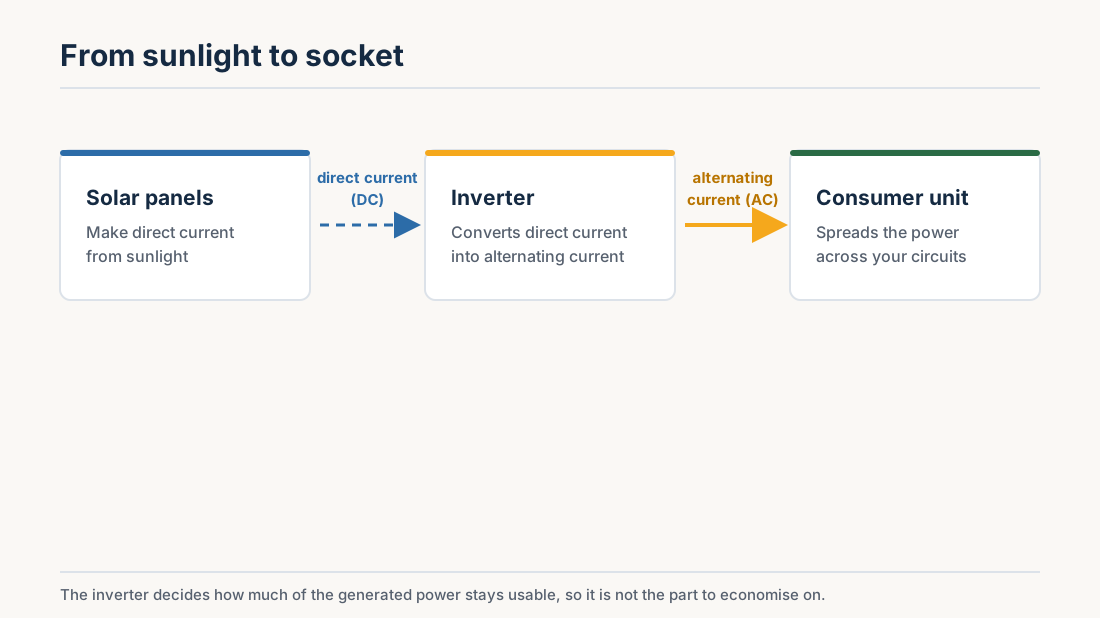
The comparison between micro inverter solar panels and traditional string inverters reveals that micro inverter systems outperform in flexibility and reliability, though string inverter setups typically have lower upfront costs.
Key differences include:
- Efficiency under shading: high for micro inverters, low for string inverters
- System reliability: distributed with micro inverters versus single point of failure with string inverters
- Monitoring capabilities: per panel monitoring with micro inverters versus system-level only in string inverters
- Installation style: modular for micro inverters versus centralized for string inverters
- Price: micro inverter systems usually have a higher initial investment
What is the difference with power optimizers?
Power optimizers enhance panel output but still depend on a central inverter to convert DC to AC. Micro inverters perform full conversion on each panel, removing dependence on a single inverter device.
When is a string inverter still the better option?
A string inverter system suits straightforward roofs with no shading and uniform panel orientation. In such cases, the difference in performance is minimal, while string systems remain more cost-effective.
What is the price of micro inverter solar panels?
The price for micro inverter solar panels typically ranges from €2,250 - €3,000 incl. VAT for a 5 kWp system. Individual micro inverter units, such as the Enphase micro inverter, cost about €60 - €70 per unit depending on capacity.
Typical system sizes and approximate equipment costs are as follows:
- Small system 3 kWp: €4,000 - €5,300 incl. VAT
- Medium system 5 kWp: €5,200 - €7,700 incl. VAT (equipment portion)
- Large system 10 kWp: €9,000 - €12,500 incl. VAT (equipment portion)
Calculation example for a typical home system
Consider a 10-panel system with built-in micro inverters; the costs break down as:
- 10 panels × €250 = €2,500
- 10 micro inverters × €70 = €700
- Mounting system = €600
- Installation = €2,000
- Monitoring system = €150
This results in a total investment of approximately €5,950 incl. VAT.
What influences the Enphase Micro inverter price?
The cost of an Enphase micro inverter depends on panel wattage compatibility, system size, and available monitoring features. Higher capacity models designed for contemporary 400 Wp to 540 Wp panels tend to raise the price but provide better energy output.
You can compare full system pricing with a complete solar installation overview.
What maintenance do micro inverter solar panels require?
Micro inverter solar panel systems require minimal upkeep since each inverter works independently and provides monitoring tools that detect faults quickly. Most micro inverters come with a 25-year warranty.
Common maintenance tasks include:
- Annual visual inspection of panels and wiring
- Monitoring system performance through an app or dashboard
- Cleaning panels when accumulating dirt reduces energy output
- Electrical inspections approximately every 5 years
How does monitoring improve maintenance?
Monitoring tools offer real-time tracking of each panel’s output, enabling you to identify underperformance immediately rather than waiting for system-wide issues.
How long do solar microinverters last?
Solar microinverters have an average lifespan of around 25 years, matching modern solar panels. This helps avoid having to replace central inverters every 10 to 15 years, which improves overall system longevity and value.
Which roof types and situations suit micro inverter solar panels best?
Micro inverter solar panels are ideal for complex roofs with shading, various orientations, or limited surface area. These conditions often reduce efficiency in traditional solar systems.
Typical ideal scenarios include:
- East-west oriented roofs
- Partial shading caused by trees or chimneys
- Small roof surfaces that require the highest possible power output
- Plans to expand the system later
Why do solar panels with micro inverters built in help?
Solar panels with built-in micro inverters simplify installation and reduce wiring complexity. Plug-and-play connections shorten the installation time and lower labor costs, making the process smoother.
What about system expansion later?
You can expand your solar power system easily by adding panels with their own micro inverters without needing to upgrade or replace a central inverter.
What should you look for when ordering micro inverter solar panels?
Before purchasing, you should assess technical compatibility, certification compliance, and the ability to scale the system. These checks help prevent performance issues and ensure your solar power setup remains reliable over time.
Consider this checklist of key criteria:
- Panel wattage compatibility, typically between 400 Wp and 540 Wp
- Certification that complies with grid standards
- Warranty period of 20 to 25 years
- The quality and usability of the monitoring platform
- Ease of installation and wiring design
What is a micro inverter solar system wiring diagram?
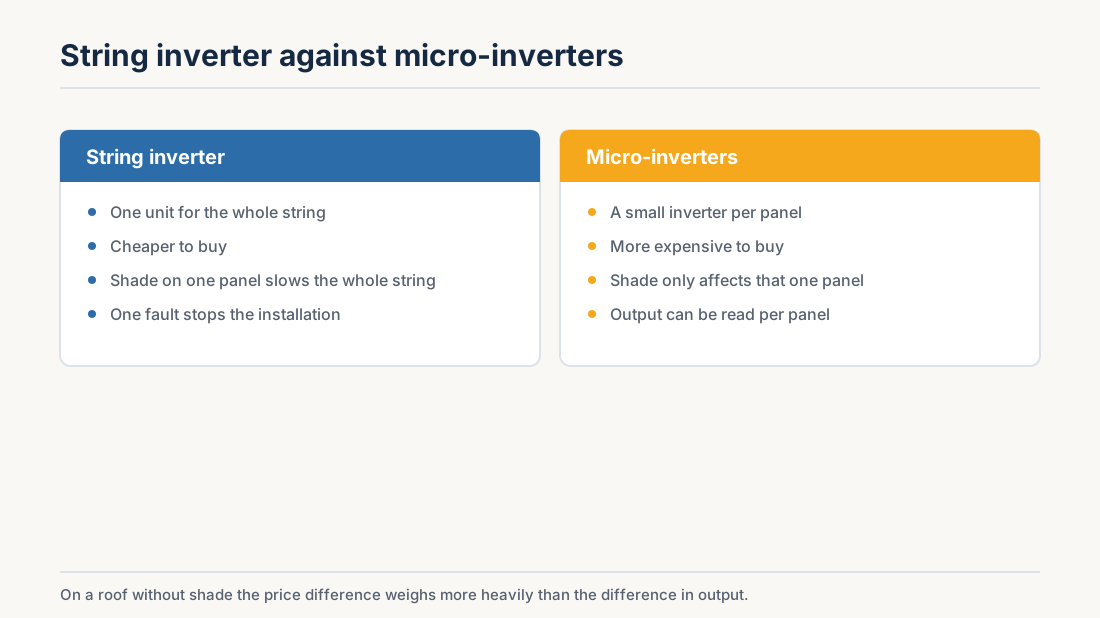
A micro inverter solar system wiring diagram illustrates each panel connected individually to its own inverter, with outputs linked via an AC trunk cable that connects directly to your home’s main electrical panel.
Are solar panels with micro inverters better?
Solar panels equipped with micro inverters offer better performance in cases of shading, complex roof layouts, or when planning to expand later. For simple roof systems, the additional cost may not justify the improved output. For personalized assessments and to compare options, visit Soleva to request tailored quotes.
Choosing a solar power system that includes panel-level conversion using micro inverters provides improved reliability and superior performance, especially if your roof has shading or multiple roof orientations. Although the initial investment tends to be higher, the increased energy production and longer inverter lifespan often result in better long-term value.
To get started, I recommend assessing your roof and obtaining at least three detailed quotes through Soleva. This approach ensures you find the most suitable system design for your home and avoid overspending on unnecessary features.
Frequently Asked Questions
What is a solar panel micro inverter?
A solar panel micro inverter is a compact device installed on each solar panel that converts direct current (DC) generated by the panel into alternating current (AC) at the source. This setup allows each panel to function independently, improving system reliability and energy production, particularly when shading or mismatched panels affect part of the array.
Are micro inverter solar panels worth the higher price?
Micro inverter solar panels are often worth the extra cost when your roof has shading, multiple orientations, or you plan to expand the system over time. They increase overall energy yield and have longer lifespans than traditional systems, which can offset the initial expense. For simple, unshaded roofs, their advantage is less pronounced, so comparison is advised.
What is the price difference between micro and string inverter systems?
The upfront costs for micro inverter systems are generally higher by about €0.05 to €0.15 per watt compared to string inverter systems. Despite the increased cost, micro inverters can deliver more energy in complex roof conditions, which may shorten your payback period through improved efficiency and lower maintenance costs.
Do micro inverter solar panels work during power outages?
Standard micro inverter solar panel systems do not supply power during grid outages because they automatically shut down for safety reasons. However, if combined with a compatible battery system and backup controls, certain micro inverter setups can provide limited power when the grid is down.
Where can you find micro inverter solar panels for sale?
You can purchase micro inverter solar panels through specialized platforms such as Soleva, where you can compare different system configurations and request quotes from certified installers. This helps you evaluate cost, design, and compatibility before committing to a purchase.
Indicative prices for the Belgian market, checked in August 2026 against energy-village.be, thuisbatterij.be and zen-zonne-energie.be. These are market ranges for an installed system including VAT, not a quotation: your price depends on capacity, brand and the state of your existing installation.
Read also
Ready to cut your energy bill?
Compare quotes for solar panels, home batteries and charging points.