Home battery belgium
5kWh plug and play battery price and guide
A 5kwh plug and play battery stores electricity for your home and connects directly to a standard socket, providing immediate energy storage without complex installation procedures. This plug-in battery typically uses lithium iron phosphate cells and offers around 5.12 kWh of capacity, which suits households with 3 - 4 kWp solar systems. You can increase your self-consumption, reduce reliance on the grid, and shift energy use from daytime to nighttime.
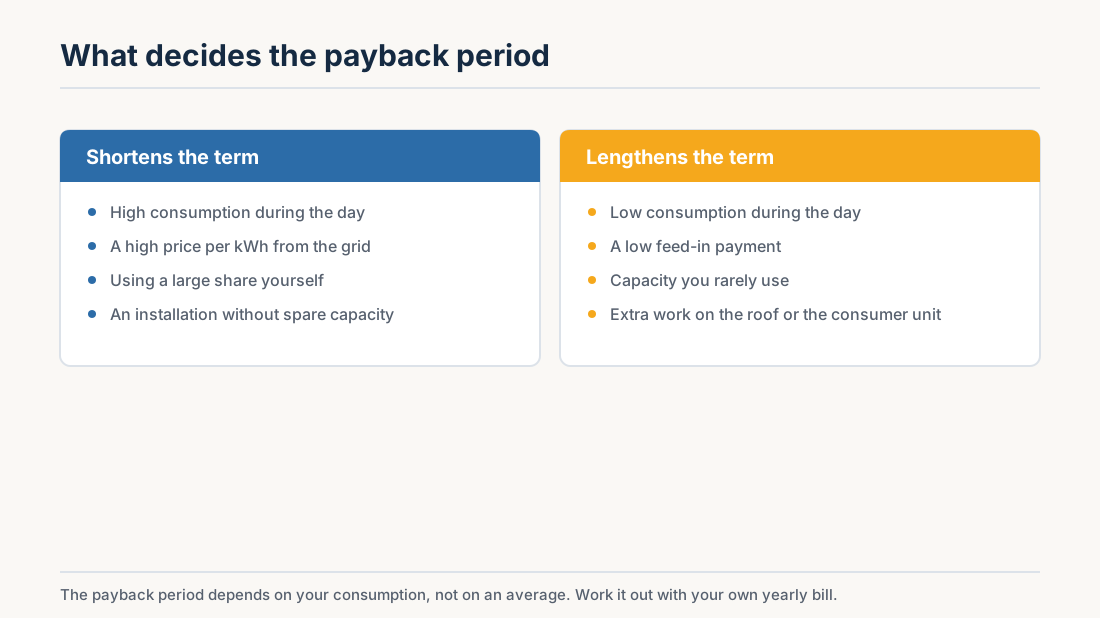
This guide explains how these batteries work, their costs, popular models like the HomeWizard Plug-In Battery and Marstek Venus E V3, and helps determine if this solution fits your needs.
Read on to discover detailed insights and practical advice on 5kwh plug and play batteries to help you make an informed decision.
How Does a 5kWh Plug and Play Battery Work?
Indicative prices for the Belgian market, checked in August 2026 against energy-village.be, thuisbatterij.be and zen-zonne-energie.be. These are market ranges for an installed system including VAT, not a quotation: your price depends on capacity, brand and the state of your existing installation.
A plug-in thuisbatterij 5 kWh stores excess electricity and releases it later through a built-in inverter connected to a wall socket. This system operates using AC coupling, allowing it to work independently from your solar inverter.
The battery charges when your solar panels produce more electricity than you consume. It discharges to supply your household when your consumption surpasses production, which reduces your usage of the electrical grid.
How Does Energy Flow in Daily Use?
The energy flow follows a straightforward pattern. During the day, your solar panels generate electricity. Any unused energy charges the battery. In the evening, the battery supplies power to your home appliances.
- Daytime surplus electricity stored in the battery
- Evening electricity consumption powered by the battery
- The grid is used only when the battery is depleted
What Role Does a P1 Meter Play?
A P1 meter collects real-time data from your smart meter and sends consumption information to the battery. This enables automatic balancing between your production and usage to maximize efficiency.
Without a P1 meter, the system cannot optimize charging and discharging processes effectively.
What Are Typical Technical Specifications?
Key specifications for a typical 5 kWh plug and play battery include:
- Capacity: approximately 5.12 kWh
- Voltage: around 51.2 V
- Output power: 800 W through a standard socket, up to 2500 W on a dedicated circuit
- Cycle life: over 6,000 cycles
- Lifespan: 10 to 15 years
Systems like the HomeWizard Plug-In Battery use micro-inverters, which improve efficiency at lower loads compared to larger inverters.
Which Technologies or Models Are Available for a Plug-In Thuisbatterij 5 kWh?
The most common options feature modular lithium batteries combined with smart energy management software. These models vary in power output, expandability, and control features.
What Defines the HomeWizard Plug-In Battery Specifications?
The HomeWizard system emphasizes simplicity and efficiency. It includes a micro-inverter with an 800 W output and allows modular stacking up to 10.8 kWh.
- 2.7 kWh capacity per module, expandable as needed
- WiFi control and app-based monitoring
- Standby power consumption approximately 1 W
- No professional installer required
How Does the Marstek Venus E V3 Perform?
The Marstek 5.12 kWh V3 Thuisbatterij plug and play offers a higher peak output and includes hybrid inverter functionality. It supports both on-grid and off-grid operation modes.
- Maximum output of up to 2500 W
- Expandable for increased capacity
- Smart AI-based optimization adapting to your usage patterns
- IP65-rated for protection against dust and water
What About the Duravolt Plug-In Battery 5.12 kWh?
The Duravolt plug-in battery 5.12 kWh focuses on modular expansion and higher capacity stacking, prioritizing scalability over compact design.
These options fall under the category of beste plug-and-play thuisbatterij, with your choice depending on your household energy profile.
You can learn more about system integration with solar panels by reading our solar panel systems guide.
How Much Does a 5kWh Plug and Play Battery Cost?
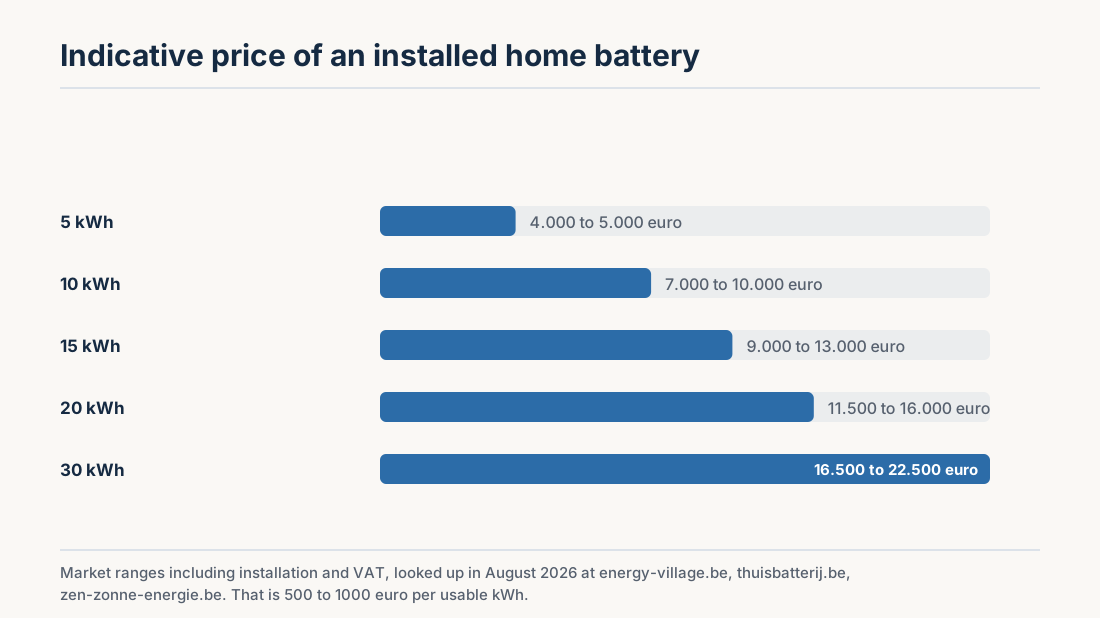
A Thuisbatterij 5 kWh plug and play device costs between €4,000 and €5,000 including VAT, without professional installation. Systems with additional installation services or hybrid features range between €4,500 and €6,000 including VAT.
The final price depends on factors such as output power, software capabilities, and expandability options.
What Is the Price Range by Type?
The price ranges for common categories are as follows:
- Basic 5 kWh plug-in battery: €4,000 - €5,000
- Advanced smart systems: €2,000 - €4,000
- Hybrid or professionally installed systems: €4,500 - €6,000
What Is a Calculation Example for a Full Setup?
For a typical household, a complete setup might include:
Battery unit €1,800 + P1 meter €120 + mounting hardware €150 + smart energy app integration €80 = approximately €2,150 including VAT.
This example illustrates that installation costs are relatively low compared to traditional battery systems.
Compared to a full solar installation price, adding a battery remains a smaller and manageable investment.
In Which Situations Does a Plug-In Battery for Home Make the Most Sense?
A 5 kWh plug-in battery fits well in households with moderate energy consumption and solar production between 3 and 4 kWp. It can increase your self-consumption rates by 30% to 60%.
Which Households Benefit Most?
This battery suits households with these characteristics:
- Solar panel systems producing excess energy during daytime
- Users with dynamic energy tariffs aiming to save costs
- Households seeking to lower grid dependency
Is It Possible to Use the Battery Without Solar Panels?
Yes, you can charge the battery from the grid during off-peak hours and discharge it during peak periods to manage energy costs effectively.
For proper system sizing, compare your needs with our guide on how many panels you need.
What Are the Advantages and Disadvantages of a 5kWh Plug and Play Battery?
Advantages focus on convenience and flexibility, while limitations relate primarily to power output and regulatory rules.
What Are the Main Advantages?
A plug-in home battery offers several benefits:
- No electrician required for installation
- Quick setup, often within minutes
- Compatibility with all solar panel systems
- Expandable battery capacity as needed
What Limitations Should You Consider?
These systems have certain constraints:
- Standard power output limited to around 800 W per socket
- Ineligibility for some subsidy programs
- Some regions require official registration
It is important to consider the 800 W power limit, as it may not support high-consumption appliances fully.
When Is a Plug-In Thuisbatterij 5 kWh Not the Best Choice?
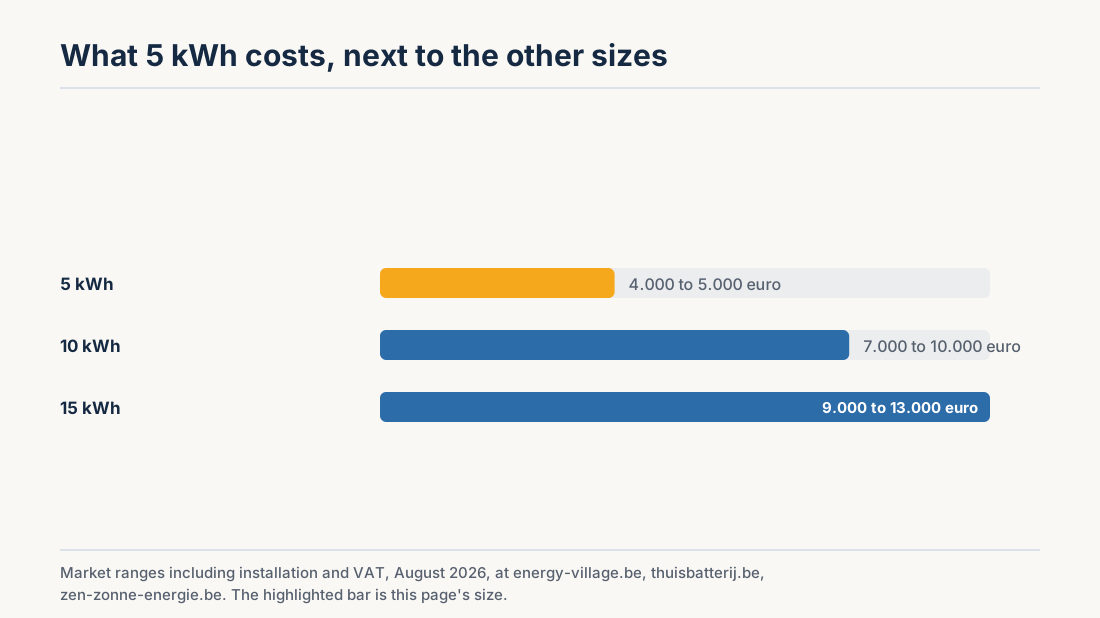
You should avoid this system if your household has high peak energy demands or requires full backup power during outages.
Homes with heat pumps or electric vehicles usually need batteries with higher capacity and power output.
What Alternatives Are More Suitable?
Consider alternatives like:
- Larger fixed battery systems with capacities over 10 kWh
- Hybrid inverter setups offering higher discharge rates
If you already have a large solar installation, combining it with a complete solar setup usually offers better overall performance.
How Does a Plug-In Battery Compare to Traditional Home Batteries?
Plug-in batteries emphasize ease of use and installation, while traditional home batteries prioritize integration and performance.
Main differences include:
- Installation method: plug-in via a socket versus fixed wiring
- Power output: 800 W versus 5 to 15 kW
- Cost: lower upfront cost versus higher setup expenses
- Flexibility: modular design versus fixed system
For many users, the best plug-in home battery serves as a practical entry point before investing in a full-scale system.
You can learn more about the price per kWh of solar energy in our detailed price per kWh guide.
Using a 5 kWh plug-in battery offers a straightforward method to store energy and reduce your electricity bills without requiring complex installation. This solution works best for homes with moderate solar production and stable daily energy consumption, while larger systems suit households with greater demands. To begin, analyze your daily electricity use and solar output. Then, compare available options and request quotes through Soleva to find the most suitable setup for your specific situation.
Frequently Asked Questions
What is the price of a 5kwh plug and play battery including accessories?
The price of a 5kwh plug and play battery including accessories usually ranges between €1,500 and €2,500 including VAT. This price covers items such as a P1 meter, mounting materials, and app configuration. Systems with enhanced output or hybrid functionalities increase the total cost due to additional inverter capabilities and software enhancements.
How much electricity can a 5kwh plug and play battery supply daily?
A 5 kWh plug and play battery typically delivers around 4 to 5 kWh of usable energy per day after accounting for efficiency losses. This amount can support evening activities such as lighting, refrigeration, and electronic devices. However, high-powered appliances like ovens or heat pumps tend to exceed the standard 800 W output and continue to rely on grid power during use.
Is a plug-in thuisbatterij 5 kWh safe for indoor use?
Yes, plug-in thuisbatterij 5 kWh units commonly use lithium iron phosphate cells that offer high thermal stability and resistance to fire hazards. Most models include safety features such as temperature sensors, tilt detection, and overload protection. Compliance with CE and IEC certifications ensures these batteries meet European indoor safety standards.
Can you expand the capacity of a 5kwh plug and play battery later?
Yes, many plug and play battery systems allow modular expansion by adding extra battery units. You can increase your capacity in increments ranging from 2 to 5 kWh per added module, depending on the brand. This feature allows you to invest gradually and adapt your energy storage as your consumption grows or if you add solar panels.
What is the price difference between plug-in and traditional home batteries?
The price difference between plug-in and traditional home batteries is considerable. Plug-in systems commonly start around €1,200 including VAT, whereas traditional batteries generally exceed €8,000 including VAT due to additional installation and inverter integration costs. The higher price of traditional batteries reflects their greater power output and the ability to provide whole-home backup during outages.
Read also
Ready to cut your energy bill?
Compare quotes for solar panels, home batteries and charging points.