Home battery belgium
50kwh home battery price | Costs & Savings
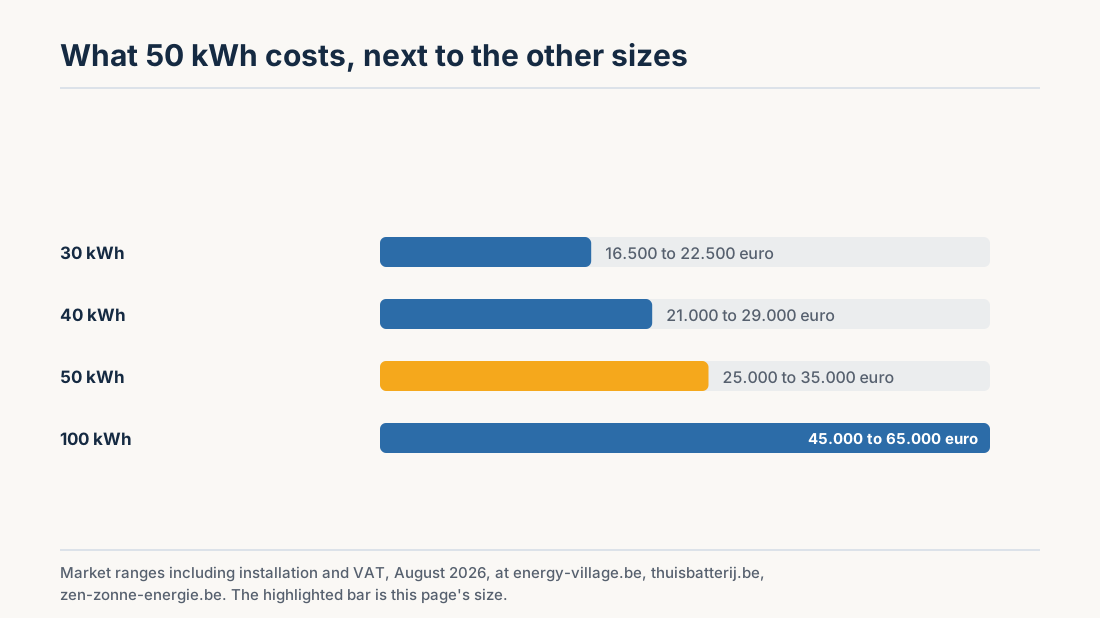
The cost of a 50kwh home battery typically ranges between €25,000 and €35,000 incl. VAT, depending on the battery chemistry and installation complexity. Choosing between LiFePO4 and NMC technologies significantly affects the total price along with system integration factors such as inverters and safety features.
This article from Soleva provides detailed price ranges, cost breakdowns, savings calculations, and guidance to help you select the ideal 50 kWh lithium ion battery system tailored to your energy needs.
Read on to understand how to evaluate these systems for your home.
What is the price of a 50kWh home battery?
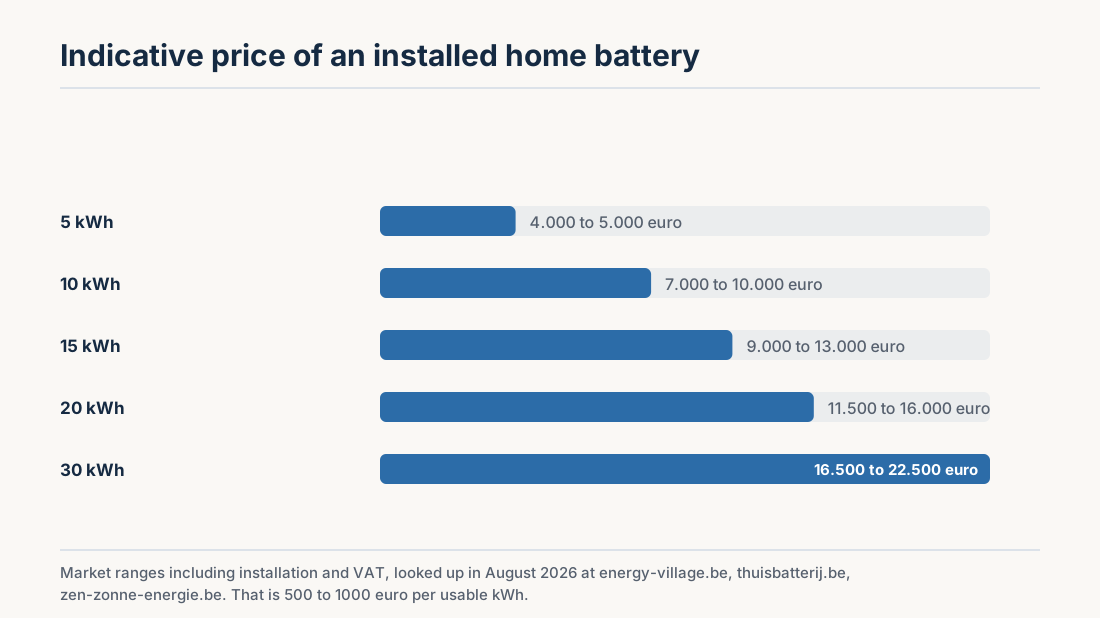
Indicative prices for the Belgian market, checked in August 2026 against energy-village.be, thuisbatterij.be and zen-zonne-energie.be. These are market ranges for an installed system including VAT, not a quotation: your price depends on capacity, brand and the state of your existing installation.
The price of a complete 50kWh battery system for residential use ranges from €25,000 to €35,000 incl. VAT. This cost includes the battery pack, a battery management system (BMS), protective casing, and safety integrations necessary for home installation.
Common configurations and their price ranges are as follows:
- Entry-level LiFePO4 system: €17,500 - €20,000
- Mid-range modular system: €20,000 - €23,000
- Premium integrated system: €23,000 - €25,000
Premium brands such as Tesla typically position their 50kwh home battery products towards the higher end of this range, due to advanced software integration and ecosystem compatibility.
When comparing to smaller capacity systems, note that while the total cost scales with battery size, installation expenses do not increase proportionally, due to certain fixed costs.
How does the price per kWh influence the total cost?
The unit price per kilowatt-hour for lithium batteries typically falls between €350 and €500. Therefore, the higher total cost of a 50kwh lithium ion battery primarily results from the larger capacity rather than greater complexity.
Larger batteries benefit from economies of scale, meaning that a 100kWh battery system generally has a lower per kWh price but requires a substantially higher initial investment.
What is the price difference between lithium battery chemistries?
Battery chemistry plays a significant role in both price and performance:
- LiFePO4: Priced between €17,500 and €25,000, with typically over 6,000 charge cycles and excellent safety characteristics.
- NMC: Higher energy density but generally more expensive and slightly shorter lifespan.
- LTO (Lithium Titanate): Commands premium pricing due to very fast charging and long cycle life.
For most residential uses, LiFePO4 batteries dominate because of their balance between cost, safety, and durability.
Which factors determine the price of a 50kWh battery system?
The final cost depends on five key factors that each contribute to the total price:
- The battery chemistry, such as LiFePO4 or NMC.
- System integration, including inverters and monitoring equipment.
- The complexity of installation, covering wiring and any electrical upgrades.
- Safety features, like ingress protection ratings and thermal management.
- The possibility for modular expandability and future scalability.
How does installation complexity impact the total price?
Installation usually adds between €500 and €1,000 to the overall cost, depending on wiring requirements and battery placement. Adding a hybrid inverter typically costs around €2,000.
When paired with a solar panel system, installation expenses often overlap, aligning the overall cost structure with comprehensive solar solutions.
How do market trends influence the pricing of home batteries?
Prices of batteries have decreased substantially due to large-scale manufacturing in gigafactories. However, costs of raw materials like lithium and iron continue to affect prices.
Residential battery systems usually incorporate additional safety features that increase their price relative to industrial-grade battery packs.
Calculation example: What does a complete 50kWh battery system cost?
A detailed cost breakdown of a typical system is as follows:
- Battery modules (50kWh): €19,500
- Hybrid inverter: €2,000
- Installation and wiring: €1,000
- Monitoring system and BMS integration: €800
The total estimated cost amounts to approximately €23,300 incl. VAT.
This example reflects a fully functional lithium ion battery pack with all essential components installed.
Compared with alternatives such as the Docan battery systems, European setups often include stricter safety compliance, which can increase overall expenses.
How much does a 30kWh home battery cost?
A 30kWh battery system, such as the Docan model, generally costs between €10,000 and €16,000 depending on its configuration. Pricing is influenced by battery capacity and inverter size.
What is the price of a 100kWh Tesla battery system?
The cost of a 100kWh battery system often exceeds €40,000 due to its doubled capacity and the advanced industrial-grade integration offered by Tesla and similar brands.
What strategies reduce cost on a 50kWh solar battery without compromising quality?
By making informed technical decisions, you can lower your costs while maintaining system reliability:
- Choose LiFePO4 chemistry over NMC for more consistent pricing and safety.
- Opt for modular battery systems that allow expansion as your needs grow.
- Install the battery simultaneously with solar panels to decrease labor costs.
- Manage your energy consumption using smart tariff plans to maximize efficiency.
How does energy arbitrage help save money?
Energy arbitrage involves charging your battery when electricity tariffs are low and discharging during peak tariff periods. Over time, stored energy costs can be as low as €0.08 per kWh compared to peak electricity prices exceeding €0.32 per kWh, resulting in a substantial return on investment for larger battery systems.
What is the expected lifespan of a 50kWh home battery?
A 50kWh battery typically lasts between 10 and 15 years and supports over 6,000 charge cycles. The lifespan depends on factors like the depth of discharge and temperature management.
What components are usually included and excluded in a 50kWh battery system quote?
Quotes typically include core elements but may not cover all possible upgrades. Expected inclusions are:
- Battery modules and enclosure
- Battery management system (BMS)
- Basic installation services
- Monitoring software or app access
Exclusions commonly consist of:
- Electrical panel upgrades
- Advanced or hybrid inverter systems
- Permits, inspections, and associated fees
- Backup system configuration
Combining your battery with an appropriately sized solar panel system can improve overall efficiency and reduce unnecessary oversizing expenses.
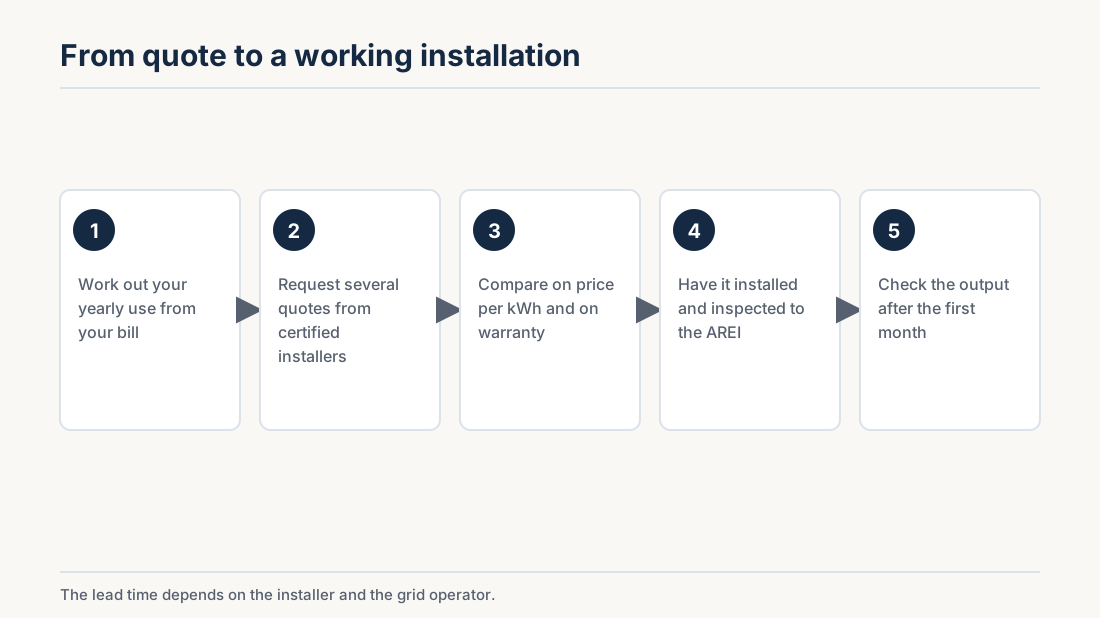
At Soleva, you can easily compare quotes from certified installers and explore transparent pricing breakdowns to find the best battery system for your home.
Investing in a large-capacity home battery allows you to control your energy consumption and achieve long-term savings. The total cost mainly depends on the battery capacity, while system integration and safety features add significant value. It is advisable to compare at least three detailed quotes to understand pricing variations and to consider pairing your battery with solar panels for optimized performance. Through Soleva, you can request personalized quotes and make informed decisions based on accurate system evaluations.
Frequently Asked Questions
What is the price of a 50kwh home battery with installation?
The total price including installation for a 50kwh home battery system generally falls between €25,000 and €35,000 incl. VAT. Installation costs cover wiring, inverter integration, and necessary safety measures. More complex installations or backup system integration increase the price, while homes with existing solar setups often benefit from lower labor fees.
How much is a 50 kW solar system with a battery included?
A 50 kW solar system combined with a battery storage solution typically exceeds €40,000 incl. VAT, depending on panel quantity and inverter specifications. This setup enhances energy flexibility by increasing self-consumption and reducing reliance on the electricity grid, suitable for households or small businesses with higher energy demand.
What is the price difference between a 50kWh battery and smaller systems?
The higher price of a 50kWh battery compared to smaller capacity systems reflects its larger size. Smaller systems, such as 10kWh batteries, have a higher cost per kWh but lower upfront expenses. Larger batteries benefit from reduced unit costs yet require greater initial investment, making them ideal for households with substantial energy needs.
How long will a 50kwh battery power a typical home?
A 50kwh battery can supply an average household for between one and several days depending on daily energy consumption, which usually ranges from 10 to 20 kWh. Homes with electric vehicles or heat pumps may use more energy, shortening the backup duration but enhancing overall savings.
What is the price of a 50 kWh lithium ion battery compared to other types?
A 50 kWh lithium ion battery typically costs more than lead-acid batteries but less than advanced chemistries like lithium titanate (LTO). Lithium ion systems offer longer lifespans, higher efficiency, and improved safety. Although alternatives may have lower initial prices, their higher maintenance and shorter lifecycles lead to increased total lifetime costs.
Read also
Ready to cut your energy bill?
Compare quotes for solar panels, home batteries and charging points.