Home battery belgium
10kwh plug and play battery price & advice
A 10kwh plug and play battery efficiently stores surplus solar energy and supplies it through a standard socket, giving you direct control over your electricity usage without requiring complex installation. This type of home battery system is ideal for households with solar panels aiming to boost their self-consumption rate from around 28% to 68%, while reducing reliance on the grid.
Key features include modular capacity, safe LiFePO4 cells, and smart monitoring via digital meter or P1 integration.
How Does a 10kwh Plug and Play Battery Function?
Indicative prices for the Belgian market, checked in August 2026 against energy-village.be, thuisbatterij.be and zen-zonne-energie.be. These are market ranges for an installed system including VAT, not a quotation: your price depends on capacity, brand and the state of your existing installation.
A 10 kWh plug and play battery stores electricity using LiFePO4 cells and releases it through a built-in inverter connected to a standard wall socket. It continuously monitors household energy flow and adjusts operation in real time.
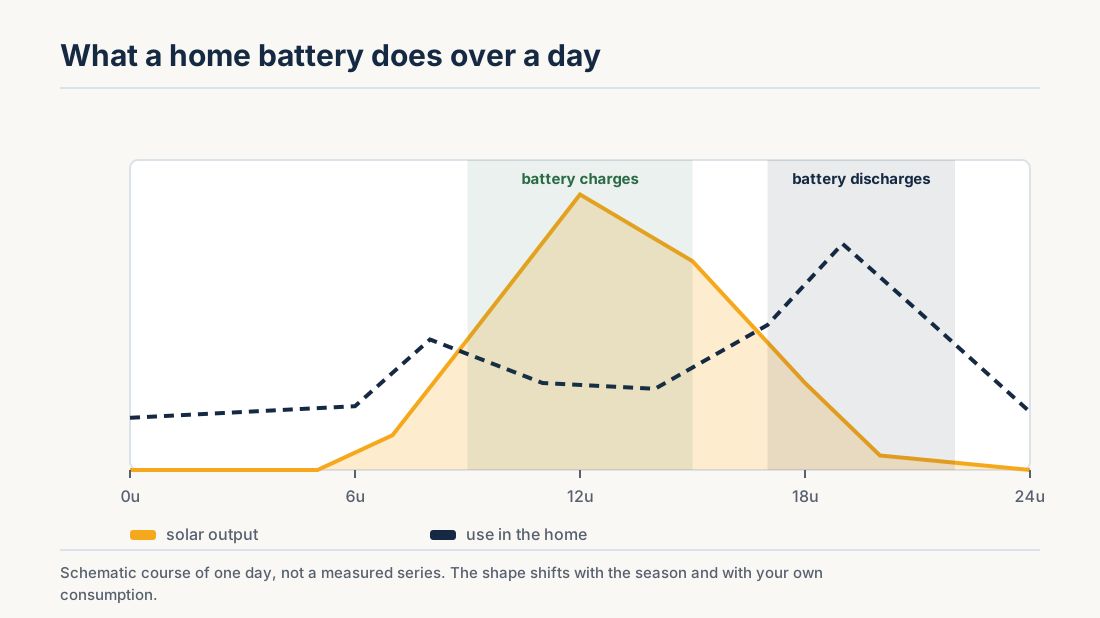
The process involves three main steps: energy first flows from your solar panels or grid into the battery, is securely stored under the supervision of a Battery Management System, and then is discharged back to your home when power demand increases.
How Does P1 Meter Integration Manage Charging?
The P1 meter reads your digital meter data to detect surplus energy. When solar panels generate more electricity than your household consumes, the battery automatically charges. During periods when your household requires electricity, the battery discharges, reducing grid usage.
What Is the Role of the Micro Inverter?
A micro inverter converts stored direct current (DC) energy into alternating current (AC) power suitable for household use. Systems with smaller inverters, such as 800 W models, minimize conversion losses, enhancing efficiency to levels between 70% and 90% in typical residential conditions.
Can These Batteries Work with Solar Panels?
Yes. Plug and play batteries use AC coupling, allowing compatibility with any existing inverter. If you already have solar panels installed, these batteries integrate seamlessly without requiring equipment replacement. For more details on solar solutions, see our solar panel system page.
Which Technologies and Configurations Are Available for Plug-in Home Batteries?
Common 10 kWh plug-in battery systems use modular units stacked together, with each module storing between 2.5 and 5 kWh. The technology variations include LiFePO4 battery chemistry known for safety and longevity, micro inverter configurations tailored for low household loads, modular stacking options allowing expansion up to 10.8 kWh or beyond, and wireless monitoring systems that track energy usage via apps.
What Are the Specifications of the HomeWizard Plug-In Battery?
The HomeWizard Plug-In Battery features 2.7 kWh per module, supports 800 W charge and discharge power, and allows expansion up to 10.8 kWh. It uses LiFePO4 cells and integrates with a P1 meter through WiFi for seamless energy management.
What Insights Does a HomeWizard Plug-In Battery Test Provide?
Tests show that the HomeWizard Plug-In Battery gains efficiency in real-life usage scenarios. Its micro inverters lower idle losses and improve performance during low consumption periods such as nighttime.
How Does the Duravolt Plug-in Battery 5 12kwh Compare?
The Duravolt Plug-in Battery 5 12kwh offers larger capacity modules, reducing the number of units required. However, this larger capacity also leads to a higher upfront investment compared to smaller modular alternatives.
Is an Anker Plug-in Battery Suitable?
The Anker Plug-in Battery prioritizes compact design and portability, making it suitable for smaller households or apartments with limited space. However, it offers less scalability when aiming for a 10 kWh capacity.
What Is the Price Range for a 10kwh Plug and Play Battery?
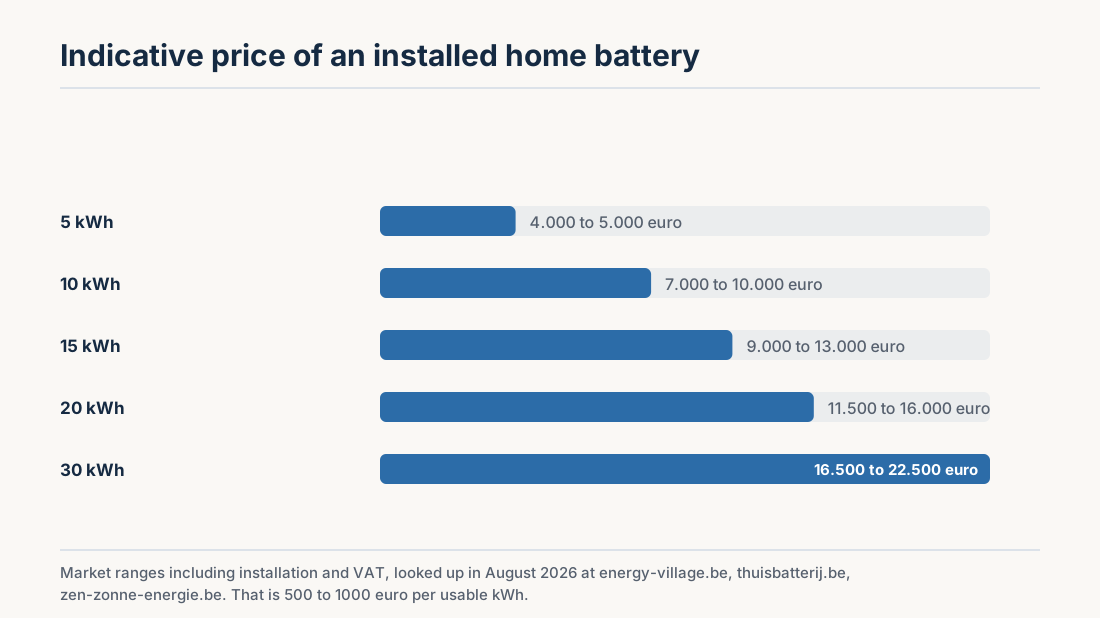
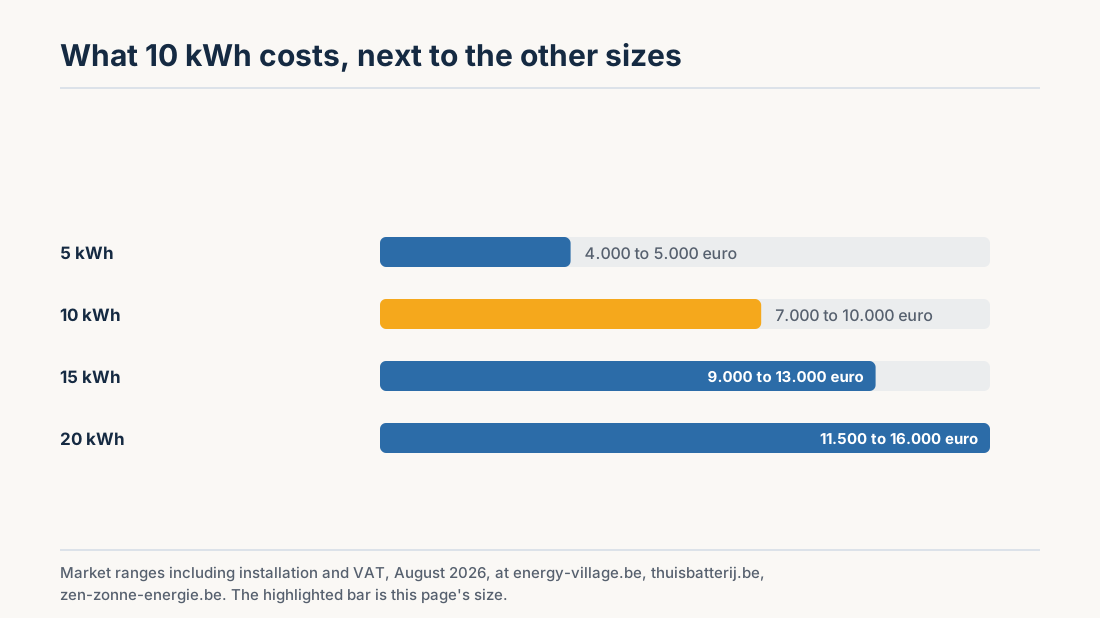
The cost for a 10kwh plug and play battery typically ranges between €7,000 and €10,000 inclusive of VAT. Prices depend on the battery’s configuration, total capacity, and any installation requirements.
Price components generally include modular stacking units or integrated systems, optional installation upgrades, and monitoring accessories.
- Individual modules (2.7 - 5 kWh capacity): €4,000 to €5,000 each
- Complete 10 kWh system: €7,000 to €10,000 total
- Optional electrical installation upgrades: €300 to €1,500
- Monitoring equipment and accessories: €100 to €400
Example Cost Breakdown for a 10 kWh System
Consider a modular setup with four 2.7 kWh units:
- 4 battery modules at €1,800 each: 4 x €1,800 = €7,200
- P1 meter and monitoring device: €150
- Optional electrical upgrade: €500
- Professional installation support: €800
This brings the total approximate investment to €8,650 including VAT. Annual savings typically range from €400 to €800, leading to a payback period between 7 and 10 years depending on your electricity rates.
In Which Household Situations Does a Plug-in Battery Offer the Most Advantages?
Plug-in batteries work best in homes with solar panels and moderate electricity consumption during evenings. They help raise your electricity self-consumption rate while reducing energy fed back into the grid.
These scenarios benefit most:
- Homes equipped with 4 - 8 kWp solar systems
- Households with significant evening and nighttime electricity use
- Locations with digital meters but no net metering arrangements
- Apartments or houses with limited space for fixed battery installations
How Do You Determine the Needed Battery Capacity?
A 10 kWh battery suits households consuming approximately 4,000 to 6,000 kWh annually. Smaller households may find 5 kWh systems more cost-effective to avoid wasted stored energy and improve return on investment.
Can These Batteries Support High-Power Appliances?
Each module delivers up to 800 W output, suitable for lighting, electronics, and appliances like refrigerators. Connecting multiple modules to a dedicated circuit can increase capacity to power larger devices such as washing machines.
What Are the Advantages and Limitations of a 10kwh Plug and Play Battery?
Plug-in battery systems offer simplicity and flexibility, but have limitations regarding power output and backup capabilities.
Advantages include easy installation without professional help, modular expansion options, and reduced dependence on grid electricity. These solutions avoid the need for complex wiring and additional installation costs.
Limitations are restricted discharge power due to socket capacity and the absence of full backup during power outages. For safety, these systems shut down automatically if the grid fails.
What Should You Be Cautious About?
A common error is oversizing the battery relative to daily energy use. Actual performance and financial return decrease if the battery capacity is too large compared to household consumption, leading to underutilized stored energy.
How Do Plug-in Batteries Compare With Fixed Home Battery Systems?
Plug-in batteries differ from fixed systems in their installation process, power capacity, and scalability.
Key differences include:
- Plug-in systems allow self-installation and provide 800 to 2,400 W output.
- Fixed systems require professional installation and offer 3 to 10 kW output.
- Plug-in systems are modular and portable.
- Fixed systems integrate into the home’s electrical panel, offering seamless management.
Which Battery System Best Fits Your Needs?
If you seek flexibility and wish to avoid upfront installation complexity, plug-in batteries are ideal. For high-power requirements like electric vehicle charging or heat pumps, a professionally installed fixed battery system combined with a complete solar setup is more suitable. Additional information is available at our solar panel system page.
Is a Plug-in Battery the Best Plug-in Home Battery Option?
The best plug-in home battery depends on your specific needs and energy consumption patterns. While plug-in options excel in simplicity and adaptability, fixed systems offer enhanced performance and backup features.
When Is a Plug-in Battery Not the Right Choice?
Avoid plug-in batteries if your household frequently experiences high peak loads or requires reliable backup power during outages. Additionally, homes without solar panels or with minimal daytime solar production may find these batteries less cost-effective, as reduced cycling lowers savings.
Choosing a 10kwh plug and play battery offers a flexible and cost-effective way to increase energy independence, especially if you already have solar panels installed. The critical factor is matching battery capacity to your daily consumption to ensure efficient use and avoid oversizing. If you prefer a straightforward setup without complex installation, this battery type fits well. To make the best decision, compare various options and request multiple quotes through Soleva to find a system tailored to your home’s requirements and your energy goals.
Frequently Asked Questions
What is the price of a 10kwh plug and play battery?
The price usually ranges from €5,000 to €10,000 including VAT. Costs vary based on battery capacity, modular configuration, and installation needs. Additional expenses might include a P1 meter, electrical upgrades, or professional installation support.
How does a 10kwh plug and play battery work without installation?
A 10kwh plug and play battery connects to a standard wall socket and interacts with your digital meter to automatically store surplus electricity and supply it as needed. Built-in safety mechanisms and intelligent software management eliminate the need for professional installation in most typical setups.
Is a 10kwh plug and play battery suitable for apartments?
Yes, these batteries are perfect for apartments since they require no structural work and plug directly into regular sockets. Their compact design fits utility rooms or storage spaces and works well with balcony or shared solar systems.
What is the lifespan of a plug-in home battery?
Plug-in home batteries generally last between 10 and 15 years, supporting more than 6,000 charge cycles. LiFePO4 technology enhances safety and durability compared to older lithium batteries. Over time, capacity decreases gradually, but systems retain most of their performance under typical household use.
Can you reset a HomeWizard Plug In Battery?
Yes, you can reset it using the mobile app or by restarting the device, which helps fix connectivity or performance issues. After rebooting, the system reconnects to WiFi and the P1 meter. Always follow the manufacturer’s instructions to avoid interfering with ongoing charging or discharging.
Read also
Ready to cut your energy bill?
Compare quotes for solar panels, home batteries and charging points.