Home battery belgium
100kwh home battery price and advice
A 100kWh home battery stores a substantial amount of electricity for later use, primarily serving buildings with high energy demands rather than typical households. This capacity aligns closely with total energy consumption, solar panel output, and grid connection limits. While most homes utilize systems between 10 kWh and 30 kWh, a 100kWh home battery suits large farms, villas, or semi-commercial properties.
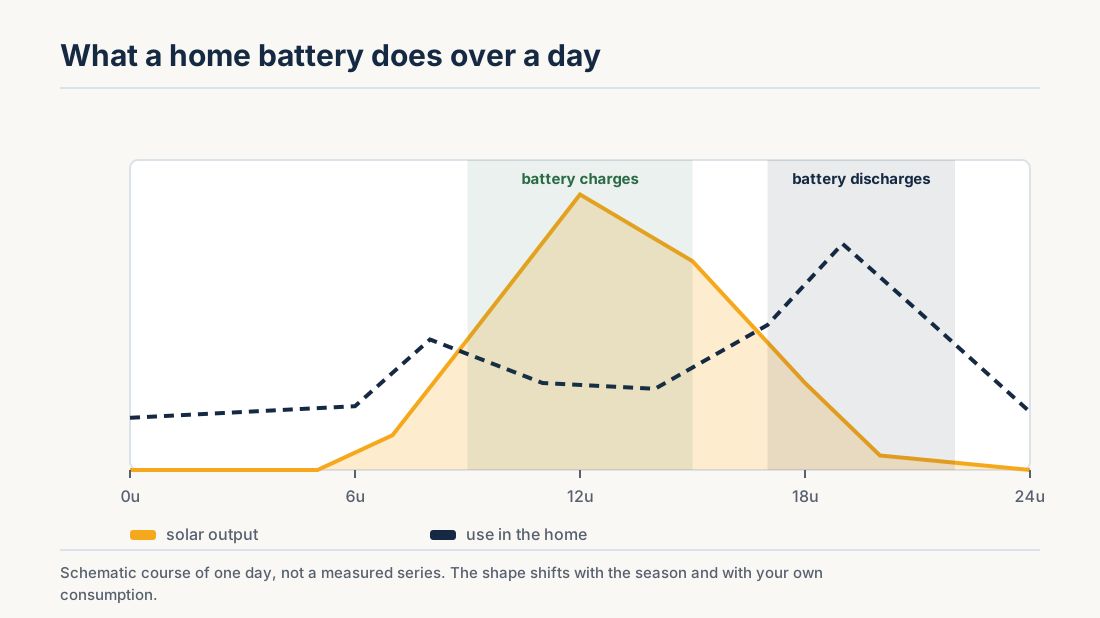
How does a 100kWh home battery operate to support energy storage?
Indicative prices for the Belgian market, checked in August 2026 against energy-village.be, thuisbatterij.be and zen-zonne-energie.be. These are market ranges for an installed system including VAT, not a quotation: your price depends on capacity, brand and the state of your existing installation.
A 100kWh battery stores electricity as chemical energy and releases it as usable power through an inverter system. It connects to solar panels or the electrical grid and prioritizes self-consumption to maximize energy efficiency.
The battery management system controls charging, discharging, and safety protocols. A hybrid inverter converts direct current (DC) into alternating current (AC) suitable for household use. For a deeper understanding of the input sources, you can learn more about how solar panels generate electricity.
How is energy stored and supplied throughout the day?
The battery stores surplus solar energy during daylight hours. At night or during times of peak electricity tariffs, it supplies stored electricity to the home. This cycle reduces dependence on the grid and helps stabilize your energy costs.
What functions does an energy management system have in this setup?
An energy management system (EMS) continuously monitors your energy consumption and optimizes battery usage. It can shift loads to off-peak times, support electric vehicle charging, and balance peak demand. Such functionality increases overall efficiency, particularly when dynamic tariffs are applied.
Which battery technologies are typically used in 100kWh home battery systems?
The main battery technologies used for 100kWh systems are lithium-ion and lithium iron phosphate (LiFePO4). Each technology determines the battery’s lifespan, safety, and performance characteristics.
What differences exist between lithium-ion and LiFePO4 batteries?
LiFePO4 batteries are noted for their enhanced safety and longer cycle lives. In contrast, lithium-ion batteries offer higher energy density and a more compact design.
- LiFePO4: 6,000 to 10,000 charge cycles, strong safety profile
- Lithium-ion: greater energy density, smaller physical footprint
- Saltwater batteries represent an emerging ecological alternative but are less common for this scale.
Are there alternative battery types worth considering?
While saltwater and solid-state batteries exist, lithium-based systems dominate the 100kWh capacity range due to their proven reliability and performance.
What factors influence the price of a 100kWh home battery?
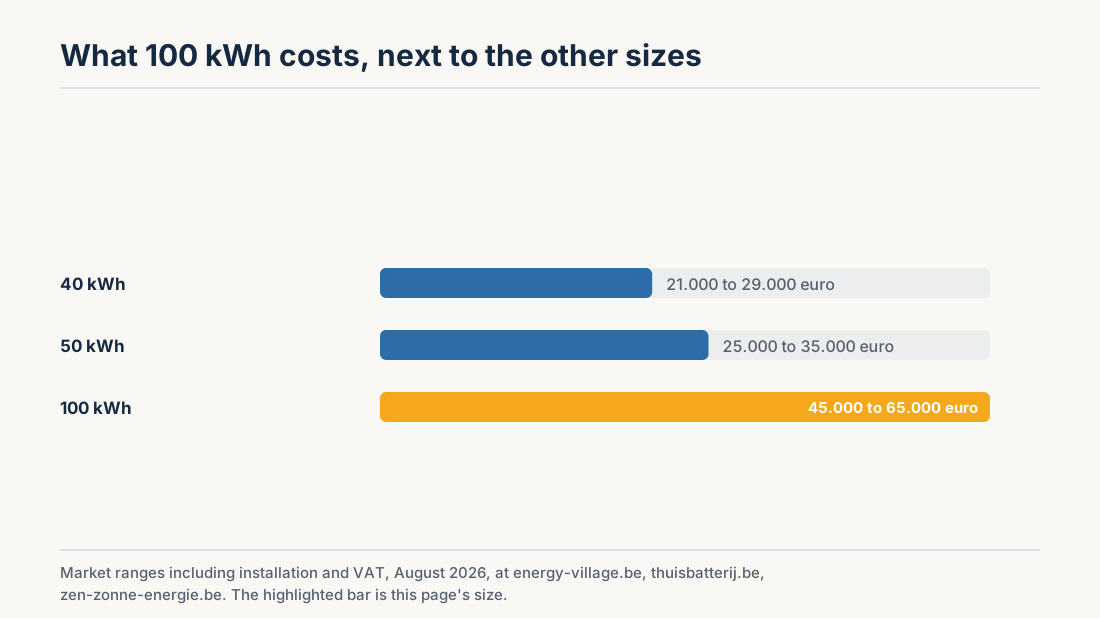
The price for a 100kWh battery system typically ranges between €45,000 and €65,000, including VAT and installation costs. Price varies based on battery technology, installation complexity, and integration with existing systems.
The typical cost breakdown includes the following components:
- Battery modules: €40,000 to €70,000
- Hybrid inverter: €5,000 to €10,000
- Installation and wiring: €8,000 to €15,000
- Energy management system (EMS): €2,000 to €5,000
How does a full system price calculation look in practice?
For example, a comprehensive 100kWh system might include the following costs:
Battery modules: €55,000 + inverter: €7,500 + installation: €12,000 + EMS: €3,500, totaling approximately €78,000 including VAT.
Comparing this to smaller systems such as 10kWh or 50kWh home batteries helps illustrate the scaling effects on price and capacity.
Which users benefit most from installing a 100kWh home battery?
A 100kWh battery suits environments with high energy consumption where daily usage significantly exceeds that of typical homes.
Who typically uses such large-capacity batteries?
- Large residential homes with high energy demands
- Farms operating machinery with high power needs
- Businesses experiencing peak electrical consumption
- Electric vehicle fleets requiring substantial charging capacity
How does solar panel capacity relate to battery sizing?
A practical guideline recommends approximately 1 kWh of battery capacity per 1 kWp of solar panel power. Consequently, a 100kWh battery necessitates about 100 kWp of solar panels, exceeding most standard residential systems. For more details, review solar system sizing basics.
What are the main advantages and disadvantages of a 100kWh home battery?
The benefits of a 100kWh battery correlate with its scale, providing substantial energy independence and the ability to manage peak loads effectively. These systems can significantly reduce grid electricity costs and offer backup power during outages.
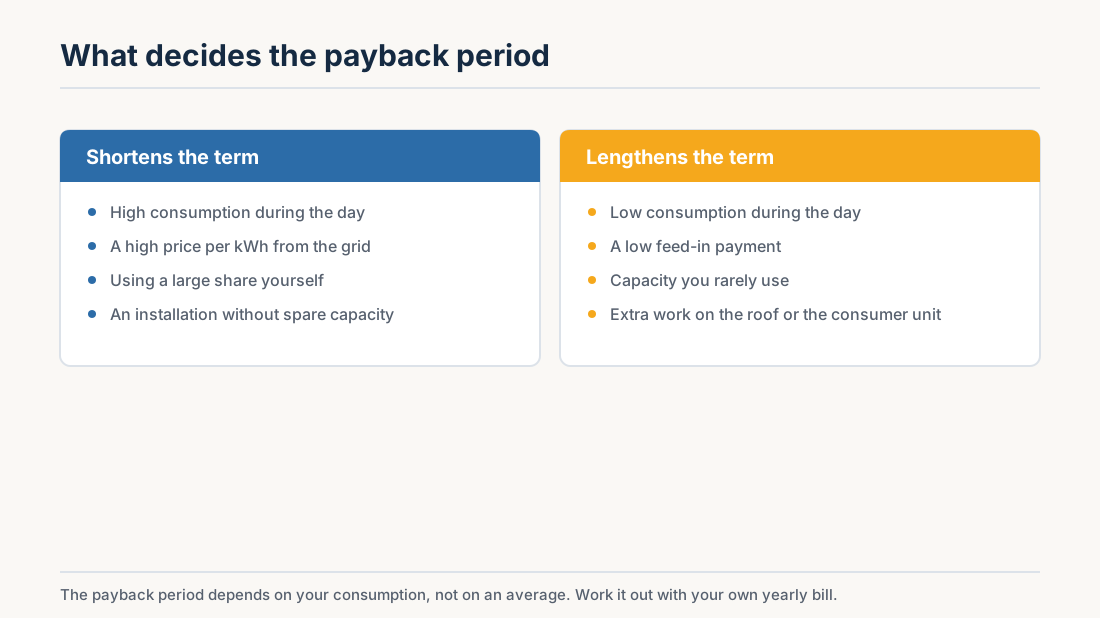
On the downside, they require a considerable initial investment, occupy significant space, and generally involve longer payback periods. With weights between 1,000 and 1,500 kg, such systems also demand careful structural planning for safe installation.
How does a 100kWh home battery differ from smaller home battery systems?
A 100kWh home battery differs substantially from smaller units, such as 10kWh or 40kWh systems, in terms of application, capacity, and economics.
Key comparisons include:
- 10kWh: designed for standard residential daily energy consumption
- 40kWh: optimizes larger household usage
- 100kWh: targets commercial-scale storage needs
- 1,000kWh+ systems: suitable only for industrial applications
For most residential users, smaller batteries deliver better value. The 100kWh setup fits specific high-consumption or combined residential-commercial cases.
When might a 100kWh home battery be unsuitable?
Choosing a 100kWh battery is not advisable if your annual energy consumption stays below 20,000 kWh or if your solar panel capacity is limited. Oversizing can lead to underutilized capacity and diminished return on investment.
In many cases, a smaller battery system paired with efficient solar energy production performs more effectively. Soleva recommends conducting a thorough consumption analysis before deciding on system size.
Large-scale home battery systems offer advantages primarily for environments with substantial energy demand, large solar capacities, or specific commercial needs. For most households, smaller storage capacities provide a better balance of cost and performance. You should start with a precise energy consumption analysis and seek tailored expert advice through Soleva to select a battery size that matches your actual requirements, avoiding unnecessary expenses and oversizing.
Frequently Asked Questions
How long does a 100kWh home battery typically last?
A 100kWh battery generally lasts between 10 and 15 years, accumulating 6,000 to 10,000 charge cycles. The lifespan depends on how frequently you cycle the battery, depth of discharge, and operating conditions such as temperature. Daily cycle usage results in faster degradation compared to occasional backup usage, which can extend the battery’s service life.
What is the price range for a home battery with 100kWh capacity?
The price for home battery systems with 100kWh capacity typically lies between €45,000 and €65,000 including VAT, depending on the configuration and installation complexity. This range reflects costs for battery modules, inverters, installation, and energy management components.
How heavy is a 100kWh home battery system?
A 100kWh battery system weighs approximately 1,000 to 1,500 kilograms, varying with battery chemistry and structural design. Lithium iron phosphate batteries tend to be on the heavier side but offer enhanced safety. This weight requires careful structural support and professional installation to ensure safety and durability.
What battery capacity do I need to run a standard household?
For most standard households, a battery capacity between 10 and 30kWh is sufficient to cover daily energy needs and optimize solar self-consumption. A 100kWh battery is typically reasonable only if your energy consumption is very high due to large property size or additional commercial use.
How does the cost of a 100kWh home battery compare to smaller systems?
The cost of a 100kWh home battery ranges significantly higher - around €45,000 to €65,000 - compared to smaller units, which are much more affordable. Although larger systems benefit from a lower cost per kWh, the upfront investment and payback time are considerably greater.
Read also
Ready to cut your energy bill?
Compare quotes for solar panels, home batteries and charging points.