Home battery belgium
Home battery warranty: terms per brand
Most brands give ten years of warranty on a home battery and Enphase fifteen, but that figure says little. What counts is the guaranteed capacity retention at the end of that period, and it ranges from 60 percent at Huawei, Enphase and Pylontech to 80 percent at BYD and Marstek. On top of that, most brands end the warranty as soon as you reach a set throughput in MWh or a number of cycles, which can happen before the year count runs out.
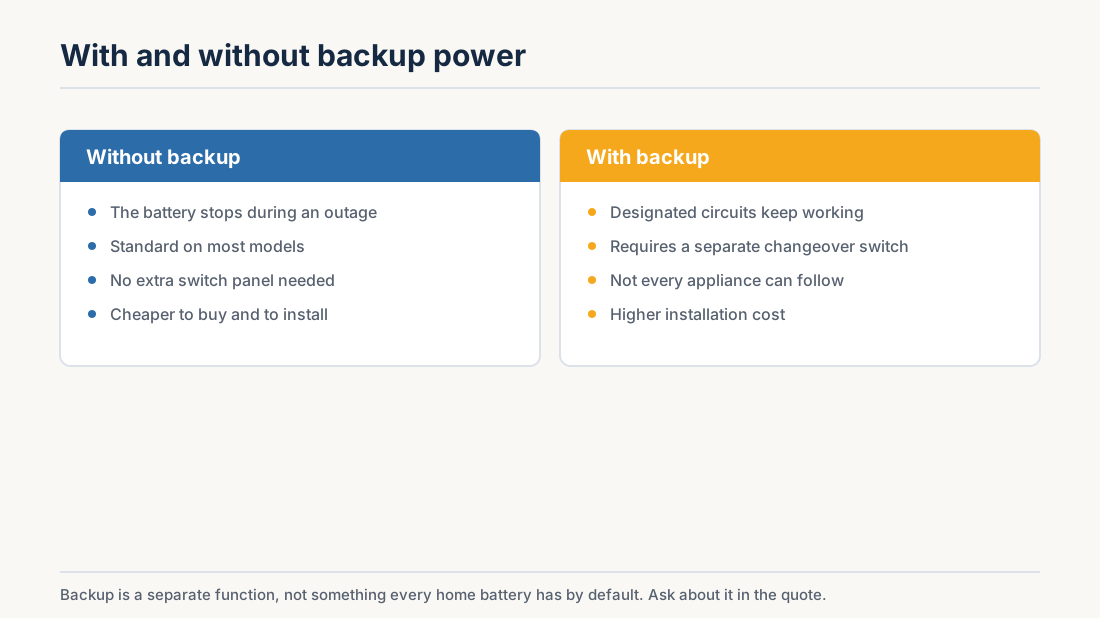
On this page you read what each brand actually guarantees, which three conditions to compare, and why a long term without a retention percentage is worth nothing.
What does a manufacturer actually guarantee?
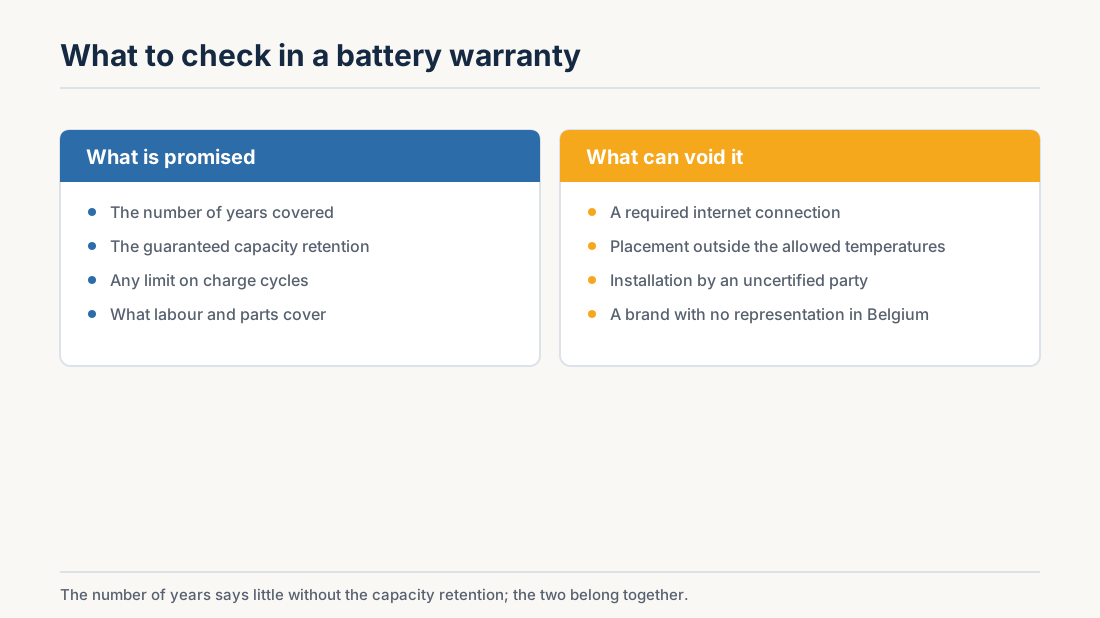
A battery warranty does not promise that the battery will keep working for ten years, but that at the end of the period it will still deliver an agreed share of its original usable capacity. If it drops below that sooner, the manufacturer repairs or replaces it.
Three conditions together decide what the warranty is worth. First the term in years. Second a usage limit, expressed in charge cycles or in energy throughput in MWh; anyone using the battery intensively reaches that limit before the year count. Third the capacity retention, the percentage still guaranteed at the end.
That last one matters most and is the least visible. A 10 kWh battery with 60 percent retention delivers a guaranteed 6 kWh after ten years; at 80 percent that is 8 kWh. Over the remaining lifespan, that gap of 2 kWh per day adds up considerably.
Which warranty does each brand give?
The table below only lists brands whose warranty document from the manufacturer itself can be consulted. The conditions apply to the Belgian market and can differ per model.
| Brand | Term | Capacity retention | Usage limit |
|---|---|---|---|
| BYD Battery-Box Premium HVS and HVM | 10 years | 80% | or the minimum throughput, whichever comes first: 12.48 MWh for the HVS 5.1 up to 31.21 MWh for the HVS 12.8 |
| Marstek Venus | 10 years | 80% | 6,000 cycles, and 10,000 cycles for the Venus A |
| Tesla Powerwall 3 | 10 years | 70% | no cycle limit for self-consumption and backup |
| Huawei LUNA2000 | 10 years | 60% | or 16.45 MWh throughput, whichever comes first |
| Enphase IQ Battery 5P | 15 years | 60% | 6,000 cycles |
| Pylontech US series | 10 years | 60% | 6,000 cycles at a maximum depth of discharge of 95 percent |
| AlphaESS SMILE | 10 years | not stated in the document | or 3,120 kWh throughput per kWh of capacity |
Four conditions deserve extra attention. The Tesla warranty falls back to four years if the battery does not stay connected to the internet, because Tesla cannot then update the firmware. With the Huawei S1 series, an extended fifteen-year variant exists alongside the five-year basic warranty. The ten-year term at Pylontech only applies after free registration of the unit. And the AlphaESS conditions apply to installations from 1 November 2024 onwards.
Enphase stands out with fifteen years, and that term explicitly covers Belgium as well. Against that stands a retention of 60 percent, the lowest in this comparison. A longer term with a lower floor is therefore not automatically better; it depends on how intensively you use the battery.
Why does capacity retention differ so much?
Capacity retention differs mainly through how cautiously a manufacturer words its promise, not through a large difference in cell quality. Nearly every brand in the table uses lithium iron phosphate, the same chemistry with comparable ageing.
A manufacturer guaranteeing 60 percent keeps more margin for warranty claims. That does not mean the battery wears out faster, but it does mean you have less recourse if ageing disappoints. Never compare the term without the percentage next to it.
What should you check in the quote?
Ask for the manufacturer's warranty document with every quote, not the installer's summary. It contains the three conditions from this page, plus the installation and usage requirements you must meet to make a claim.
Also look at who carries out the warranty. The factory warranty covers the product, but not always the labour and call-out costs of a replacement. Installers differ on this, which is a reason to compare several quotes.
Frequently asked questions
How long does a home battery really last?
The warranty runs ten years at most brands and fifteen at Enphase, but manufacturers themselves quote cycle counts of 6,000 to 10,000. At one cycle per day that works out to fifteen to twenty-five years, well beyond the warranty period.
Does the warranty end if I use the battery intensively?
At most brands the warranty stops as soon as you reach the stated throughput or cycle count, even if the ten years are not up. Tesla is an exception for self-consumption and backup.
Which capacity retention is usual?
Sixty percent appears most often in this comparison, at Huawei, Enphase and Pylontech. Eighty percent is the highest, at BYD and Marstek, and Tesla sits between the two at seventy percent.
Does the warranty also cover the installer's hours?
The factory warranty covers the product itself. Labour and call-out costs for a replacement are not always included; that varies per installer and belongs in the quote.
The conditions on this page come from the manufacturers' warranty documents: Tesla, BYD, Huawei, Marstek, Enphase, AlphaESS and Pylontech. Brands whose document was not publicly available are deliberately left out of the table.
Read also
Ready to cut your energy bill?
Compare quotes for solar panels, home batteries and charging points.