Home battery belgium
home battery subsidies belgium | 2026 Guide
In Belgium, home battery subsidies for private homeowners no longer provide direct financial support due to the phasing out of regional premiums and the absence of federal incentives. The former Premie thuisbatterij Fluvius ended after March 2023, shifting the focus to savings through self-consumption, capacity tariff reduction, and other alternatives.
What were home battery subsidies Belgium and how much could you receive?
Home battery subsidies in Belgium referred to financial support programs aimed at reducing the purchase and installation costs of thuisbatterijen (home batteries). However, no direct subsidies exist for private homeowners today. Earlier schemes in Flanders provided structured subsidies based on the battery’s capacity.
The historical subsidy structure included:
- €250 per kWh of installed capacity
- A maximum subsidy of €3,200 per system
- Up to 35% of the total investment cost
- An additional €300 for installing a digital meter
These subsidies required installation by a certified professional and compliance with AREI regulations. The subsidy was available once per connection and excluded company installations.
What happened to the Premie thuisbatterij Fluvius?
The Premie thuisbatterij Fluvius program ended for installations approved after March 2023. Applications could still be submitted for older systems until December 2024. The Flemish government discontinued the scheme due to declining battery prices and increased market adoption, making direct subsidies less necessary.
Is there still a thuisbatterij subsidie België available today?
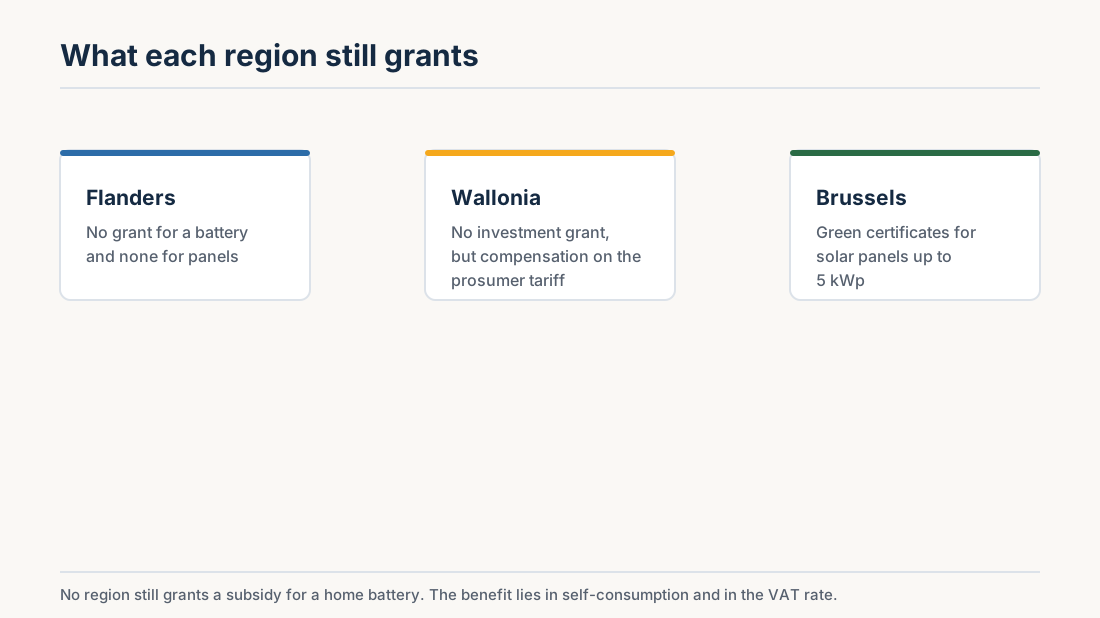
Currently, there are no home battery subsidies available to private households in Belgium. Instead, the market operates under a model where savings come from energy optimization strategies rather than upfront financial incentives.
Who qualifies for home battery subsidies Belgium?
Subsidy eligibility depends on whether you are a private homeowner or a business. Today, direct financial support for home batteries is only accessible to companies rather than private individuals.
Which conditions applied to private households under previous subsidies?
Private homeowners previously had to meet the following criteria to qualify for subsidies:
- Battery installation combined with a solar panel system
- A maximum inverter capacity of 10 kVA
- A mandatory digital meter installation
- Prohibition of lead-acid batteries
- Smart control with feed-in limitation capped at 60%
These technical requirements remain important because grid operators, such as Synergrid Belgium, enforce safety and communication standards for all battery systems.
Which companies qualify for home battery subsidies?
Companies may benefit from several subsidy programs, including:
- EP+ (Ecologie Premie Plus) with support ranging from 15% to 30%
- VLIF subsidies providing up to 40% for agricultural investments
- STRES program supporting innovative storage technical systems up to 40%
- Increased investment deduction allowing 15.5% deduction for energy-related assets
These business incentives make subsidies for companies more attractive compared to those for residential users.
What is the cost after home battery subsidies Belgium deduction?
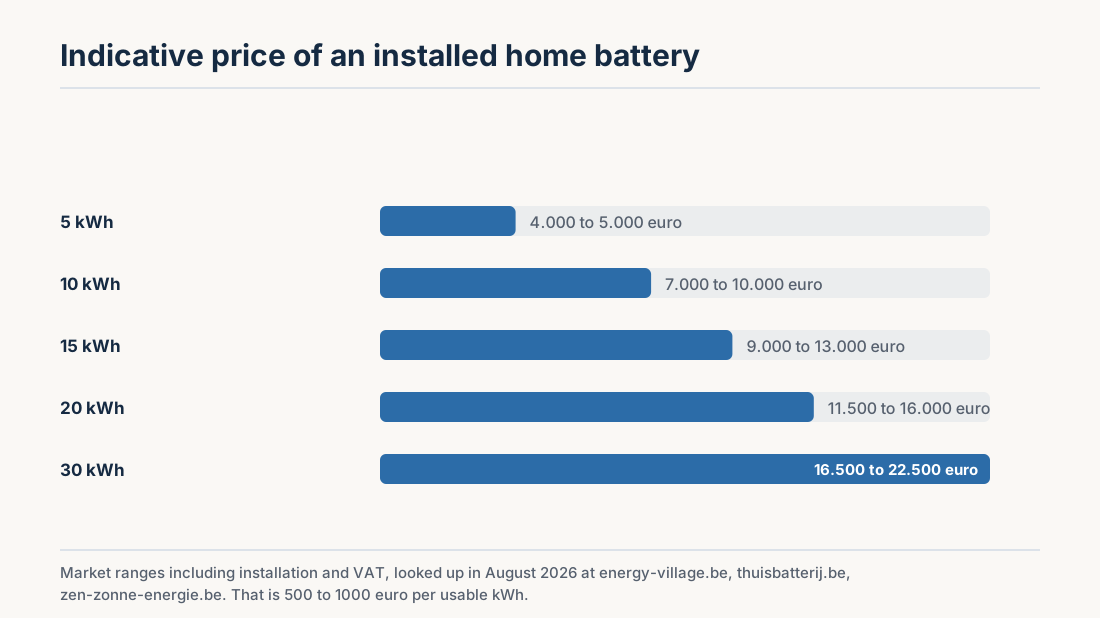
The final cost after subsidies depends on eligibility. For households, there is no reduction since subsidies are no longer provided. A typical 10 kWh home battery unit costs between €7,000 and €10,000 including VAT, excluding advanced control systems.
A realistic full system price breakdown is:
- Battery unit (10 kWh): €6,000
- Hybrid inverter: €1,200
- Installation costs: €1,500
- Electrical adjustments: €400
- Total: €9,100 including VAT
Previously, a 10 kWh system could receive a subsidy up to €2,500, reducing the total cost to around €6,600. Today, financial benefits arise from optimizing energy consumption rather than direct subsidies.
How does a Tesla home battery subsidies Belgium scenario compare?
The situation with Tesla home batteries in Belgium is similar. No direct subsidies apply to Tesla products. Instead, the financial advantage results from peak shaving and maximizing solar energy use, which lowers electricity costs.
Which alternative incentives replace home battery subsidies Belgium?
Alternative incentives now replace direct financial subsidies and provide long-term savings and value. Key alternatives include:
- Green loans offering lower financing costs
- Dynamic tariffs that reduce electricity prices during off-peak hours
- Capacity tariff savings lowering grid fees based on peak consumption
- Energy sharing systems optimizing local electricity use
The capacity tariff in Flanders charges based on peak electricity demand. Using a home battery to reduce these peaks can substantially lower grid fees, effectively replacing prior subsidy benefits.
Why do dynamic energy contracts increase the value of home batteries?
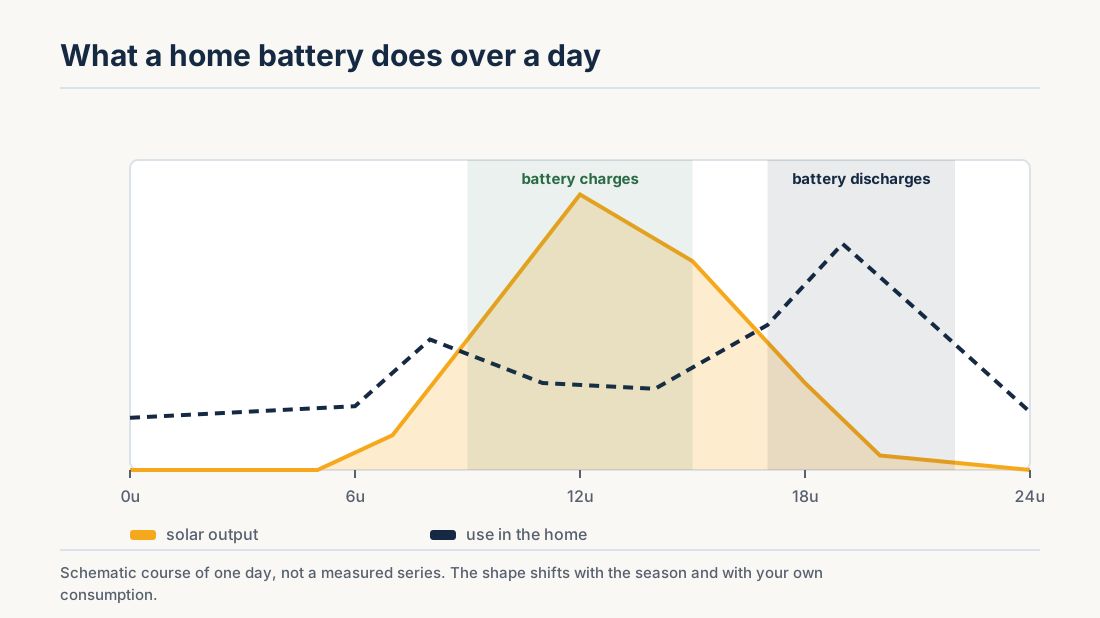
Dynamic energy contracts allow you to charge your battery when electricity prices are low and discharge when prices are high. This strategy creates additional savings by minimizing energy costs without government subsidies.
How do you apply step by step for home battery subsidies Belgium?
At present, private homeowners cannot apply for home battery subsidies, as no programs exist. Businesses seeking subsidies should follow these steps:
- Request a detailed technical quote from a certified installer
- Check eligibility for VLAIO programs such as EP+ or VLIF
- Submit the subsidy application before starting installation
- Complete installation with a certified contractor
- Provide invoices and technical documents to authorities
- Receive the subsidy after approval
Households should instead focus on optimizing their systems for energy savings using home battery calculation tools to estimate returns without subsidies.
What documents are needed for subsidy applications?
Applications require submission of invoices, technical specifications, proof of compliant installation, and regulatory certificates such as AREI approval.
How do you maintain eligibility and comply with requirements?
Even without subsidies, compliance ensures safe and efficient battery operation and acceptance by the grid operator.
Essential requirements include:
- Certified installation following AREI standards
- Digital meter integration
- Bidirectional communication system enabling real-time data exchange
- Integration with energy management platforms such as HomeWizard België
Meeting these criteria ensures optimal grid interaction and maximizes system efficiency and savings over time.
Why is a digital meter still mandatory?
A digital meter records electricity consumption and injection in real time. It supports dynamic tariffs and accurate billing, which are vital for maximizing home battery profitability.
Investing in a home battery remains a financially sound decision even without direct subsidies in Belgium, particularly when focusing on strategies such as self-consumption and peak demand reduction. The best approach is to perform a realistic analysis of your energy consumption and obtain multiple quotes to find the system that offers the highest return. Soleva can assist you with free quotes, helping you evaluate options tailored to your needs and achieve the best financial outcome.
Frequently Asked Questions
Are there any home battery subsidies Belgium available for private users?
No direct subsidies for home batteries are currently available to private homeowners in Belgium. Previously active programs have ended, shifting financial benefits to optimizing solar energy use and reducing grid consumption. Some municipalities may offer temporary support, but you must check locally for availability.
How much does the price difference with and without subsidies impact the total cost?
Previously, subsidies lowered battery system costs by up to €3,200 or 35% of the investment. Today, you bear the full installation cost. However, you can recover value over time through lower electricity bills and reduced peak consumption charges, making batteries still financially attractive.
Do companies still receive home battery subsidies Belgium?
Yes, businesses can still benefit from structured incentives such as EP+, VLIF, and increased investment deductions, covering 15% to 40% of eligible costs. These incentives promote operational efficiency and grid stability, encouraging company investments in energy storage.
What is the typical price of a 10 kWh home battery system in Belgium?
A 10 kWh battery unit typically costs between €7,000 and €10,000 including VAT. Total installation costs - adding inverter and labor - usually reach €8,500 to €10,000. Prices vary based on system complexity and smart control features.
How does the capacity tariff affect savings from a home battery?
The capacity tariff charges grid fees based on your peak electricity usage. A home battery reduces these peaks by storing energy and discharging it during high-demand periods, thereby lowering monthly grid bills. This mechanism effectively replaces subsidies by generating predictable savings.
Indicative prices for the Belgian market, checked in August 2026 against energy-village.be, thuisbatterij.be and zen-zonne-energie.be. These are market ranges for an installed system including VAT, not a quotation: your price depends on capacity, brand and the state of your existing installation.
Read also
Ready to cut your energy bill?
Compare quotes for solar panels, home batteries and charging points.