Home battery belgium
off grid home battery price and guide
An off grid home battery stores solar energy to allow your home to function independently without relying on the electricity grid, giving you complete control over your power supply. These systems most commonly use lithium-ion or lithium iron phosphate (LFP) batteries with capacities ranging from 5 to 20 kWh, designed to provide continuous power day and night.
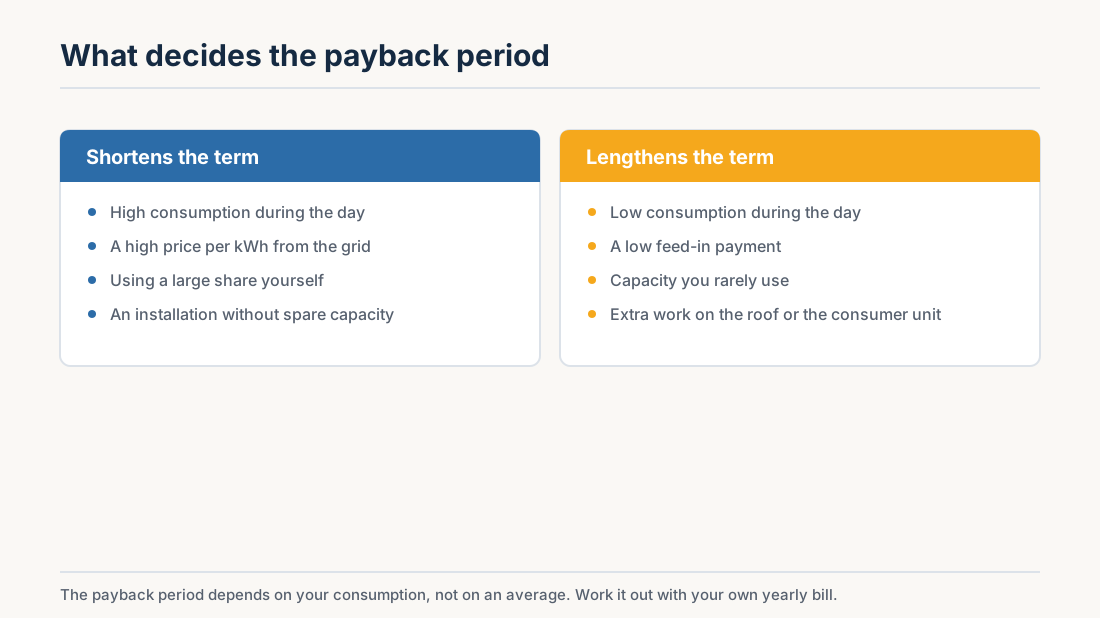
Prices generally fall between €7,000 and €20,000 including VAT and installation, depending on capacity and system complexity.
How does an off grid home battery system operate?
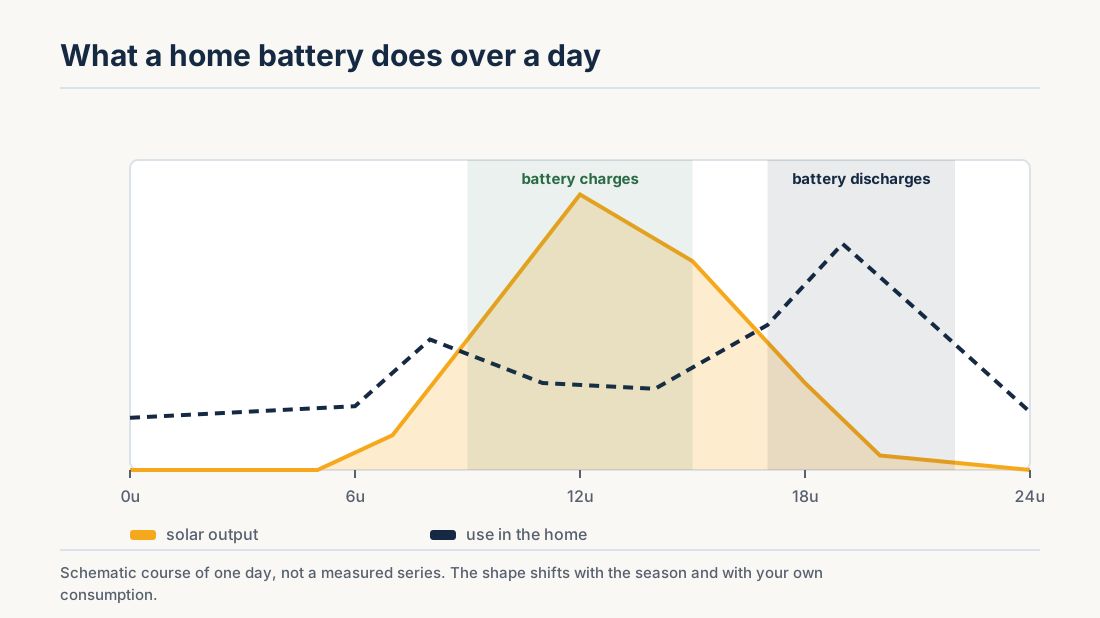
An off grid home battery stores electricity produced by solar panels and supplies power when solar generation is insufficient. The system works independently from the public electricity grid and relies on a well-balanced combination of solar panels, an inverter, and battery capacity.
The main elements of this system include:
- Solar panels: These generate electricity during sunny hours.
- Battery storage: It saves unused solar energy for later consumption.
- Hybrid inverter: This device converts and distributes energy within your home.
What occurs during day and night with an off grid battery?
During daylight, solar panels power your appliances and charge the battery. At night, your home draws electricity from the stored battery energy. For instance, a 10 kWh battery system typically delivers 8 to 9 kWh of usable electricity due to efficiency losses.
What is the purpose of a generator in off-grid setups?
A generator acts as a backup power source during periods of low solar production, especially in winter when sunlight diminishes. Many off-grid installations include a generator to ensure energy availability through darker months.
What comprises a complete off-grid solar system with batteries?
A full off-grid solar system includes solar panels, an inverter, a battery bank, and monitoring software. This setup forms a closed energy loop where all energy generation and consumption happen within your property, eliminating dependency on external power grids.
Which battery technologies and types are suitable for off-grid systems?
The predominant batteries used in off-grid solar applications feature lithium iron phosphate (LFP) chemistry, known for safety, longevity, and stable daily cycling performance.
Here is a comparison of common battery types:
- LFP batteries: They offer a cycle life exceeding 6,000 cycles with high safety standards.
- NMC batteries: These have higher energy density but usually a shorter lifespan.
- Lead-acid batteries: They are more affordable but provide limited lifespan and lower efficiency.
Which battery type is best for off-grid solar?
The most reliable off grid home battery uses LFP technology, which supports deep discharges of 90 to 100 percent capacity and retains performance over time. This makes daily usage more dependable and consistent.
What is a battery bank in off-grid living?
A battery bank combines multiple battery modules to increase overall storage capacity. This modular approach allows scaling from about 5 kWh to 30 kWh or more, adapting to your specific energy needs.
How do 12V and 24V battery systems differ?
Small off-grid systems often use 12V batteries suitable for light loads. Larger systems utilize 24V or 48V configurations, which provide improved efficiency, support higher energy demand, and reduce current losses. Most modern off-grid homes use 48V systems for optimum performance.
What costs are associated with off grid home battery systems?
The cost of an off grid home battery system typically ranges from €7,000 to €20,000 including VAT and installation for systems sized between 10 and 20 kWh. The total price depends on storage capacity, inverter specifications, and the complexity of installation.
Below is a price overview for common system sizes:
- 5 kWh system: €4,000 - €5,000 including VAT
- 10 kWh system: €7,000 - €10,000 including VAT
- 20 kWh system: €11,500 - €16,000 including VAT
Example calculation for a 10 kWh battery system
Here is an estimated cost breakdown for a typical 10 kWh off grid battery installation:
Battery modules: €6,500 + inverter: €1,500 + installation: €1,800 + electrical upgrades: €700 = approximately €10,500 including VAT.
How does adding smart energy management affect the price?
Including smart energy management systems, which optimize the battery charging by analyzing production and consumption patterns, can increase the total investment. These systems enhance performance and efficiency but add to upfront costs. Compare prices with general solar investments via solar panel cost overview.
When is an off-grid battery system the most practical choice?
Installing an off-grid system makes the most sense where grid access is limited or nonexistent, or when energy independence is a priority. It is particularly suitable for rural residences, vacation homes, and households looking for self-sufficiency.
When does a solar battery bank suffice for home use?
A solar battery bank is sufficient if your yearly electricity use matches the production range of your solar panels. For example, a home consuming about 3,500 kWh annually would be well supported by a 5 to 8 kWh battery system.
Why might semi off-grid systems be preferable?
Semi off-grid configurations maintain a connection to the electricity grid as a backup source. This reduces system size and purchase cost while ensuring power reliability during low solar generation periods, such as winter months.
How do seasonal changes affect system performance?
Solar energy production drops significantly in winter, which affects battery autonomy. Many off-grid systems function fully off-grid for 8 to 9 months, relying on supplementary backup power during the colder season.
What are the advantages and disadvantages of using an off grid home battery?
The benefits and limitations depend on your energy goals and usage patterns.
Some main advantages include:
- Energy independence: You do not rely on the public grid for electricity.
- Backup power: You have electricity even during outages.
- Increased self-consumption: You use your solar energy directly.
The main drawbacks are:
- High upfront cost: These systems require significant initial investment.
- Limited winter performance: Reduced solar energy lowers energy autonomy.
- Lack of subsidies: Financial support for home battery systems is often scarce.
It is important to balance these factors. While full energy independence sounds appealing, many homeowners find a hybrid system better suited for practical and financial reasons.
How do off grid home battery systems compare to grid-tied alternatives?
An off grid home battery functions entirely independently from the public electricity network. In contrast, grid-tied systems use the grid as a backup power source.
The following comparison highlights key differences:
- Off-grid: Complete independence, higher costs, and requires careful system sizing.
- Grid-tied: Lower costs, relies on the grid as backup, and generally easier installation.
- Hybrid: Combines features for flexibility and reliability.
Which system suits most households best?
Hybrid systems commonly provide the best balance between cost and reliability. Fully off-grid installations require detailed planning and larger investments but offer full autonomy.
Learn more about solar integration and complete solar solutions via complete solar solutions.
Choosing the right energy storage system depends on how much independence you want, your household energy consumption, and your budget. Fully autonomous off-grid setups demand precise sizing and usually need a backup generator for winter months. Hybrid systems typically offer a practical compromise, providing both reliability and affordability for most homeowners.
To proceed confidently, start by analyzing your actual energy needs, then request multiple personalized quotes through Soleva. This approach ensures your system fits your lifestyle without overspending on excess capacity.
Frequently Asked Questions
What is the best battery for off-grid homes?
The best battery for off-grid homes is a lithium iron phosphate (LFP) type. It offers a long lifespan, excellent safety, and consistent performance under daily charge and discharge cycles. Modular LFP systems enable you to expand capacity gradually, which helps avoid oversizing and upfront costs.
How long will a 10kW home battery last?
A 10 kWh home battery typically provides power for 8 to 9 hours, depending on the household’s energy consumption. Using energy-efficient appliances and smart management can extend battery runtime, especially when consumption remains low.
Is 12V or 24V better for off-grid use?
Systems with 24V or 48V batteries are preferable for off-grid homes because they handle higher loads more efficiently and reduce energy losses. A 12V system is suitable only for very small cabins or minimal power needs.
How many 100Ah batteries are needed to power a house?
The required number of 100Ah batteries depends on your system voltage and energy demand. For instance, a 48V system with a 100Ah battery provides about 4.8 kWh of storage. Typically, multiple batteries are connected in series and parallel to achieve total capacity of 10 kWh or more.
What is the price of an off grid home battery kit?
Off grid home battery kits range between €5,000 and €20,000 including VAT, depending on capacity and included components like inverter and wiring. Kits with advanced energy management and backup features cost more but enhance system performance.
Indicative prices for the Belgian market, checked in August 2026 against energy-village.be, thuisbatterij.be and zen-zonne-energie.be. These are market ranges for an installed system including VAT, not a quotation: your price depends on capacity, brand and the state of your existing installation.
Read also
Ready to cut your energy bill?
Compare quotes for solar panels, home batteries and charging points.