Home battery belgium
home battery EV charging explained
A home battery EV charging system stores electricity and uses it to charge your electric vehicle efficiently while balancing solar production, electricity grid use, and household demand. Most of these setups combine a home battery, an EV charger, and often solar panels to increase self-consumption of renewable energy and reduce reliance on costly peak-time electricity.
As electric vehicle adoption increases rapidly, smart integration of these components is necessary to prevent inefficiencies and unnecessary battery drain. This guide explains how such systems function, their costs, strategies to avoid draining your battery, and configurations that deliver best results based on Soleva insights.
How does a home battery EV charging system work exactly?
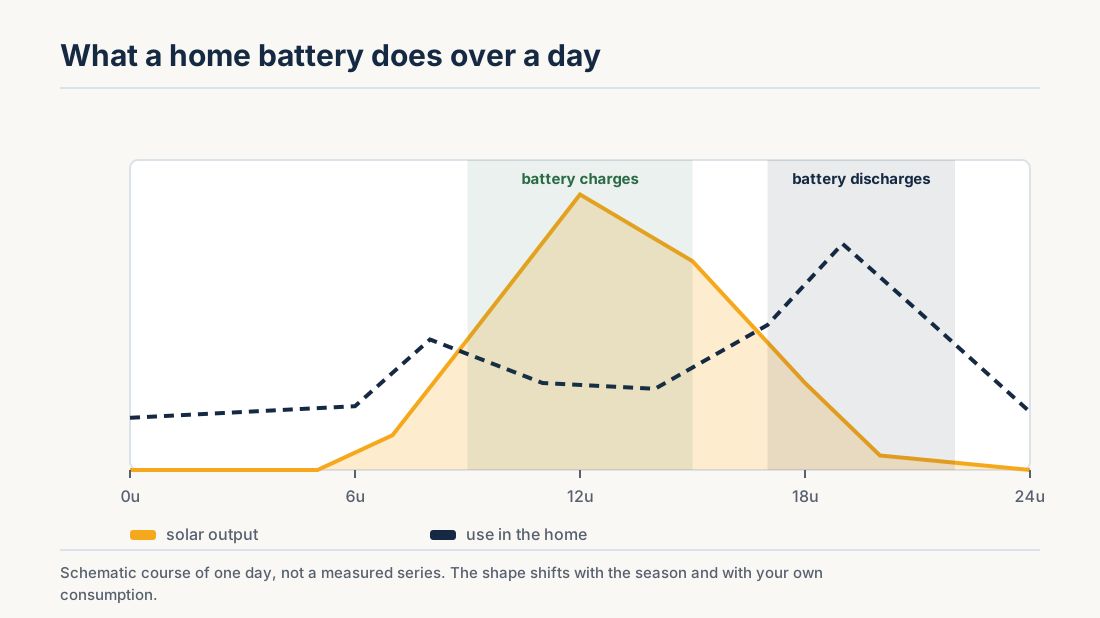
A home battery EV charging system operates by storing electricity in a battery and supplying it to your EV charger or household loads as needed, guided by control settings. The battery management system continuously monitors solar energy production, grid electricity import, and household consumption to determine when to charge the battery or discharge it to meet demand.
In typical configurations, EV charging represents a significant household load. For example, if your EV charger uses 7 kW but your solar panels generate only 3 kW, the home battery provides the remaining 4 kW. This can lead to rapid depletion of the battery, especially if charging occurs in the evening when solar generation is low.
Which operating modes control the system?
Two main operating modes influence system behavior:
- Solar self-consumption mode: The battery stores excess solar energy generated during the day and discharges energy when household demand or EV charging needs increase.
- Tariff-aware mode: The battery discharges electricity during times of high electricity prices and charges when prices are lower, optimizing cost savings.
The selected mode directly affects whether your EV receives energy from the battery store or the grid, influencing efficiency and cost.
Why does the EV often drain the home battery?
An EV battery typically has a much larger capacity than a home battery. Since EVs require a substantial amount of energy daily, the home battery often prioritizes supplying energy to the EV charger, leading to its fast depletion unless the system is managed carefully. Understanding your solar production helps optimize system performance; for more details, read how solar panels generate electricity and contribute to your battery system.
What role does a home EV charging app play?
A home EV charging app enables you to schedule your charging sessions, limit the charging power, and prioritize using solar-generated electricity. These apps connect the EV charger, inverter, and battery system, allowing you real-time control and automatic adjustments to maximize renewable energy use and reduce costs.
Integrating a home battery with your EV charging setup gives you better control over your energy use and costs when configured properly. The key insight is that unmanaged charging can quickly drain your battery, whereas smart control preserves stored energy and lowers your electricity expense. Focus on seamless integration among the charger, battery, and solar production rather than treating these components separately. To find the optimal setup for your driving patterns and energy needs, consider comparing multiple configurations and seek personalized advice from experts like Soleva.
Frequently Asked Questions
Can a home battery EV charging setup fully charge my car overnight?
Typically, a home battery does not have enough capacity to fully charge an electric vehicle overnight. Home batteries usually provide partial charging or top-ups by storing energy harvested from solar panels during the day. For complete overnight charging, drawing electricity from the grid or combining grid electricity with stored solar energy is generally necessary.
What is the price difference between charging from a battery and from the grid?
The cost difference depends on your electricity tariff and solar production. Charging from stored solar energy reduces your electricity expenses, but charging from the battery introduces some efficiency losses. In many cases, grid charging during off-peak periods remains less costly than cycling electricity through the battery multiple times.
How does a bidirectional EV charger affect home battery EV charging?
A bidirectional EV charger allows electricity to flow in both directions between your electric vehicle and home. This enables vehicle-to-home capabilities, where your car’s battery can supply power to household loads, reducing dependency on a separate home battery. This feature adds flexibility in managing your energy use during peak demand or outages.
How can I prevent my EV charger from automatically using my solar battery?
You can prevent the EV charger from drawing energy from the battery by setting discharge limits or creating charging schedules. Many systems allow you to specify a minimum battery charge level or restrict battery discharge during certain hours. Energy management tools often automate these settings to optimize battery use without manual intervention.
Is integrating Tesla Powerwall with EV charging efficient?
Integration between Tesla Powerwall and EV charging is efficient when both systems operate within the same ecosystem and communicate seamlessly. However, using different EV brands may present compatibility challenges. The effectiveness of charging prioritization - whether from solar, battery, or grid energy - depends on the available software integration and control options.
Read also
Ready to cut your energy bill?
Compare quotes for solar panels, home batteries and charging points.