Solar panels Belgium
How many solar panels do I need: calculator guide
Determining how many solar panels you need depends directly on your annual electricity consumption, the wattage of the panels, and the local solar yield. Most households consume between 3,500 and 5,000 kWh yearly, which typically requires around 8 to 15 panels with modern 400 to 450 watt modules. Factors such as your roof size and its orientation also influence both the number of panels you can install and their energy production efficiency.
Continue reading to find precise calculation methods and useful tips for sizing your solar installation effectively.
What formula defines how many solar panels you need?
You calculate the number of solar panels by dividing your annual electricity consumption by the expected yearly output per panel, while also applying a safety factor to cover efficiency losses.
The commonly used formula is:
- Number of panels = (annual kWh × 1.2) / (panel wattage × yield factor)
The multiplier 1.2 accounts for losses such as inverter inefficiency and weather variations. In Belgium, the typical solar yield ranges between 900 and 1,100 kWh per kWp, depending on location and conditions.
Example calculation for number of solar panels
For a household using 4,000 kWh annually and panels rated at 450 Wp, yearly production per panel is approximately 450 kWh. The calculation proceeds as:
- 4,000 × 1.2 = 4,800 kWh required
- 4,800 ÷ 450 ≈ 11 panels
This estimate matches typical installations for medium-sized homes.
How does monthly electricity usage affect panel count?
Considering monthly consumption allows a more precise estimate. For example, a household consuming 350 kWh per month uses roughly 4,200 kWh annually. This translates into approximately 10 to 12 panels depending on sunlight exposure and system efficiency.
For more details on matching system sizes to your usage, visit our solar panel system options page.
How do I determine the number of solar panels needed for my house based on energy use?
Your required number of panels primarily depends on your total yearly electricity consumption in kilowatt-hours (kWh).
Common household consumption ranges and corresponding panel numbers include:
- Single person: around 1,200 kWh requiring approximately 4 panels
- Two-person household: 2,350 kWh needing about 6 to 7 panels
- Family of four: between 3,500 and 4,000 kWh, requiring 9 to 12 panels
- Larger households: around 5,000 kWh, with 12 to 15 panels typically needed
How many solar panels are suitable for a 3-bedroom house?
A 3-bedroom home generally consumes between 3,500 and 4,500 kWh annually, which means you would likely need 10 to 13 panels using standard efficiency modules.
What about a 1,500 sq ft home?
A 1,500 square foot home typically aligns with average consumption and requires 9 to 12 panels, depending on factors such as insulation and appliance efficiency.
How many panels suit a 2,000 sq ft home?
Power usage usually increases with home size, especially when electric heating is involved. For a 2,000 square foot residence, expect to install 12 to 16 panels.
Panel count for a 3,000 sq ft home?
Larger homes around 3,000 square feet often require 18 to 25 panels, especially if you operate heat pumps or electric vehicles.
Which factors influence the number of solar panels required?
Beyond consumption, several physical and technical factors affect the total panels you need.
Key influences include:
- Roof orientation, which affects the amount of sunlight your panels receive
- Panel efficiency, determining how much energy each panel produces per square meter
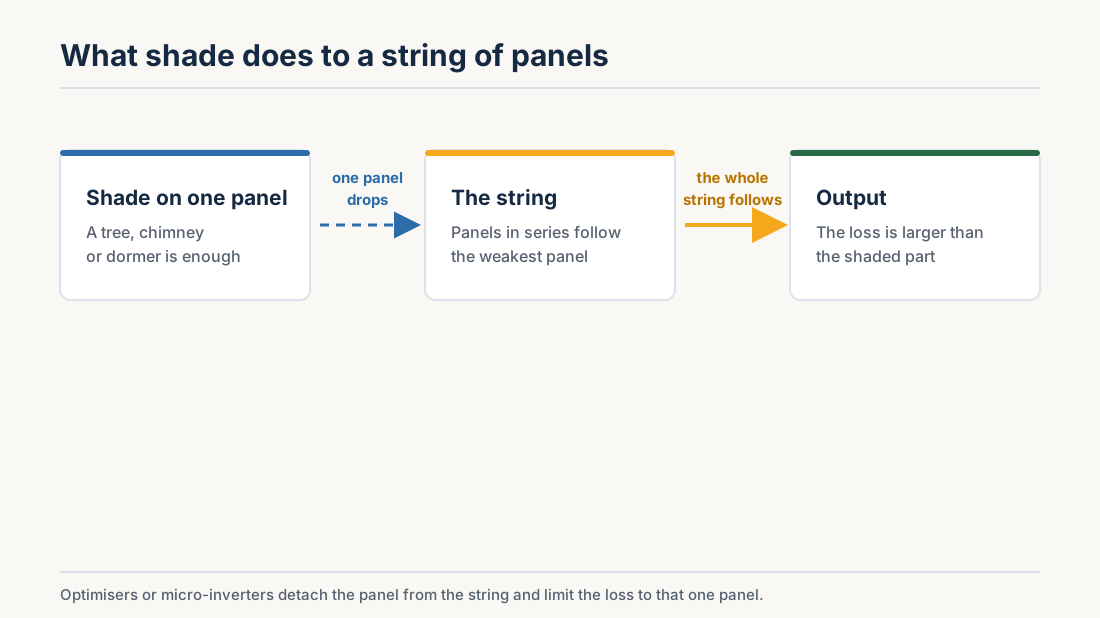
- Shading from trees or nearby structures, which reduces output
- Available roof space, as it limits how many panels you can install
How do roof orientation and tilt affect panel output?
Roofs facing south with about a 35-degree tilt deliver optimal yields. East-west facing installations typically generate slightly less total energy but can better match daily consumption patterns.
Does shading increase the number of panels needed?
Yes, shading reduces the electricity produced by each panel. Obstacles like trees or chimneys lower overall output, making it necessary to install additional panels to compensate.
If your roof layout restricts panel placement, consider alternative panel configurations to improve system efficiency.
What if I consume 4,000 kWh per month or have high electricity usage?
Monthly consumption of 4,000 kWh translates to an annual usage of 48,000 kWh, requiring an extensive solar setup.
Estimate for panel quantity is:
- 48,000 × 1.2 = 57,600 kWh needed
- 57,600 ÷ 450 ≈ 128 panels
This scale suits commercial or industrial environments rather than typical homes.
Are there obligations for commercial photovoltaic (PV) systems?
Commercial buildings consuming over 1 GWh must install at least 12.5 Wp per square meter of roof area. For instance, a 500 m² roof requires a minimum of about 25 to 30 panels.
Is battery storage necessary for high usage systems?
Systems with high consumption often benefit from battery storage. Solar energy systems equipped with storage increase self-consumption and reduce reliance on the grid.
What price can I expect for solar panels based on system size?
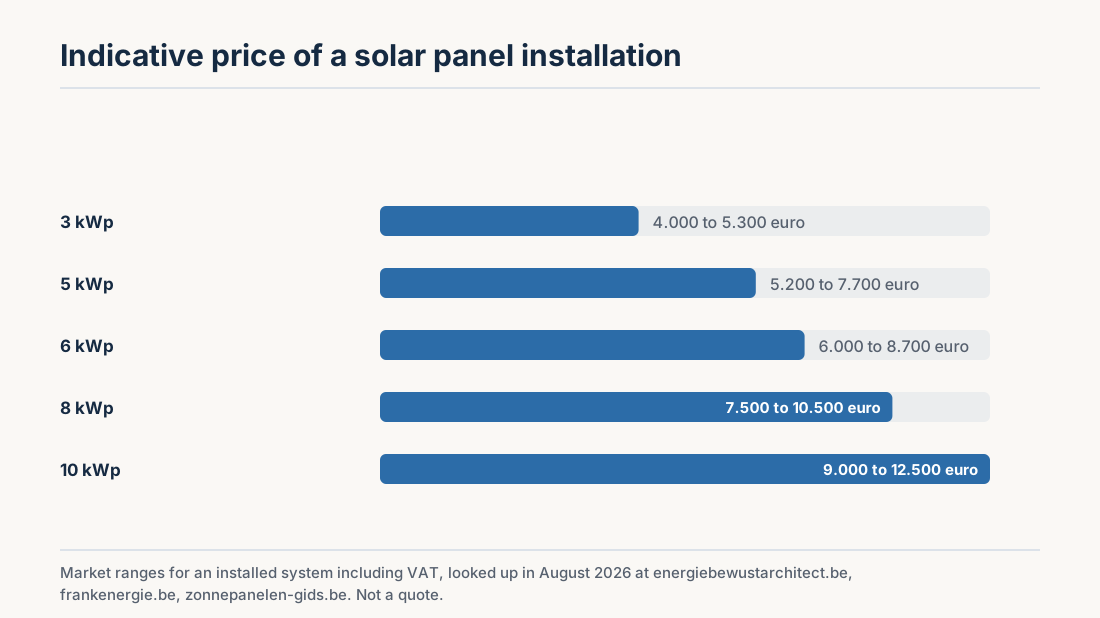
The total cost varies depending on system size, panel type, and installation complexity.
Typical system sizes with estimated prices include:
- Small system of 4 panels: around €3,000 incl. VAT
- Medium system of 10 panels: approximately €4,600 incl. VAT
- Large system of 15 panels: about €5,700 incl. VAT
Detailed price calculation for a typical installation
For a 12-panel system using 400 Wp panels, the costs break down as follows:
- 12 panels × €250 = €3,000
- Inverter = €1,200
- Installation labor = €2,000
- Mounting system = €600
Total price is approximately €6,800 incl. VAT. This investment is comparable to a full solar panel installation.
Visit the complete solar panel installation page for further information.
How can you reduce the number of solar panels required?
You can lower the needed panels by decreasing your energy consumption or increasing panel efficiency.
What home upgrades can reduce panel numbers?
- Replacing traditional bulbs with LED lighting reduces electricity use
- Using energy-efficient appliances lowers your baseline consumption
- Improving home insulation decreases heating energy demands
Do higher efficiency panels really reduce your number of panels?
Yes, high-efficiency panels produce more electricity per square meter, which reduces the quantity of panels needed - this is especially beneficial if you have limited roof space.
For comprehensive comparisons, explore our solar panel technologies section to identify the best option for maximizing output.
The number of solar panels appropriate for your home depends on your yearly energy consumption, roof characteristics, and any plans for increased future usage such as electric vehicles or heat pumps. Most homes install between 8 and 15 panels, while larger houses may require more. Start by analyzing your electricity bill and then request several professional quotes to confirm your estimate. Through Soleva, you can compare expert offers easily and select a solar system tailored to your long-term energy needs.
Frequently Asked Questions
How many solar panels do I need for my house if I plan future upgrades?
If you anticipate installing a heat pump or electric vehicle charger, increase your system size by about 20 to 50 percent. Future electricity consumption often increases by several thousand kWh annually. Adding extra panels during initial installation avoids costly expansions later and improves your energy independence over time.
How many solar panels do I need per month for a stable energy supply?
The monthly number of panels needed varies with seasonal sunlight. Summer months generate more solar power than winter months. Designing a system sized for your annual consumption will produce surplus energy in summer and less in winter. Combining this system with smart energy use or storage solutions helps maintain a stable supply year-round.
What is the 20 percent rule for solar panels?
The 20 percent rule involves oversizing your system by approximately 20 percent above your annual electricity needs. This buffer accounts for equipment inefficiencies, panel aging, and weather fluctuations, ensuring your system continues to meet your energy requirements reliably over time.
Does a 400W solar panel produce 400W under real-world conditions?
No, a 400W rating refers to optimal laboratory conditions. Actual output varies with factors such as temperature, angle of sunlight, and shading. Typically, solar panels produce around 90 percent of their rated capacity annually, so efficiency factors are included in system calculations.
Is a 10 kW solar system sufficient to power a house, and what are the cost implications?
A 10 kW system can cover the electricity needs of most large households consuming 8,000 to 10,000 kWh annually. Prices vary depending on installation complexity and component quality. This system size is suitable if you use electric heating or own an electric vehicle, providing substantial energy independence.
Indicative prices for the Belgian market, checked in August 2026 against energy-village.be, thuisbatterij.be and zen-zonne-energie.be. These are market ranges for an installed system including VAT, not a quotation: your price depends on capacity, brand and the state of your existing installation.
Read also
Ready to cut your energy bill?
Compare quotes for solar panels, home batteries and charging points.